Beshear says he will sign order Thursday restoring voting rights of 100,000+ felons
In his inaugural address, Kentucky Gov. Andy Beshear said he will file an executive order this week restoring the voting rights of many convicted felons who are currently disenfranchised under state law.
“My faith teaches me to treat others with dignity and respect,” the new Democratic governor told his audience outside the state Capitol. “My faith also teaches forgiveness.”
“That’s why on Thursday I will sign an executive order restoring voting rights to over a hundred thousand men and women who have done wrong in the past but are doing right now. They deserve to participate in our great democracy,” Beshear said.
The speech offered no details about Beshear’s forthcoming order, which felons would be covered or how the restoration process would work.
Of the 50 states, only Kentucky and Iowa still deny the right to vote to anyone convicted of a felony. Iowa’s governor is calling for a constitutional amendment to restore voting rights to felons in her state.
Kentucky has an estimated 242,000 felons who are disenfranchised despite having completed their sentences, according to a 2016 report by the Sentencing Project, a criminal-justice reform advocacy group. That includes one in every four of the state’s African-American adults, according to the report.
Under Kentucky’s Constitution, voting rights can be restored solely by the governor.
“For people who make mistakes and serve their time, it’s a double jeopardy to say ‘We’re never going to give you back your civil rights, not for the rest of your life. We’ll take your taxes but we’ll stifle your voice forever,’” said Tayna Fogle of Lexington, a voting rights activist with Kentuckians for the Commonwealth.
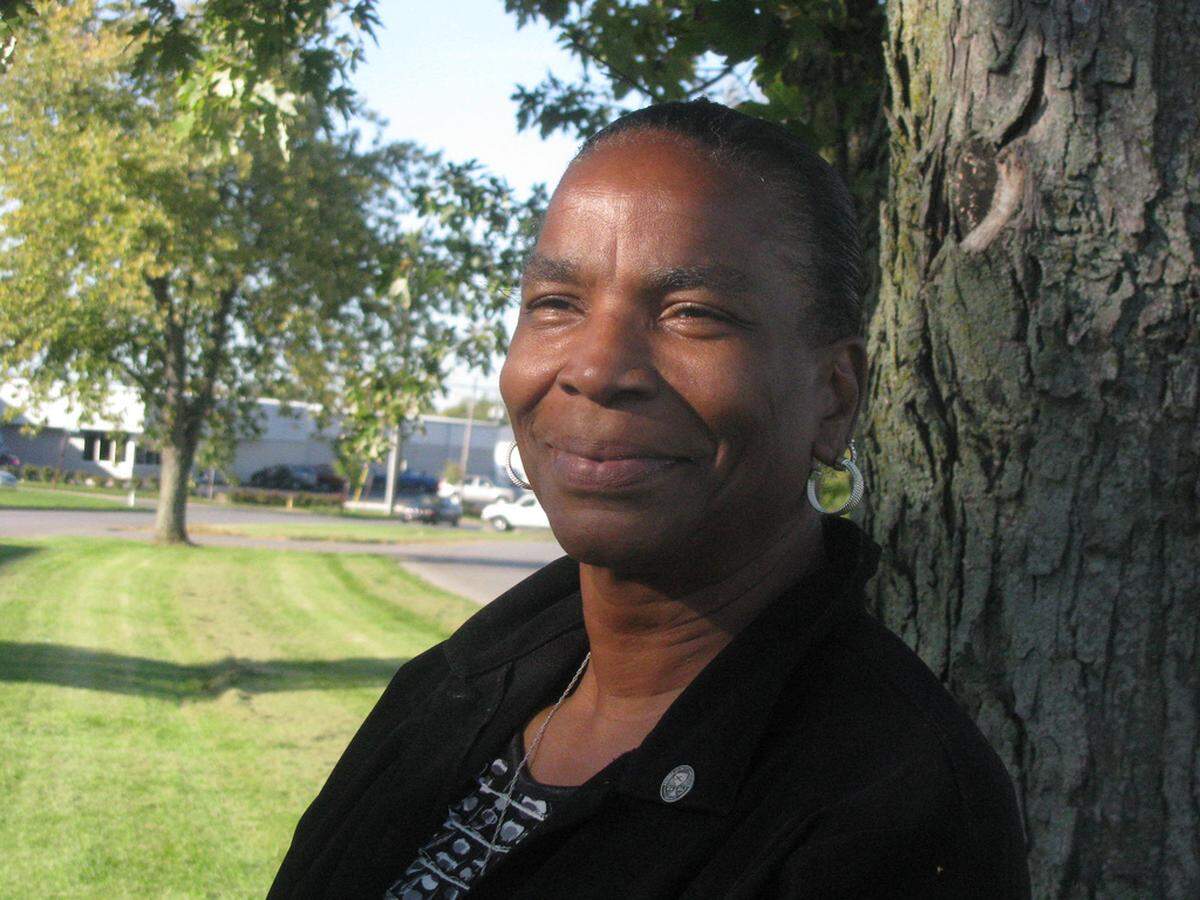
Fogle, who had an old felony conviction on her record, personally walked her application for restoration of voting rights into the governor’s office in 2006, along with the requisite essay and three character references, successfully lobbying for its approval.
“The vote is the most powerful institution we have access to,” she said Tuesday. “It can change so many things, if you have it.”
As in other states, the share of Kentuckians with felony convictions exploded between 1980 and 2010, thanks in large part to the war on drugs, cramming jails and prisons to overflowing. The proportion of African-American adults who were disenfranchised by a felony in Kentucky rose from 3 percent in 1980 to 26 percent in 2016, according to the Sentencing Project.
Beshear’s father, then-Gov. Steve Beshear, issued an executive order shortly before leaving office in late 2015 that was supposed to restore the right to vote and hold public office to more than 100,000 felons who had completed their sentences and paid all of their court-ordered restitution.
Steve Beshear’s 2015 order did not include people convicted of crimes classified as “violent offenses,” sexual crimes or election-related bribery. (Under Kentucky law, the violent offense statute is a catch-all that includes some crimes that don’t involve actual acts of violence, such as repeat-offense methamphetamine manufacturing.)
It had little time to take effect. Just days after he succeeded Steve Beshear in December 2015, Republican Matt Bevin suspended the order.
“While I have been a vocal supporter of the restoration of rights, it is an issue that must be addressed through the legislature and by the will of the people,” Bevin said at that time.
However, the legislature has rejected multiple attempts to restore voting rights through statute. The closest it came was in the 2014 General Assembly, when the Democratic-led House and the Republican-led Senate each passed a version of a proposed constitutional amendment on felon voting, but they could not agree on final language.
Under Bevin, felons who served out their sentences still could apply to the Kentucky Department of Corrections for a restoration of voting rights. The department forwarded those applications to Bevin’s office, where the decision to grant or deny rested “with the governor’s unfettered discretion,” according to a federal lawsuit filed against Bevin this year by the Fair Elections Center and the Kentucky Equal Justice Center.
By the time the suit was filed last winter, the groups said, a foot-dragging Bevin had approved only 980 applications, creating a backlog of 1,459 requests. By comparison, Steve Beshear aggressively moved to reinstate voting rights to more than 9,500 people during his two terms in office, the groups said.
The groups’ suit, which is pending in U.S. District Court in London, asks that “clemency applications be processed under objective rules and criteria, independent of the governor’s whims.”
While Andy Beshear’s executive order is progress, the better solution is a state constitutional amendment that settles the issue beyond the ability of any future governor to interfere, said Ben Carter, who is one of the Kentucky Equal Justice Center lawyers involved in the suit against Bevin.
The constitutional amendment should cover as many people as possible and keep the process simple, Carter added.
“It really, really matters what the process is going to be. If people have to actively apply for something, that’s totally different than if we basically send out a letter just saying, ‘Congratulations, your right to vote has been restored,’” Carter said. “Only one out of 20 people are going to apply. You’re going to be leaving a lot of people out.”
This story was originally published December 10, 2019 at 3:33 PM.