Mitch McConnell is among the most powerful men in America. Can this guy Ditch Mitch?
In November of 1980, as Judge-Executive Mitch McConnell prepared for his 1981 reelection bid in Jefferson County, he sent 7,500 people in Louisville a red plastic record. Those who played the record on their stereo, at the end of the four and a half minute recording, were greeted with a direct appeal for a campaign donation.
The record was part of McConnell’s attempt to raise $500,000 in his campaign, a number he thought would show Democrats that he was a formidable fundraiser, laying the groundwork for the young politician’s 1984 bid for U.S. Senate, according to a 1980 article in the Courier-Journal.
It worked.
Since the beginning of his political career, McConnell has served as a testament to how money helps win elections. Now, almost four decades and six terms in the U.S. Senate later, another generation has adopted the theory.
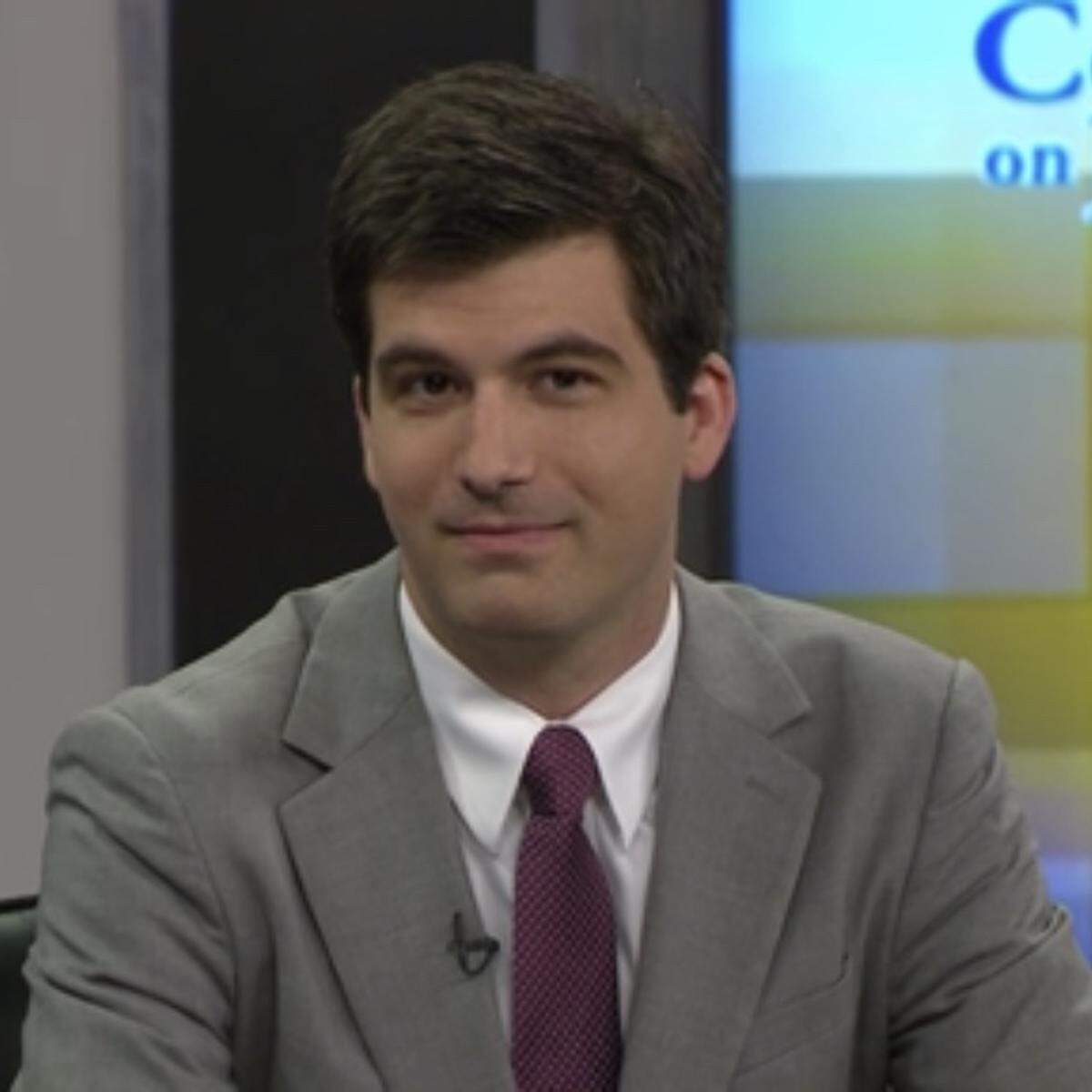
“Mitch McConnell knows and understands and believes that money is critical to winning these races,” said Ryan Aquilina, 28, of Washington D.C. “The person with the most money doesn’t always win, but you can definitely lose if you don’t have enough.”
As Democrats nationally survey the political scene and find U.S. Senate Majority Leader Mitch McConnell standing in the way of Democratic policies while bolstering President Donald Trump, more and more are looking to see his ouster.
Enter Aquilina.
In October 2018, he started a political action committee dedicated to raising money to defeat McConnell called the Ditch Mitch Fund. It raised $75,000 in its first week, $1.4 million by their first filing period and now has raised more than $5 million, according to Aquilina.
“We are going to outspend Mitch McConnell and he has never been outspent before,” Aquilina said.
Not including outside spending, McConnell has been outspent once, when he first won office against Walter Dee Huddleston in 1984. Ever since, McConnell has massively outspent opponents. The closest any candidate has come to spending as much as McConnell was Bruce Lunsford in 2008. He spent $21.9 million to McConnell’s $23.2 million, according to the Federal Elections Commission, but much of Lunsford’s money came out of his own pocket.
Aquilina lives in D.C. and has no ties to Kentucky. He said he sees unseating McConnell as a national issue, not one that only matters for Kentuckians. He said McConnell has stomped on all the institutions of the Senate in order to forward his political agenda, creating the hyper-partisan national politics we’re currently experiencing in the process.
“It doesn’t matter what he does, he can do anything he wants,” Aquilina said. “And our message is no. No you can’t. You can’t just do whatever you want and expect the people of Kentucky to elect you.”
Even if money pours into Aquilina’s efforts, Democrats face a challenging political field in 2020 with Trump, who is still well liked through much of the commonwealth, at the top of the ticket. McConnell has emerged as one of the president’s top protectors as Democrats have moved to unseat him.
“The next time Kentuckians are interested in the opinion of a bunch of liberal political activists in Washington DC it will be the first,” said Kevin Golden, McConnell’s campaign manager.
What’s Ditch Mitch
It started with the hearings to confirm Supreme Court Justice Brett Kavanugh.
As McConnell swore to the country that Kavanaugh would make it onto the court — amid dramatic hearings after allegations that Kavanaugh sexually assaulted a woman while in high school — Aquilina found himself looking for a place where he could donate money to help get McConnell out of office.
It was 2018 and McConnell wasn’t up for reelection until 2020. That meant there were no candidates to donate to and there were no political action committees dedicated to ousting McConnell.
“I found myself saying ‘where’s the Mitch McConnell group? Where is it? Where do I donate?’” Aquilina said. “And I went looking for it and it didn’t exist.”
So the Ditch Mitch Fund was born.
In its first week, the group collected more than $75,000, mostly in small donations. Aquilina worked nights and weekends to get his project off the ground.
“I knew there was an energy nationally to take on McConnell,” Aquilina said. “I don’t know that I knew how deep it went.”
That energy has only been stoked by the bitter partisan battles in Washington. McConnell has held the national spotlight as he defends Trump, reshapes the judicial branch and blocks legislation passed by the Democratic controlled House of Representatives. McConnell’s rise as a villain of the left has enabled Aquilina to quit his job to work full time on the Ditch Mitch Fund.
It hasn’t just been raising money. Even before there were major Democratic candidates attempting to challenge McConnell, Aquilina hired Mark Putnam, the media consultant used by Alison Lundergan Grimes in her 2014 Senate bid and both of former Marine Corps pilot Amy McGrath’s campaigns.
The resulting short ads showed people with bullhorns amplifying recordings of some of the things McConnell said about the Affordable Care Act, Supreme Court Justices and raising money from out of state.
The group’s latest ad, which cost $500,000 and aired throughout the state, was a hodgepodge of criticism about McConnell: from his making light of cocaine use (McConnell has embraced the nickname Cocaine Mitch after he was called that by a man running for Senate in West Virginia) and his family’s support of the coal industry outside of Kentucky.
“They’re always like, ‘he’s always unpopular, he’s historically unpopular, but he still wins and why is that?’” Aquilina said. “And it’s because he raises a ton of money, he spends a ton of money beating up his opponent and making them even more unlikeable. That’s his strategy. He doesn’t run a positive campaign. So we have to raise money in order to combat that and to communicate this message effectively and enough to hold Mitch accountable.”
To raise that money, Aquilina has taken the usual tactics — Facebook ads, email lists, a website to collect donations. But he’s also a client of Grassroots Analytics, a group that has helped progressive candidates raise money by providing them with lists of donors who are most likely to support them.
The group works outside of the traditional party structures of Washington D.C. to help politicians raise money, according to a profile in The Intercept, similar to how the Ditch Mitch Fund is separate from the traditional party structures, such as the Democratic Senate Campaign Committee.
“Doing something like that is not new,” said Tres Watson, a Republican political consultant. “What it does show is that there’s a little bit of an independent movement out there trying to do something outside the D.C. power structures.”
Earlier this month, a McGrath-sanctioned super PAC was announced, run by Gov. Andy Beshear’s campaign manager. The group, called Fire Mitch Save America, quickly picked up thousands of followers on Twitter and is the PAC Mark Nickolas, McGrath’s campaign manager, hopes people will turn to if they want to donate above the legal limits for a candidate.
Aquilina is still working within some of the traditional Kentucky power structures, however. Dave Contarino, who is behind Kentucky Family Values, a political group that has worked to get Democrats elected in Kentucky, is among the dozen or so people Aquilina has consulted or hired to help craft Ditch Mitch’s message.
But unlike the Democratic political institutions that have routinely stopped supporting Democratic candidates when it appears they are unlikely to defeat McConnell, Aquilina says he’s not pulling out of the race.
“We’re not just raising money, we are organizing folks on the ground and establishing relationships and deepening relationships that we already have,” Aqulina said.
A money pit
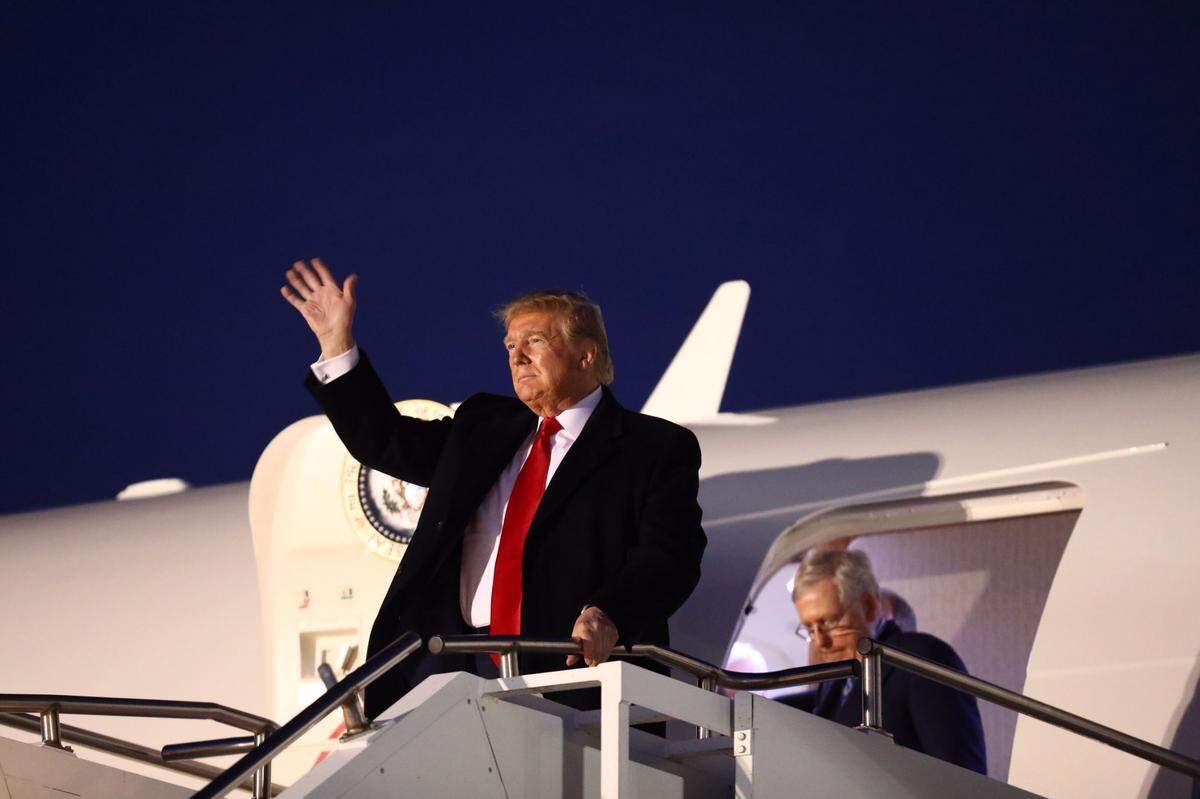
The last time McConnell ran for Senate, he won by more than 15 percentage points. Two years later, President Donald Trump won by nearly 30 percentage points.
Now, with McConnell running and Trump at the top of the ticket, some have deemed the fire hose of cash being donated to oust McConnell (much of it flowing to McGrath) as a waste of money.
“It is 100 percent a money suck,” Watson said. “This is a fools mission for national Democrats because Mitch McConnell won’t be beat and certainly not by Amy McGrath.”
Gov. Andy Beshear gave Kentucky Democrats an injection of hope last month, when he upset former Gov. Matt Bevin by running up the margins in Kentucky’s two biggest cities and holding Bevin off in the suburban and rural areas of the state.
“There’s now a clear path to beat McConnell,” said Marisa McNee, a spokeswoman for the Kentucky Democratic Party. “I think we understand, for maybe the first time, what we need to do.”
But there are many differences between a race for governor and a race for U.S. Senate in Kentucky. Beshear was able to largely ignore national issues and keep Kentuckians focused on local issues and their dislike of former Gov. Matt Bevin’s personality. That tactic is not possible in a federal race, where Democratic candidates are often forced to take a stance on national proposals driven by the more progressive candidates in their party.
Already, McConnell’s campaign has lambasted McGrath, the Democratic front runner, for being reluctant to take a firm stance on controversial issues. McGrath has not directly said she favors impeachment of Trump, but indicated in an email to her donors that she believed the House “rightly passed” the articles of impeachment.
“In classic Amy McGaffe fashion, her views on the issue of impeachment differ depending on whether her audience is comprised of Californians or Kentuckians — on whether she is hoping to raise money or earn votes,” a McConnell campaign email said.
McNee acknowledged that Democratic candidates will have to engage directly with national issues on the campaign trail.
“There will be a conversation about national issues, which is different than the state race,” she said. “Our job is to talk about national issues in a way where they apply to the lives of everyday Kentuckians.”
There is one similarity between the two races that Democrats are banking on: both Bevin and McConnell are unpopular.
Aquilina said polling by Ditch Mitch and others shows McConnell is more unpopular than he’s ever been, and he considers the race winnable because of that fact.
“I don’t mean to say the races are analogous because they’re not,” Aquilina said. “They’re not identical. But there is a lot of similarities to be drawn and the places where a Democrat has to do well, Andy Beshear just did do well.”
Aquilina and other Democrats are hopeful their full war chests will let them run effective campaigns that highlight the things people dislike about McConnell.
“I think the race is winnable, I don’t think it’s a money pit by any stretch of the imagination,” Aquilina said. “But even if that were true, I don’t think us keeping McConnell busy would be a bad thing.”
This story was originally published January 10, 2020 at 10:08 AM.