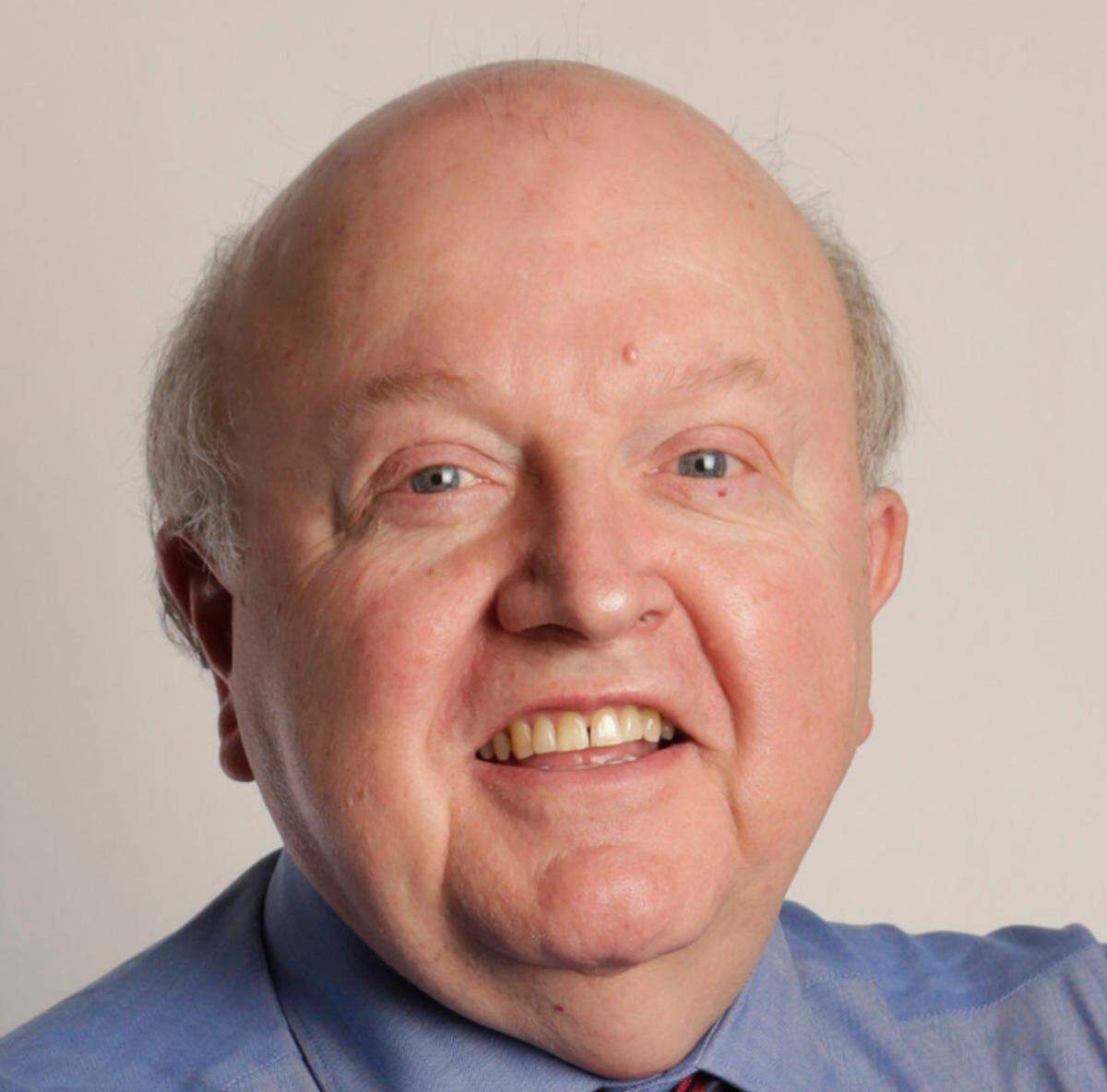
This Bevin pardon was earned, say fans of KY woman who rebuilt her life, helped ACLU
The toughest parts of prison for her, said Amanda Hall, were missing family and feeling “very insignificant.”
“You feel dehumanized like you don’t have a purpose or place in this world,” said Hall, pulling on her long black hair.
“Sometimes you could watch the news and see the world go on. It’s very lonely to see the world going on without you. You don’t really matter.”
Hall, 35, recounted the darkest time of her life on a recent Friday afternoon, sitting where she works in the modern 22nd-floor office of the American Civil Liberties Union of Kentucky in downtown Louisville. She enjoys her job and is proud of her progress.
Two days earlier, departing Gov. Matt Bevin had put his stamp of approval on Hall’s efforts to restore her life — going from a prison inmate with a drug problem to an ACLU employee with a master’s degree in sight.
Hall was on a WHAS-AM radio show Dec. 11, talking about justice reform pushed by the ACLU, when she got a text message from a friend. Hall learned Bevin had issued an unconditional pardon for her that fully restored her civil rights and her innocence as though she had never committed a crime.
“I cried,” she said. “That’s all I could do”
WHAS talk show host Leland Conway was on the show with Hall.
“It was one of the coolest things ever for me on radio,” said Conway. “It was so clear how much she deserved it. Quite heartwarming. That pardon was one of the good ones.”
In his pardon, Bevin said, “Amanda Hall went through a dark period of addiction and resulting criminal activity. She has since turned her life around and is a true blessing to many in her community. She has paid her debt to society and continues to give back on multiple fronts.”
Joy about the pardon turned to stress after questions were raised about some of the hundreds of pardons and commutations Bevin issued before leaving office, Hall said. Recipients included convicted murderers and rapists as well as nonviolent drug offenders like Hall.
“People on social media started asking how did I get my pardon,” said Hall. “What did I do? How much did it cost? It was hurtful, quite stressful. A pardon I worked hard to get was overshadowed by questions about other pardons.”
Hall said she got her pardon on merit after applying for it first with former Gov. Steve Beshear and then Bevin.
“I never talked to Gov. Bevin about my pardon,” she said. “Once I talked to him in the Capitols’ annex cafeteria about felony expungement legislation in my job with the ACLU. I really thought I might not get a pardon because I told him I was with the ACLU and Bevin is conservative.”
Some pardons were worthwhile, Hall said. “I believe mine will help in my attempts to turn my life around.
“Unlike in prison, I feel like I’m somebody again.”
Drugs kill dream of becoming a marine biologist
Hall grew up poor in Martin County with two older brothers and two older sisters. Her mother raised them. Hall didn’t know her dad until she became a teen. As an eighth-grader and a good student, she was voted by her classmates as the most likely to succeed.
Her dream was big. She wanted to become a marine biologist — an idea sparked by a class trip to an aquarium in Baltimore.
But high school was stressful. She had anxiety issues. She started experimenting with alcohol and drugs. A car crash hurt her neck, and she started using mild opioids.
“That led to Oxycontin and more alcohol. Prescription drugs were flowing into the area. You could find them in people’s medicine cabinets. Many kids had them.”
Hall said she barely graduated from high school. She spent a semester at Southern Community College in Logan, W. Va.
Her first arrest was for public intoxication. She spent time in detox centers and worked at various jobs.
In her mid-20s, Hall was arrested in Martin County for drug trafficking. She said she was convicted over selling two prescription pills and sentenced to 13 months behind bars. It is a long way from Martin County to the state women’s prison in Shelby County near Pewee Valley.
“When I got there in a van from Johnson County, I saw the buildings, a tower and guards in it and the barbed wire. I was strip-searched and there was a community shower with de-licing shampoo on your head.
“I was so scared. I stayed there from March to December and spent the rest of the sentence in county jail. Parole allowed me to participate in a substance abuse program.”
Recovered, she works on criminal justice reforms
Hall found real help at The Healing Place, a nationally recognized recovery center, in Louisville. She was there for 17 months and learned life skills.
After 14 months there, Hall started mentoring other residents. “I could relate to them very well,” she said.
With treatment behind her, Hall and two friends from The Healing Place looked for a place to live.
Several landlords turned them down because of their history with drugs. They eventually found a place to rent in Louisville’s Portland neighborhood.
During that time, Hall worked as a caterer, a house cleaner, a receptionist, and a server at the Kentucky Derby, often holding down three jobs at a time.
She attended classes part-time at Jefferson Community and Technical College and received an associate degree in human services.
Next May, she is to receive a master’s degree in social work from the University of Louisville. “I will be the first person in my immediate family to do anything like that.”
Hall has been greatly aided by a job with the ACLU of Kentucky.
With Hall on board since November 2017 as a field organizer, the ACLU has established Kentucky Smart on Crime, a broad-based coalition working for justice reforms that strengthen communities and promote cost-effective sentencing alternatives.
“I sent in my application and knew that they had requested a background check. It was all there — the good and the bad, and they were willing to take a chance on me.”
The job has sent her to Frankfort to lobby state legislators. “I still am amazed that this country girl gets a chance to talk to lawmakers about important issues like criminal justice reform,” she said.
Amanda Hall deserves all she has worked for — life without drugs, a good job, a master’s degree and a pardon, said Michael Aldridge, executive director of the ACLU of Kentucky.
It was not easy for Aldridge and his staff to find an Amanda Hall.
“We knew we wanted to have an impact in reforming the justice system, but finding the right person for the job turned out to be a difficult task,” he said.
Aldridge and his staff interviewed “a lot of people, through a traditional process, who had a lot of organizing experience, or campaign or lobbying experience, but the connection was missing.”
They changed that process to one-on-one interviews with people recommended by others but “still no fit,” said Aldridge.
“Then we interviewed Amanda and everyone in the room immediately agreed that we had found the right person.”
Hall had firsthand experience with Kentucky’s opioid crisis and the justice system, he said.
“She is relatable to most Kentuckians and that helps her navigate different spaces and groups of people with ease. But more than anything — she’s genuine. She’s a straight shooter, one of the hardest working people I’ve ever met, and she puts herself out there every day for the sole purpose of helping other people.
“Amanda believes in the power of redemption, and because of her, so do a lot of decision-makers in Kentucky.”
What’s next for Hall? “The sky’s the limit,” she said.