Family of beheaded woman ‘violated’ by Bevin’s pardon. Others say innocent man freed.
Before parole hearings for the man convicted of strangling Betty Carnes, beating her with a pipe and cutting off her head, her daughters would get nervous, even nauseous, about what they would say to the parole board and whether the killer would get out of prison.
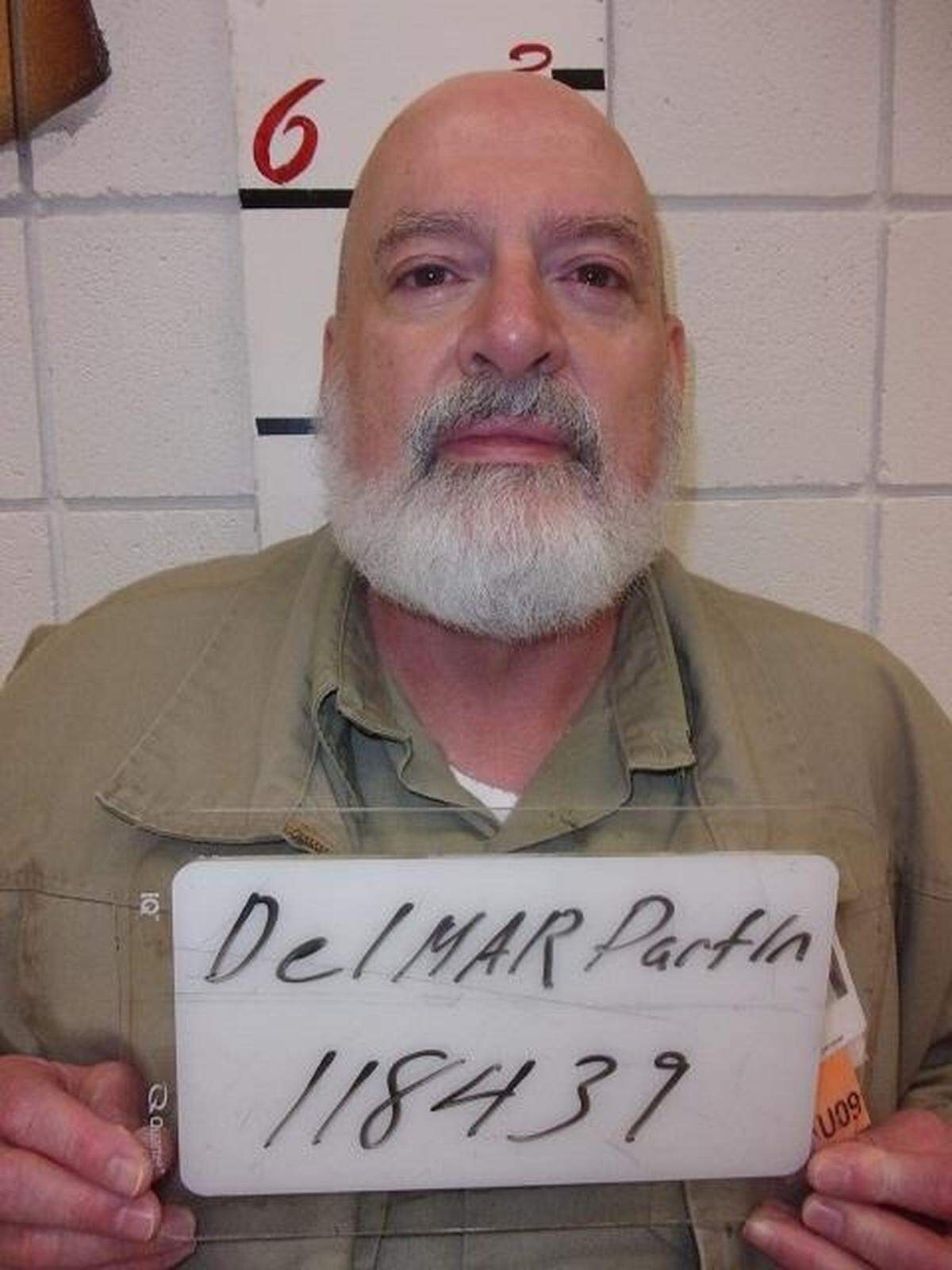
But in April 2018, the parole board ordered Delmar Partin to serve out his sentence for murdering Carnes in 1993, meaning he would spend the rest of his life in prison.
“We were just so relieved,” said Carnes’ oldest daughter, Kimberly Clark. “We finally thought our Mom could rest in peace.”
That peace of mind was shattered last week when Clark and her two sisters got word that on Dec. 9, his last day in office, Republican Gov. Matt Bevin signed an order that not only commuted Partin’s sentence, freeing him from prison, but also pardoned him for the crime.
No one reviewing Partin’s request for clemency talked to the prosecutor on the case, Tom Handy. And no one let Carnes’ family know Partin was getting out, so they were blindsided.
“We never dreamed something like this could happen,” said Carnes’ middle daughter, Tracy Miller, now 41.
“It’s awful. We just cry,” Clark said.
Partin’s pardon is among several that have caused an uproar across Kentucky in the last week. Prosecutors and families of victims have condemned many of the decisions, while supporters of those released have defended the pardons as acts of mercy justified by changed lives or poor investigations and faulty court decisions.
Suzanne Hopf, directing attorney for the Kentucky Innocence Project, which worked to get Partin released, said she “got this immense sense of gratitude from Delmar” for Bevin’s decision.
She said Partin does not plan to go back to Knox County, where the crime occurred and Carnes’ three daughters still live.
Bevin said in a series of tweets that he carefully weighed the clemency requests and that each case had its own set of facts, evidence, lack of evidence and reasons for his decisions, “most of which the arm-chair critics are not aware of . . . .”
That didn’t sit well with Carnes’ daughters, soft-spoken, church-going women. The youngest is Jessica Smith, now 33.
They’re not “armchair critics” with no knowledge of their mother’s case, but rather “victims whose rights you have violated by an egregious abuse of power,” Clark said she would tell Bevin.
It upsets the three that one person has the power to undo a decision by a jury that’s been upheld on appeal and by the parole board.
The publicity about the controversial pardons has been uncomfortable, like an invasion of privacy, they said.
“You just feel like everyone’s talking about you,” Miller said.
Carnes was 37 in September 1993 and worked at the Tremco factory in Barbourville, which made insulation for car windshields. Partin also worked at the factory.
The two had a short affair before she broke it off to return to her husband and family.
Partin had a hard time accepting the break-up, leaving notes for her and following her at work, and she had been scared about his behavior, according to Handy and her daughters.
Carnes picked up overtime when she could, so was working an extra shift in the lab at the factory on Sept. 26, a Sunday.
Partin wasn’t scheduled to work that day but witnesses saw him come to the plant. He was carrying a bag he said contained books, but the shape was consistent with a hand ax found later in the lab, Handy said.
Handy said the evidence showed Partin had created a tool to use in hunting alligators, a loop to put around the neck before shooting the animal.
Handy argued to the jury that Partin had used the loop around Carnes’ neck to cut off the blood flow to her head; beaten her with a pipe; then cut off her head with the ax and sealed her body in a 55-gallon drum used in the lab to collect waste.
“It was a hate crime, no doubt about it,” Handy said recently. “Her final resting place would have been in a toxic waste dump.”
Workers moving the barrel the next day noticed it seemed heavy and looked inside, discovering Carnes’ body, Handy said.
Partin denied killing Carnes but a jury convicted him and he received a life sentence.
The state Court of Appeals said in a 2010 ruling that while the evidence against Partin was circumstantial, it was enough to uphold the jury verdict.
It noted that on the day after Carnes was killed, before her body was found, Partin “falsely denied” being at the factory the day of the murder. The state Supreme Court also affirmed the conviction.
An experienced alligator hunter?
Partin was one of 10 people Damon Preston, the Kentucky Public Advocate, recommended for a pardon and commutation as an offender “convicted of violent offenses with mitigating circumstances.” Six of the 10 names Preston recommended were either pardoned or commuted by Bevin.
In his memorandum to the governor, Preston wrote that his office believed there was no way Partin could have committed the crime based on the facts of the case.
“Delmar Partin has spent the last 26-years in prison for a murder we believe he did not commit,” Preston wrote. “The gruesome nature of the murder was the driving force behind Delmar’s conviction, and is also what shows his innocence as he could not have murdered, decapitated, and concealed the victim’s body and then walked past several people mere minutes later with no signs of struggle, blood, or injury on his person or clothing.”
Preston’s argument was similar to one made during the trial in 1994 and one the jury ultimately rejected when they gave Partin a life sentence.
Melanie Foote, an attorney who worked on the Partin case with the Kentucky Innocence Project, a branch of the Kentucky Department of Public Advocacy, cast doubts on the prosecution’s portrait of the crime.
“What happened to Ms. Carnes is horrific and I think that’s why they found it easier to point at Delmar,” Foote said. “Something this terrible, you want to be able to say ‘we got the guy.’”
In addition to the argument that Partin didn’t have enough time to commit the crime, Foote was critical of the prosecution’s assertion that Partin was an experienced alligator hunter who was able to restrict the blood flow to Carnes head, enabling him to behead her without getting blood all over himself and the lab.
Foote pointed out that a detective for Kentucky State Police said he found blood splatters in the lab. She also noted that Partin filed an affidavit saying he had only observed an alligator hunt, not participated in one.
“Sometimes I think we want the puzzle pieces to go together so badly that we want this to fit,” Foote said. “But it’s not necessarily where they are supposed to be.”
Handy said the evidence justified convicting Partin, who was represented by two of the state’s top defense attorneys.
Partin had “plenty of time to do what he did if you know what you’re doing,” Handy said.
“All the pieces fit together,” he said.
DNA evidence
In his order, Bevin pointed to an issue with DNA testing as his basis for freeing Partin.
He appeared to be focused on a 2009 appeal the Kentucky Innocence Project made on behalf of Partin to get the court to do further DNA testing.
In his appeal, Partin requested that state police perform mitochondrial DNA testing on hairs found in a paper towel in a trash can in his house. That type of testing did not exist when he was convicted.
That evidence could have been crucial, defense attorneys said, because if the hair and the blood found in the trash can did not match Carnes, it would call into the question the forensic analysis done by Kentucky State Police.
The Kentucky Court of Appeals denied Partin’s request in 2010. Justice Laurence VanMeter wrote that the jury was already aware that the hair in the trash can may or may not have belonged to Carnes when they convicted Partin.
“Even if DNA analysis excludes the victim as the source of any hair in Partin’s kitchen trash, even if a third person’s DNA shows up among the evidence at the Tremco laboratory, which would not be surprising given the number of persons who were in and out of that location on Sunday, September 26, 1993, no testimonial inconsistencies exist which otherwise cast doubt on the jury’s verdict,” VanMeter wrote.
VanMeter’s six page opinion includes no mention of at least two other pieces of evidence the Innocence Project wanted tested: a pair of gloves found in the barrel with Carnes and a hair found in Carnes hand.
The science required to test the gloves for DNA did not exist in 1994, but the hair found in Carnes hand contained a root, which meant it could have been tested for DNA in 1994. Police never tested it.
“It is probable that in the struggle before her death, Carnes was able to grab the hair of her attacker when he circled to the front of her body to administer the blow to the front-right side of her head,” the Innocence Project wrote. “DNA testing of this hair would create a genetic profile of the attacker which could be used to find the true perpetrator.”
Bevin’s pardon cited that argument.
“Given the inability or unwillingness of the state to use existing DNA evidence to either affirm or disprove this conviction, I hearby pardon Mr. Partin for this crime and encourage the state to make every effort to bring final justice to the victim and her family,” Bevin wrote in his order.
Four people who said they were friends with Partin wrote letters to Bevin praising Partin and saying they would help support him should he be released from prison. Three of the letters called Partin a “model inmate” and the fourth said he was “the ideal prisoner.”
“I believe, despite any allegations made against Delmar, that he is without a doubt, a good person,” wrote Margaret McClellan, of Lexington. “He has never been anything but sincere and caring in any communication that we have had.”
‘I just wanted my mom’
For Carnes’ daughters, Partin’s surprise release has rekindled the pain of their mother’s murder.
Clark, now 45, can still recall the panicked effort to find Carnes that family and friends undertook when she wasn’t there when the rest of the family got home from church that Sunday evening more than 25 years ago.
Clark, then 18, went with one of her aunts and a co-worker of her mother to Partin’s house. The co-worker knew Partin had harassed Carnes and suspected he was involved, Clark said.
They banged on the door and screamed to try to wake up Partin. When he came out he said he didn’t know where Carnes was, Clark said.
Smith, who was seven years old, was confused and scared.
“I was so young and I just wanted my mom,” she said.
After workers found Carnes’ body the next day, authorities had her family come to the emergency room at the hospital in Barbourville.
Miller, who was 15 then, recalls being relieved at first, thinking maybe it meant Carnes was injured but alive, but they were notified of her death.
“I just remember everybody being there and crying and holding one another,” Clark said. “It was like I was living a nightmare for days.”
The sisters said they wouldn’t have gotten through the ordeal without their faith in God and the support of their church, family and friends.
The family attended Locust Grove Baptist Church regularly and Carnes worked to teach her daughters virtues such as kindness, compassion and love, they said.
“We had the best mom,” Miller said.
Carnes loved her husband, Phillip, despite her mistake with Partin, her daughters said, and was devoted to her husband and to them, helping get Jessica to gymnastics, Tracy to dance practice and Kimberly to cheerleading.
“Our mother gave her all in everything that she did,” Clark said. “She loved unconditionally and was a devoted mother that made sure that we got not only what we needed but what we wanted.”
Carnes’ daughters grew up to be professionals — Clark and Smith teachers and Miller a registered nurse.
The three have missed her at holidays, college graduations, their weddings, and the births of their seven children. The milestones that families celebrate are a reminder that Carnes was stolen from them by a man they describe as a monster, the daughters said.
“No holidays were the same,” Miller said.
Phillip Carnes didn’t remarry for 10 years after the murder. He worked hard to support his daughters, but there was a void.
“It’s not having that mother’s touch or a mom to talk to,” Miller said. “I just feel that our lives were never the same after that.”
This story was originally published December 19, 2019 at 10:30 AM.