Should Kentuckians need a photo ID to vote? Lawmakers consider issue.
Kentuckians may need official photo identification to vote in public elections — an action advocates say would increase confidence in elections and opponents claim would needlessly keep some people from voting.
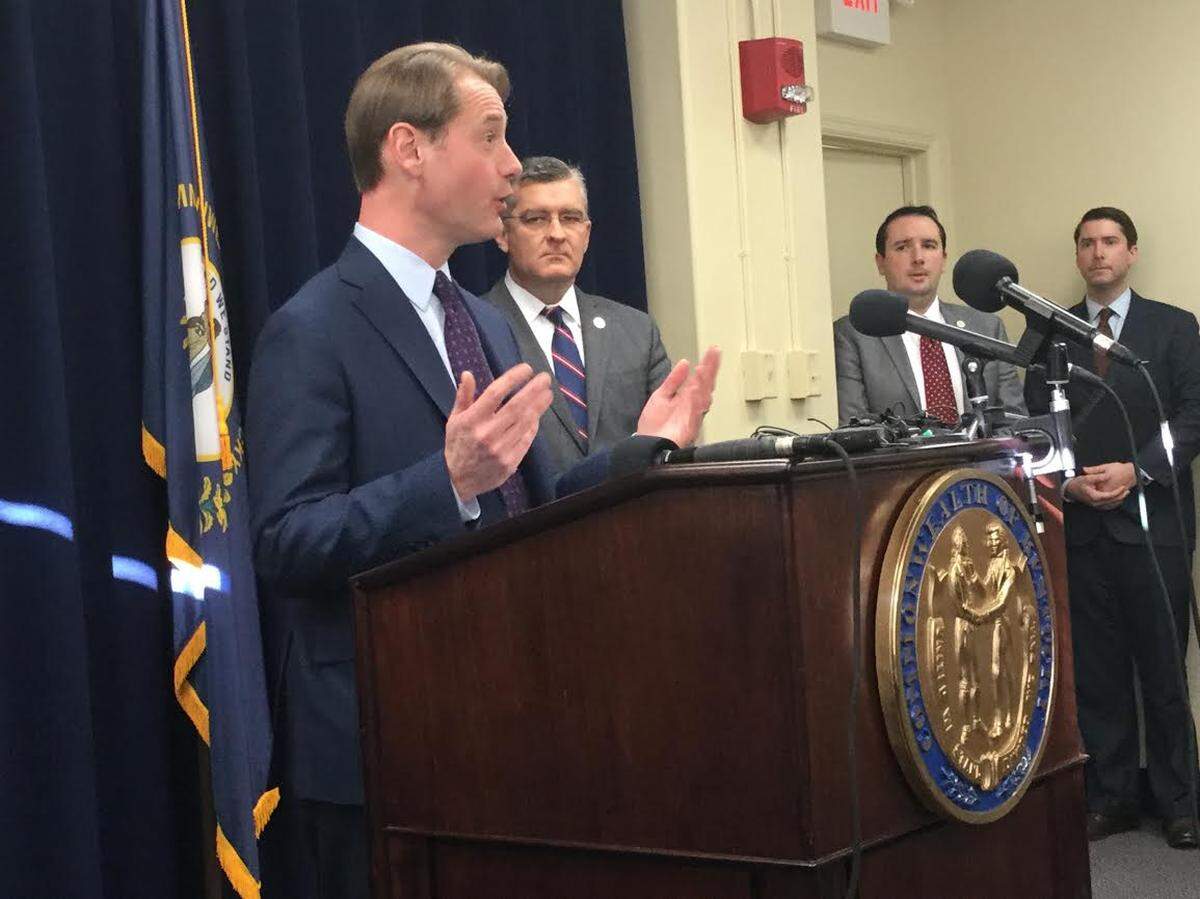
State Sen. Robby Mills, R-Henderson, and Kentucky Secretary of State Michael Adams held a news conference Wednesday to provide details of Senate Bill 2, sponsored by Mills.
The measure is considered one of the priorities in the Republican-controlled Senate in this year’s legislative session that began Tuesday.
Democratic Gov. Andy Beshear said he has not had the chance to fully review the bill, adding “I want to make sure there are not unnecessary roadblocks toward voting.”
Mills said photo IDs already are needed for many daily transactions, ranging from picking up a University of Kentucky basketball ticket at will-call to cashing a check at a bank.
“I believe the requirement of a photo ID to vote increases public confidence in the election process,” he said.
Corey Shapiro, legal director of ACLU of Kentucky, said the bill would unnecessarily restrict voting access, especially for minorities.
“The day after Kentucky celebrated the 100th anniversary of expanding the right to vote to include women, the Kentucky Senate declared it a priority to restrict voting access,” he said in a statement.
He said there is no evidence that in-person voting fraud is a problem in Kentucky.
“Mandating photo identification will exacerbate the difficulties Kentuckians already face when voting, particularly the disabled, minorities, the elderly, and hourly workers,” he said.
Shapiro said 11 percent of all U.S. citizens and 25 percent of African-Americans lack government-issued photo identification.
The bill identifies official photo IDs as those issued by state or federal government or military and public universities.
The lawmaker said his bill provides for a no-fee, personal standard information card for people who are are at least 18 years of age, do not have a valid driver’s license and are eligible to vote.
The bill, Adams said, makes arrangements for people who have no ID to vote on Election Day through a provisional ballot process that requires later confirmation.
Josh Douglas, an election law and voting rights professor at the University of Kentucky College of Law, said in a series of tweets that SB 2 has “too many flaws,” including the provisional ballot process required for voters without a photo ID.
“That means filling out a separate envelope before casting a separate ballot,” he said. “Then — and this is the worst part — the ballot still will not count unless the voter visits the county clerk’s office by the Friday after Election Day. The voters would have to fill out an affidavit there explaining the reason for not having the ID.”
Adams, a Republican, said he did not know how much it will cost the state to provide free photo IDs but expected it would be “in the low six figures.” He campaigned last year on the need for photo voter ID.
Shapiro, though, said the free ID program will prove costly to government and low-income Kentuckians.
“There will also be hidden costs to those needing new identification, such as time and money spent to get the identification and the underlying documents needed to acquire an ID,” he said. “Indiana spent more than $10 million to produce free ID cards between 2007 and 2010.”
He said “the real problem” facing Kentucky voters is restrictive voting policies.
“When enacted, photo ID laws reduce turnout by 2 to 3 percent,” he said. “Additionally, polls are open only from 6 a.m to 6 p.m, and unlike nearly every other state, one needs to have specific excuses to vote absentee. Hourly workers are forced to choose between taking unpaid leave or not voting.”
The measure also would require a photo ID to vote by mail. If a person votes using a mailed absentee ballot, Adams said, the clerk will expect a copy of a photo ID to accompany the filled-out ballot.
Adams said the bill has no emergency clause to make it effective once it should become law. Thus, he said it would not be in effect for the May primary elections but would be up and running before the November general elections if it becomes law.
Douglas said any photo ID law should not take effect until 2021.
“There’s just no way for the state to implement a law like this and ensure everyone has the proper IDs for 2020, especially in a presidential election year with a huge election,” he said.
This story was originally published January 8, 2020 at 3:23 PM.