Beshear’s budget would ‘sweep’ $288 million from agency accounts, raising concerns
To help balance his two-year, $24 billion state budget plan, Gov. Andy Beshear proposes $288 million in “fund transfers” — sweeping money from state-controlled accounts intended for specific purposes, such as environmental cleanup, and dumping it into the General Fund, where it can be used as the governor prefers.
This tactic, a time-honored tradition of Kentucky state budgets, nonetheless is raising concerns on the political left and right. Critics say they worry that Beshear’s sticky fingers would leave some agencies scrambling to meet their obligations with depleted bank accounts.
Waving a copy of the budget bill, Senate budget Chairman Chris McDaniel, R-Taylor Mill, identified $9.3 million in fund transfers from the state licensing boards for nurses, hairdressers, real estate agents, accountants and other occupations. Taking that much of their money makes it likely these boards either will need to raise fees on their middle-class members or else reduce the services they provide, McDaniel said Tuesday.
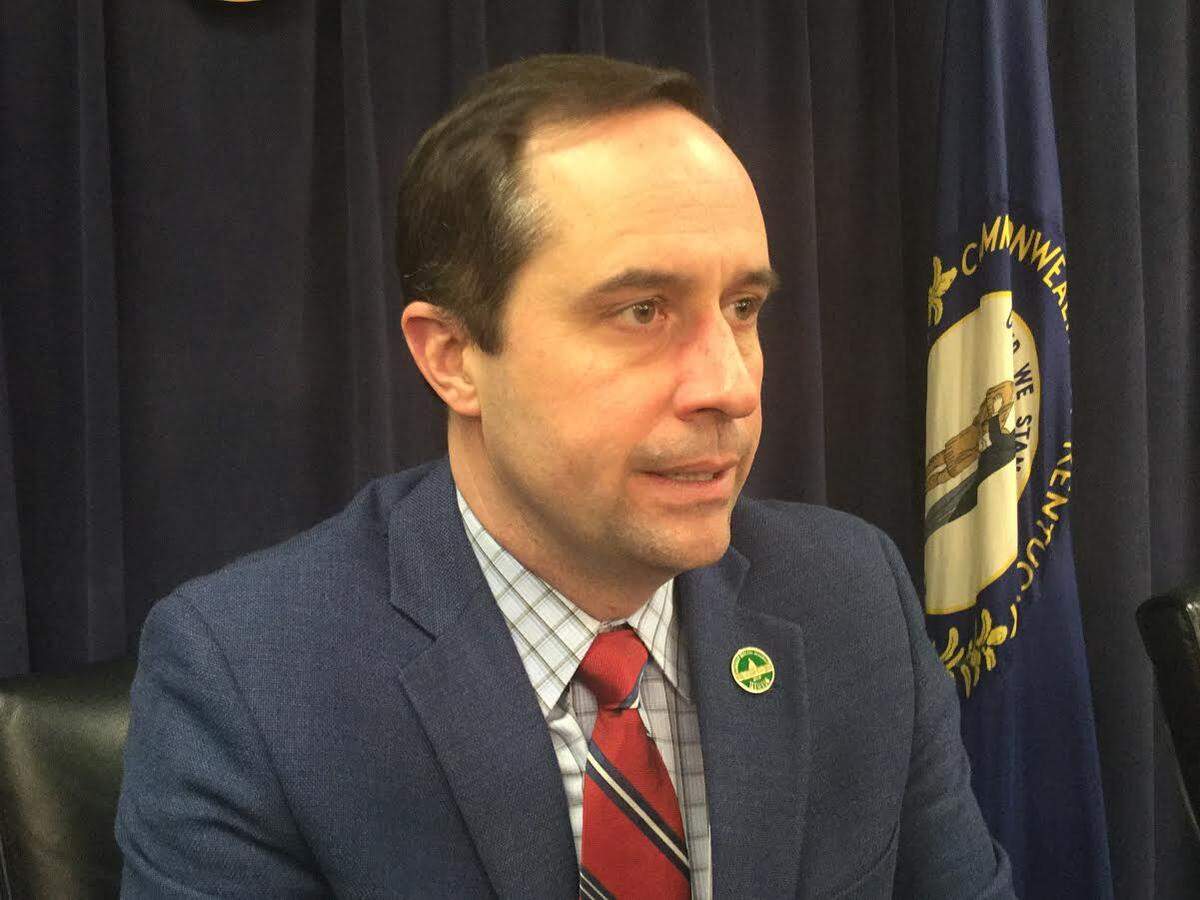
“Ultimately, all of that money still comes from the same source, which is the members’ dues,” McDaniel said. “That should be up to their individual boards, to decide what fees to ask from their members.”
However, the governor’s budget director, John Hicks, told McDaniel’s committee on Tuesday that the sum Beshear recommends sweeping is less than the average of fund transfers in the last 13 state budgets. Former Gov. Matt Bevin, for example, shifted $609 million into the General Fund in Fiscal Years 2017-18 and $622 million in 2019-2020.
The governor’s budget targeted accounts that hold surplus funds, so no state agency should be left unable to function as a result of what they lose to transfers, Hicks told lawmakers. The state licensing boards that McDaniel cited started Fiscal Year 2020 with balances that ranged from 80 percent to 220 percent of their annual spending, he said.
“We looked at areas where receipts on an ongoing basis are in excess of their need, both expressed in their budget requests and their actual spending history,” Hicks said. “There will be no fee increases necessary due to the fund transfers at these boards.”
The Kentucky Resources Council, an environmental advocacy group, has raised its own objections to Beshear’s budget plan because of fund transfers that it says would cripple several important cleanup programs.
The Petroleum Storage Tank Environmental Assurance Fund, which spends about $30 million a year for soil and groundwater remediation at the site of gas stations, would lose $93 million over the next two years, essentially wiping it out, the group said.
The fund is supported by a fee on gasoline and special fuels imported into Kentucky. In 2019, the U.S. Environmental Protection Agency reported 109 new confirmed discharges from underground storage tank sites in Kentucky during the previous fiscal year, with 162 site cleanups completed and 636 sites remaining to be addressed.
Smaller state-run environmental programs — the Kentucky Pride Fund and the Kentucky Waste Tire Fund — also would lose $5.5 million between them to fund transfers, the group said.
“A healthy economy and a healthy people depend on clean air, water and soil,” the Kentucky Resources Council said in a statement. “The proposed budget fails to assure that future for Kentuckians.”
Responding to questions Tuesday, Hicks again said Beshear’s fund transfers would not leave any program unable to function.
While it’s true the Petroleum Storage Tank Environmental Assurance Fund would lose most of its cash to fund transfers, Hicks said, the governor’s budget would replace “a sufficient amount” of that with $50 million over two years from a 20-year bond. About $4 million is included in the governor’s budget for debt service on the bond.
After the hearing, McDaniel said he wasn’t entirely satisfied with Hicks’ explanations.
On the Petroleum Storage Tank Environmental Assurance Fund, for example, “for every gallon of gas that you buy, you pay 1.4 cents into that fund. That is a dedicated fund. And we’re taking a record amount of money from that. As we’re trying to reduce sweeps, this is the biggest one going,” the senator said.
“We’re taking money we’re telling people is going toward cleaning up old gas tanks and old gas stations and we’re putting it in the General Fund,” McDaniel said. “That’s certainly not how we intended that.”
In several instances, Beshear, a Democrat, tapped the same sources for budgetary fund transfers as did Bevin, his Republican predecessor.
The Malt Beverage Education Fund — fueled by an excise tax on beer, to pay for programs that discourage underage drinking — would kick in $1 million under Beshear, just as Bevin proposed in his 2019-20 budget. Another repeat target under both Beshear and Bevin is the School Facilities Construction Commission ($8.8 million).
Still, Beshear left untouched the one popular source for transfers that previous governors have treated like a piggy bank, raiding it for more than $1 billion since 2009: the Kentucky Employees’ Health Plan.
The health plan provides insurance coverage to roughly 260,000 employees of state and local government and school districts as well as dependents. Claims are rising and massive payouts are still underway to the General Fund because of fund transfers required by past budgets, including a $175 million sweep that is due June 30.
All fund surpluses will be exhausted by the end of this fiscal year, according to the health plan’s governing board. The board’s actuarial advisers have urged the creation of a reserve fund equal to 10 percent of anticipated claims, which would require governors and lawmakers to keep their hands off for the next budget cycle or two.
This story was originally published February 4, 2020 at 3:00 PM.