Panel approves bill to move local governments out of ailing Kentucky pension system
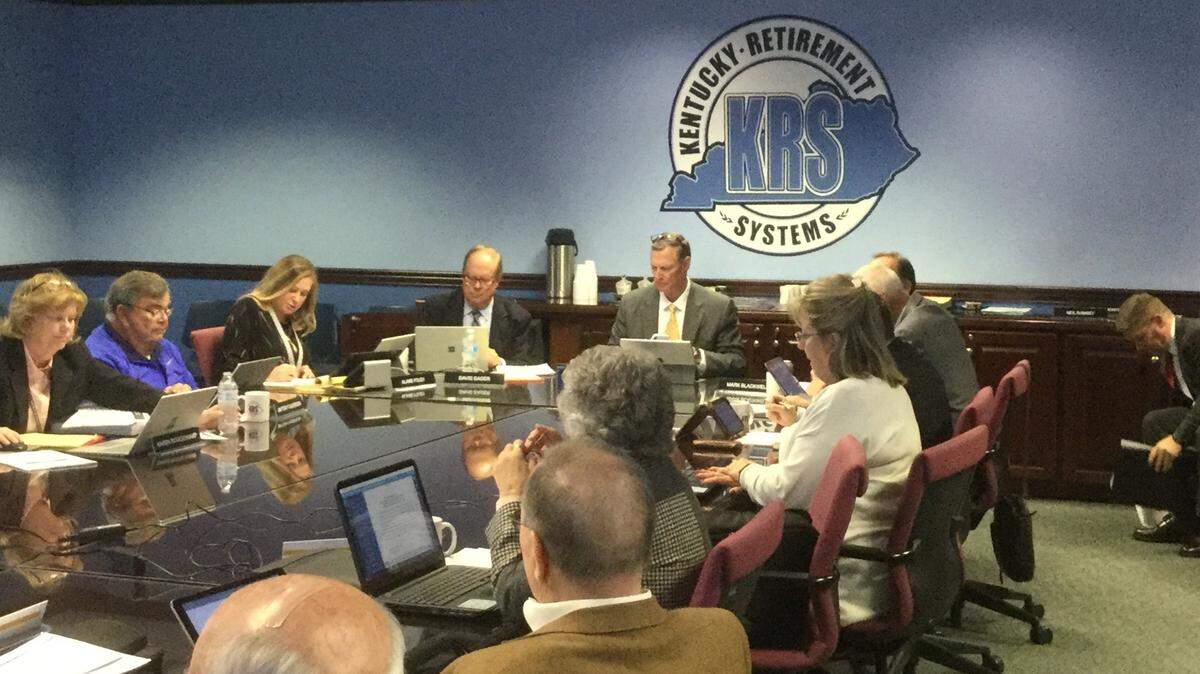
A House committee on Monday approved a bill that could cost millions of dollars a year in order to move Kentucky’s local government pension fund out of the ailing Kentucky Retirement Systems. It’s a longtime goal of city, county and school district leaders who say they want more control over the soaring pension contribution rates set by a 16-member governing board where they only hold three seats.
“We feel this is a very important bill for local government and its employees,” LaRue County Judge Executive Tommy Turner testified to the House Local Government Committee, which sent the measure to the full House.
However, critics told lawmakers the bill would be a boondoggle, pointlessly creating new bureaucracies when a quick reorganization of the existing state pension board could give local governments the stronger voice they seek.
“This plan will increase costs to two of the worst-funded pension systems in the country,” said Jim Carroll, spokesman for the Facebook advocacy group Kentucky Government Retirees. “There is nothing in this plan that even pretends to make the administration of pensions more efficient.”
Local government leaders were upset in 2017 when then-Gov. Matt Bevin’s appointees to the KRS Board of Trustees approved more realistic assumptions about public payroll growth and investment returns to the pension funds, neither of which are as strong as they used to be. An immediate consequence was a rise in the official pension debt and a corresponding jump in contribution rates.
In Louisville last year, when the mayor was unable to raise additional revenue with a tax increase, the city dealt with roughly $20 million in new pension costs by enacting painful spending cuts, including the closure of swimming pools and libraries. Lexington has avoided an equal burden so far because its police and fire employees are enrolled in their own pension fund outside of KRS.
As of last June 30, the primary state government pension fund at KRS that covers 123,027 people was only 13 percent funded. The primary local government pension fund that covers 228,065 people was 49 percent funded — in better shape, but still not healthy.
House Bill 484 would transfer control of the County Employees Retirement System (or CERS) from the $18.4 billion KRS to its own governing board. A smaller KRS board would continue to manage the pension and retiree health insurance funds for state employees and Kentucky State Police.
The two boards each would hire their own chief executive officers but otherwise would share a single staff to manage their daily business, under the control of still another governing board called the Kentucky Public Pensions Authority (KPPA). The CERS and KRS boards would contribute members to sit on the KPPA board. These changes would be effective as of April 1, 2021.
Pension systems in North Carolina, Alabama and Arkansas have a similar management structure where separate governing boards with responsibility for their own investments have one administrative staff, Bryanna Carroll, a lobbyist for the Kentucky League of Cities, told the House committee.
But adding all that new bureaucracy would not be cheap. The estimated start-up expense would be $250,000, followed by up to $6.7 million a year, according to an actuarial analysis prepared for KRS.
Among the costs would be “the loss of buying power” for the shrunken pension funds to “take advantage of economies of scale in negotiating contracts with investment managers, investment consultants, insurance companies and other providers,” according to the analysis. Put simply, the analysts said, the bigger they are, the better a deal pension funds generally can win for themselves.
The House bill has 38 sponsors from both parties, reflecting intense lobbying support from the politically powerful Kentucky League of Cities and Kentucky Association of Counties. The bill would allow both of those groups to help select members of the new CERS board.
As reorganized by Bevin during his term, the 16-member KRS board is dominated by 10 gubernatorial appointees. Six members are elected by public employees, and of those, only three represent CERS members, leading local governments to complain that their interests are largely ignored at the agency.
At Monday’s committee hearing, Sarah Durand of the Bluegrass Institute for Public Policy Solutions recommended that a cheaper solution for local governments would be reorganizing the KRS board to give them more seats, as well as the autonomy to hire their own investment and actuarial advisers for their separately managed pension and retiree health insurance funds.
“We believe these concerns could be much more easily resolved, and without the substantial administrative costs of $6.7 million per year,” Durand said.