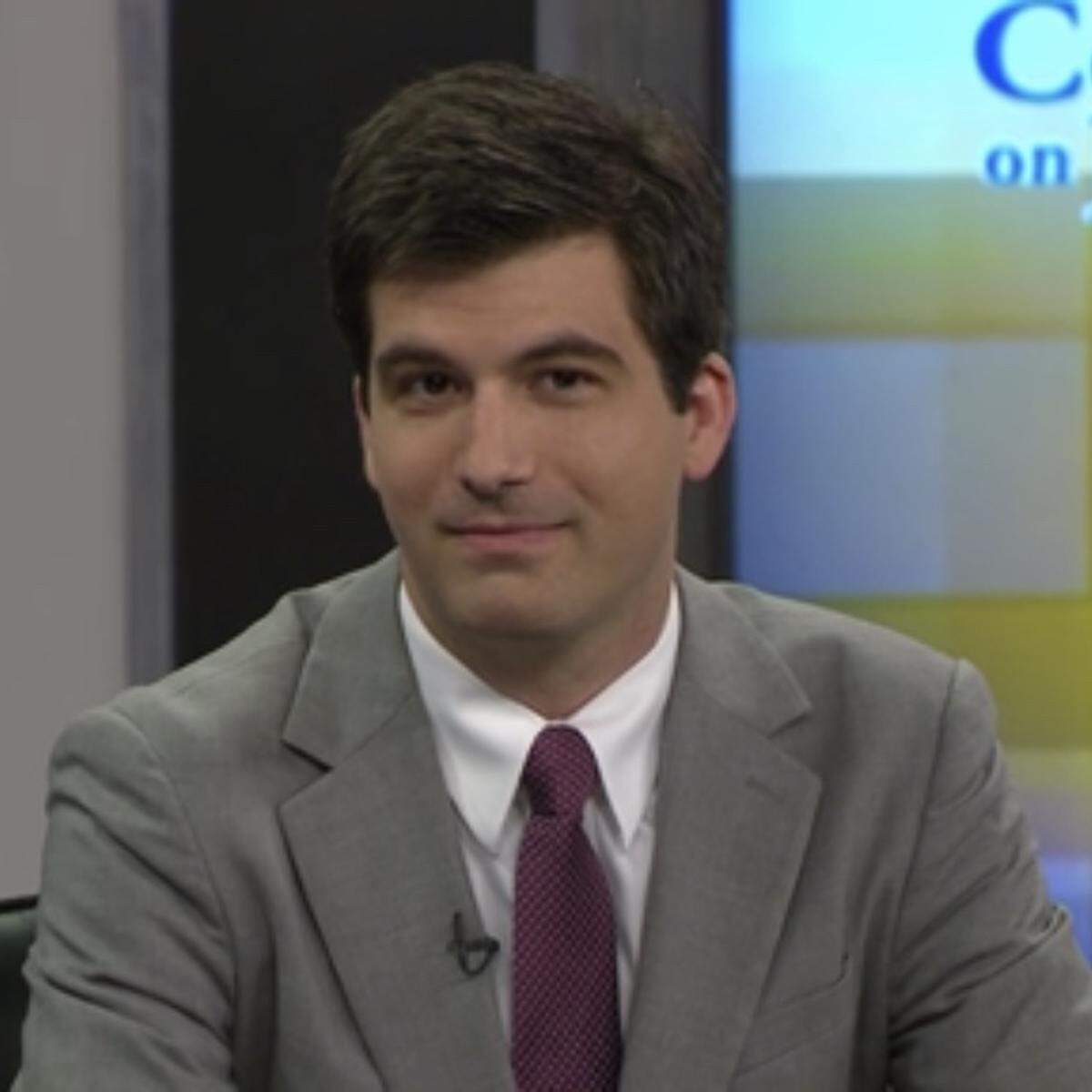
Charles Booker is the Democrat who fits the moment. Is that enough to win?
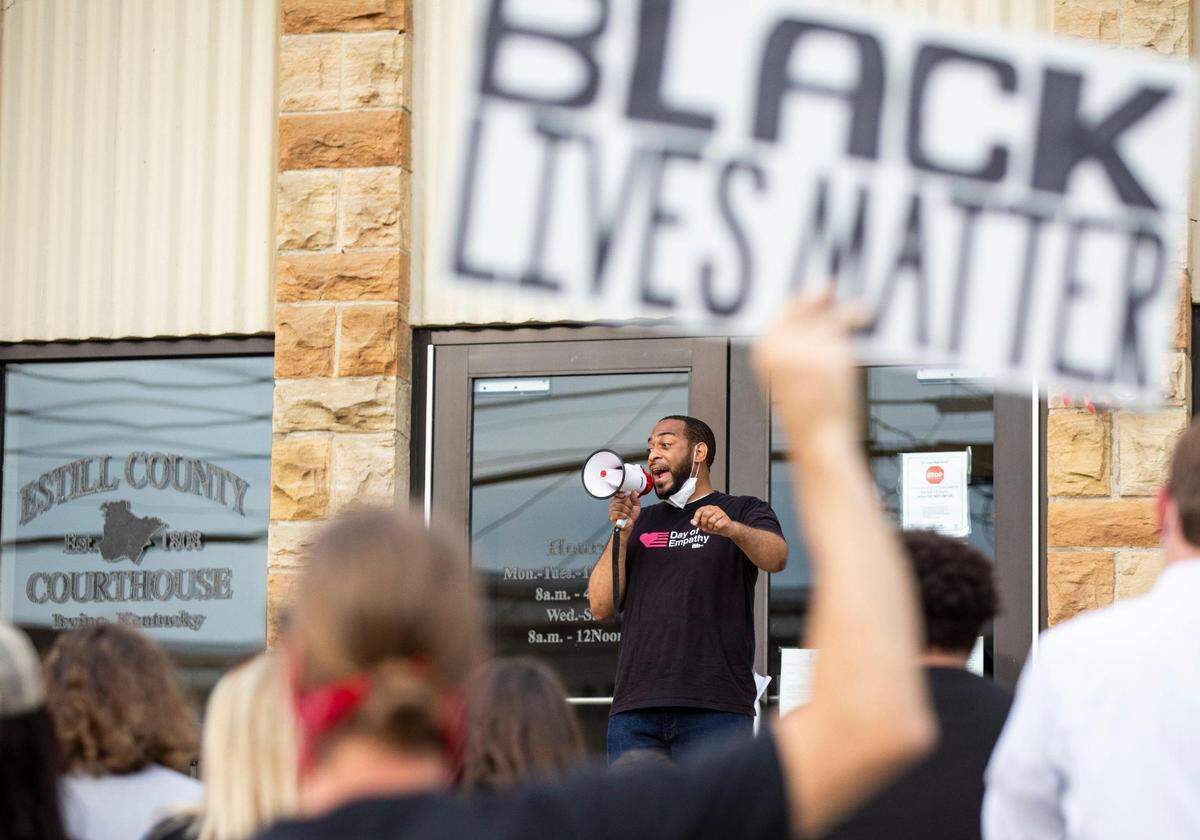
On a sweltering sixth day of protests in Louisville, state Rep. Charles Booker, D-Louisville, stood behind a podium at Jefferson Square Park. There was a microphone, but the sound system hadn’t been set up yet. He turned down a bullhorn offered by a woman standing in the grass behind him, telling the crowd he would do his best to project his voice.
“Having to see all of this from the lens of a young black man from the West End, dealing with a lot of trauma, having a lot of loss and now dealing with the pain that is being expressed and put out into the atmosphere with all of you, I want to do my part,” Booker started. “Not only as an elected official, as a leader locked arms with you, but as your neighbor, as someone who gives a damn about this place. I just want to tell you how things are going.”
A crowd had formed around him. People who had been across the street chanting “no more no-knock,” a reference to no-knock search warrants. People who had been writing the names Breonna Taylor and David McAtee, two black Louisvillians who have been killed at the hands of law enforcement in Louisville since March, in chalk on the sidewalk. People who had been handing out water or just milling around holding signs.
“Let’s be clear, I want to say protest, but this is not a protest, this is an uprising,” Booker said to a cheer. “This is much bigger than just demanding justice, this is us leading for justice. This is us talking about structural issues, getting to the heart of why things are the way they are in our city, across our country and across the world. And I’m just humbled to be one small part of that with you.”
Booker launched his campaign for U.S. Senate in January, about three miles down the road from where McAtee was shot, saying it was “time to be bold.” For months, he has been talking about building a movement — a movement to press for urgent and progressive change.
Now the moment and the movement have collided. Booker’s hometown has become an epicenter of the protests against police violence that have spread throughout the nation — and the freshman state representative has been both on the streets with protesters and on the phone with Louisville Mayor Greg Fischer and Gov. Andy Beshear.
Ahead of the only televised debate before the June 23 primary, Booker had spent the day at an impromptu memorial for McAtee, then went to a press conference with Louisville Mayor Greg Fischer, where he was asked to explain that police officers who shot Breonna Taylor haven’t been fired because of a state law and the Louisville Metro Police Department’s collective bargaining agreement. Instead, he said the city should make an exception in Taylor’s case.
Neither of the two other major candidates in the Democratic primary — former Marine Corps pilot Amy McGrath and Lincoln County farmer Mike Broihier (who was also a Marine) — had attended a protest by June 3. McGrath cited concerns about the coronavirus and Broihier said he didn’t want to appear opportunistic. Broihier, also a substitute teacher, later went to a protest that involved teachers and McGrath attended a protest in Lexington.
“It changes some things,” said Matt Erwin, a Democratic consultant who worked on Adam Edelen’s gubernatorial campaign. “You have a moment where a lot of people in America are realizing that supporting and uplifting black voices and black candidates is important.”
The protests have helped propel Booker into the spotlight, injecting new life into a campaign that had struggled to gain traction. Money, which was hard for his campaign to come by a month ago, has started pouring in. So have endorsements. News outlets are paying closer attention to what he says.
But there are still hurdles to Booker’s campaign — largely the question of whether there are enough progressive Democrats in Kentucky to elect someone who’s platform includes the things Republicans run scare ads about: a Green New Deal, Medicare for All and a universal basic income.
“I would not say it’s too little, too late,” said Stephen Voss, a political science professor at the University of Kentucky. “Elections, when you’re months out or even weeks out are susceptible to change.”
The two schools
There are two schools of thought among Kentucky Democrats about how to win elections.
The first school — or old school — believes a candidate must run as a moderate. This path focuses largely on “finding the common ground” and distancing the candidate from controversial federal issues, especially the culture wars. The most recent iteration of it was run by Andy Beshear in 2019, when he stuck to a script that focused entirely on state issues, basically refusing to talk about President Donald Trump.
As voters in the state have turned increasingly to the Republican Party, that path to statewide election has become increasingly narrow. Beshear was running against a widely unpopular candidate in former Gov. Matt Bevin.
The second school — or new school — believes that Democrats need to run as unapologetic progressive candidates. They say voters want to support candidates who are firm in their beliefs, rather than trying to walk the tricky line of a moderate.
The Democratic primary for U.S. Senate breaks down along these lines.
In the old school, you have McGrath. Since her first campaign in 2018, she has run on the idea of “country over party,” saying she wants to prioritize ideas and not the party they come from. She even has a talking point about being willing to work with Trump on things like lowering drug costs and building more infrastructure.
That approach has been complicated by her first campaign. When she ran against U.S. Rep. Andy Barr, R-Lexington, every ad the Republicans ran closed by saying McGrath was “too liberal for Kentucky.” They played a sound clip of her saying “I am further left, I am more progressive” than anyone in Kentucky.
For the progressive wing of the Democratic Party, that sound clip was great. Then, as she rolled out her Senate campaign in early July and the progressives heard her talking about working with Trump, some began looking for other options.
Enter Broihier and Booker.
Broihier, a Lincoln County farmer, entered the race without any political experience. A jack of all trades with a resume that includes Lt. Col. in the Marines, farmer, teacher and journalist, Broihier began his campaign in July but struggled to attract financial support. He found a niche late in the campaign when he embraced a universal basic income, and with it, former staffers on the campaign of presidential candidate Andrew Yang. Yang’s endorsement soon followed.
Booker got into the race late, launching an exploratory committee in December and officially announcing his campaign days before the January filing deadline. His platform looked a lot like Broihier’s, who had been attempting to court the progressive wing of the party, but Booker became the only person in the race who had actually won an election before — his House seat in 2018.
McGrath’s fundraising machine allowed her to carpet the state with ads, making it appear as if she was the pre-ordained Democrat who would challenge U.S. Senate Majority Leader Mitch McConnell in November. With little money, Booker and Broihier struggled to boost their name recognition and combat that narrative.
That appears to have changed as the nation focuses on police violence against minorities. Booker ran his first television advertisements this week, providing a needed boost for his name recognition.
Booker still appears to face long odds, though, especially since the coronavirus pandemic has made traditional methods of campaigning next to impossible. Also, most people will be casting absentee ballots from home during the next two weeks, making last-minute advertising less effective.
“That method (absentee voting) undercuts the ability of that progressive candidate to make a comeback,” Voss said. “They’re casting their votes before he gets a chance to get his last message across.”
The moment
Amy McGrath fit the moment in her first campaign in 2018. She was a woman — the first woman Marine to fly in an F-18 into combat — in the “so-called” year of the woman. A military veteran among a cadre of female veterans who were vying to help Democrats win the House of Representatives. A newcomer when people were clamoring for change.
The Democrats succeeded, but McGrath did not. Since then, the political world has turned through impeachment, a pandemic and protests opposing police violence against black people that have spread as far as Hazard and Murray, creating an increased sense of urgency among Democrats.
McGrath has put out statements supporting the protests and has called for a statue of Confederacy President Jefferson Davis to be removed from the state Capitol Rotunda. She hasn’t, though, been on the front lines of protests in the same way as Booker.
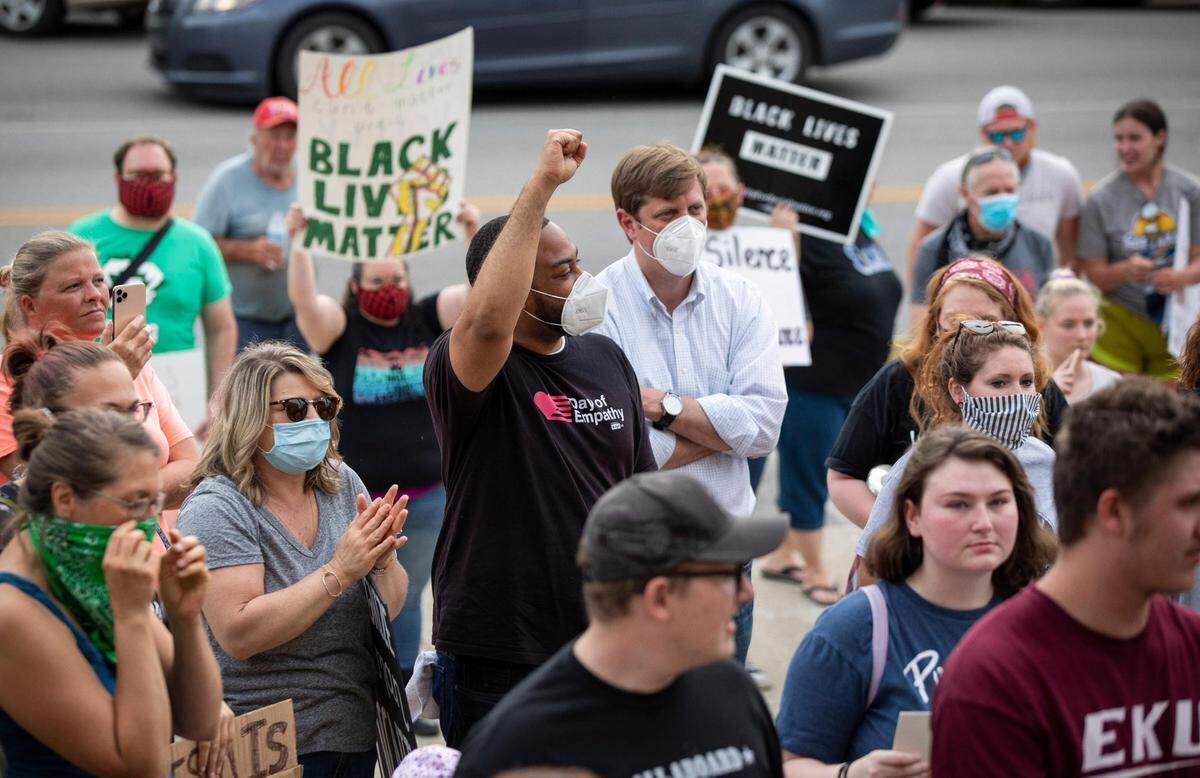
“She plays it too safe,” said Tiffany Robinson, 50, who was attending the protest in Louisville. “I would like her to speak out more boldly. The time for placating and spending time and talking is over. This is our time, this is our moment in history to really make a change, to step out and be anti-racist.”
Yet Robinson said she was still likely to vote for McGrath because she feels McGrath has a better shot at beating McConnell in November.
“I love Charles Booker, but I really want to get a Democrat that I know is going to be able beat Mitch McConnell,” Robinson said. “And so unfortunately I know that in a state like Kentucky, Mr. Booker has a really tough road to go.”
The same electability argument played out in the Democratic primary for president, where Joe Biden (who McGrath endorsed) won the nomination over several more progressive candidates in the field, including Bernie Sanders (who Booker endorsed).
“People tend to underestimate how large a portion of the Democrats in the state are not progressive,” Voss said. “That provides a pretty solid anchor for McGrath. I don’t think that anything that’s happened this past week has done anything to change the large mass of voters throughout the state.”
There have been few tests of whether a progressive Democratic can win a statewide election in Kentucky. Most of the Democrats who have made it out of a primary over the past decade have belonged to the moderate wing of the party.
“Eventually, you have to build a coalition,” Voss said. “There’s not enough of these progressive voters to win by themselves.”
When Booker is asked about what he’s doing to build coalitions across the state, he offers a line about how he grew up in the poorest zip code in the state and that he has more in common with people in Appalachia than some might think.
“I know what it means to feel invisible,” Booker said. “To feel like nobody listens to you or cares about you. And the reason I have to answer this question so much is because no one pays attention to my neighborhood.”
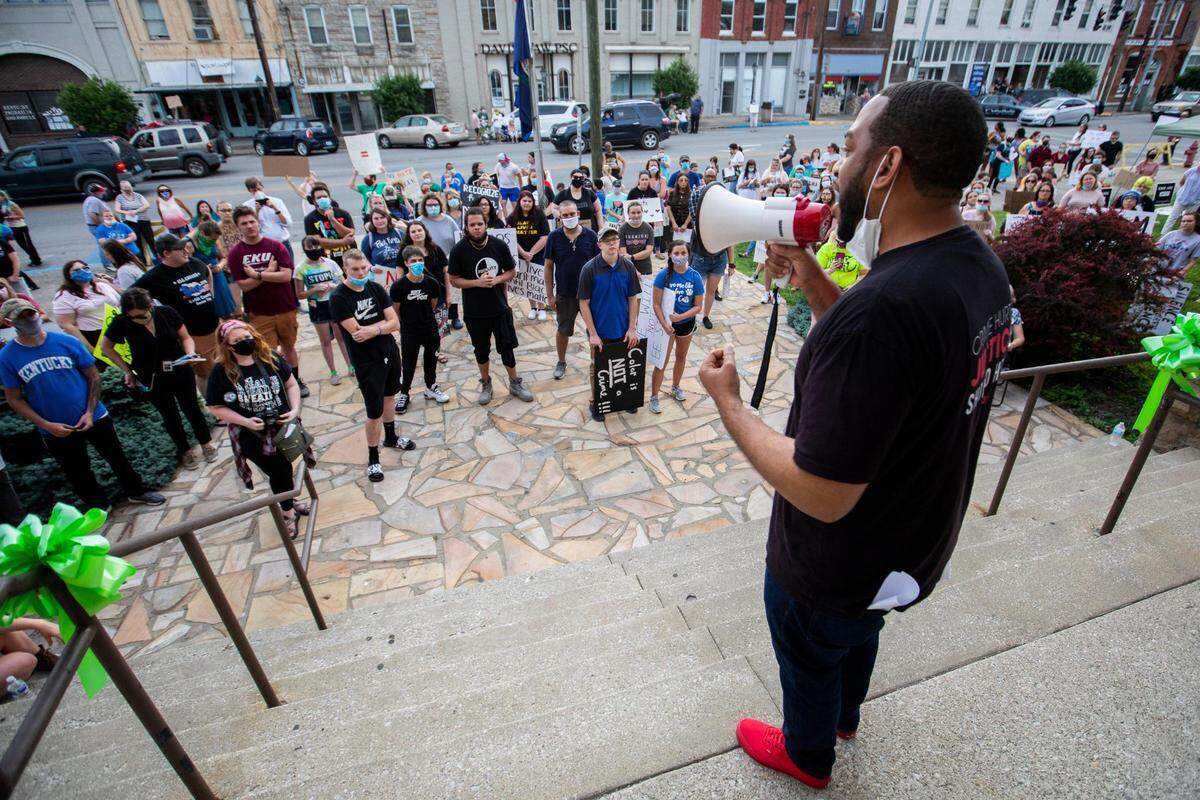
Booker eventually got a megaphone in the park last Wednesday. As he talked about the role he had played as liaison between the protests and Louisville Mayor Greg Fischer, Booker finished by telling the crowd that he saw them and that he loved them. He was looking out at about 100 people, mostly white, all with a fist raised in the air.
He’s no longer invisible.
“If Charles Booker’s campaign is not successful, he’s going to have a lot of leverage to influence the positions of the winner,” Erwin said.
This story was originally published June 10, 2020 at 11:28 AM.