Lexington council moves closer to restoring cuts to shelters, nonprofits and housing
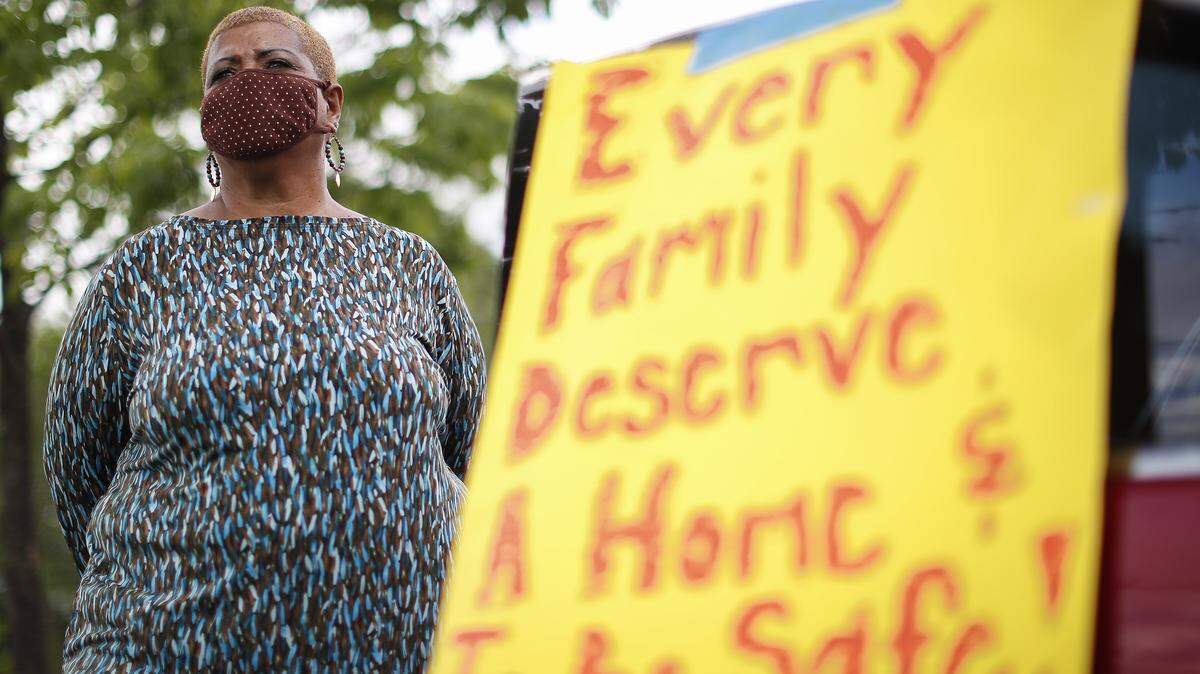
The Lexington council inched closer Thursday to restoring millions of dollars in funding to homeless shelters, social service agencies and affordable housing.
Many on the 15-member council expressed support for restoring funding to $2.1 million for the extended social resource grants that typically go to more than 30 nonprofits, including shelters for domestic violence victims, women and children.
But the question of when to restore those cuts and a $1.8 million reduction to the affordable housing program was the center of a marathon six-hour council meeting Thursday.
The council will meet again Tuesday to take final votes on how to restore some of that funding and possibly fund more economic development and small business programs to help Lexington businesses hurt by the coronavirus pandemic.
The council is also likely to vote Tuesday on proposed reductions to the council’s $3 million budget, including cuts to its food and travel budget.
Lexington Mayor Linda Gorton proposed a lean $372 million budget for the fiscal year that begins July 1 as the city’s revenues have cratered due to business-related shutdowns caused by the coronavirus pandemic.
To make up for a predicted $40 million revenue shortfall, Gorton proposed taking $30.2 million from various city savings accounts, including $13.6 million from a $35.6 million economic contingency fund and $9.4 million from an $11 million reserve fund for increased pension payments into the state’s beleaguered pension fund.
Gorton is also proposing an additional $12.6 million in cuts across city government and $6 million in cuts to outside agencies.
The $6 million in cuts to outside agencies includes $2.1 million in cuts to the extended social resources grant program, which has traditionally funded shelters for women, children and men. Gorton’s budget also would cut $400,000 from the Office of Homelessness Prevention and Intervention and $1.8 million from the affordable housing program.
The cuts to social service agencies, homelessness and housing programs drew fire from many advocates and some on council.
The city learned last week that it would be eligible for up to $25 million in funding through federal coronavirus relief money. But those funds can only be used for COVID-19 related expenses. The money cannot be used to make up for revenue shortfalls.
The city will have an estimated $5 million in COVID-19 related expenses from March to May 30 eligible for reimbursement, city officials said. That means $5 million would be available to spend elsewhere.
On Tuesday, Gorton recommended that reimbursement money be used to fund the grant program for nonprofits and restore cuts to affordable housing and homelessness. She also recommended the remaining funds go back into the city’s economic contingency fund.
Tyler Scott, Gorton’s chief of staff, said during Thursday’s meeting that it’s not clear when the city will get the reimbursement money. The money could arrive within three to four weeks — in July or August — after the city submits information to the state Department of Local Government, which is overseeing city COVID-19 reimbursements.
Some council members said during Thursday’s meeting they would prefer to wait until that reimbursement money hits city accounts before allocating it to restore cuts to programs.
“I would like to see this money in hand,” said Councilwoman Susan Lamb. “We don’t know how this is going to play out.”
Councilman Fred Brown agreed.
“I would like to have the money first,” Brown said.
But others on council said many nonprofits may not be able to wait until July or August for the city to free up funding.
Instead, the council should use money from the economic contingency fund to restore those funds, some said. The city’s COVID-19 reimbursement money could go back into its economic contingency fund, replacing funds that were taken out, said Vice Mayor Steve Kay.
Councilwoman Kathy Plomin, a former executive with the United Way of the Bluegrass, said most nonprofits operate on razor-thin budgets.
“It’s month to month,” Plomin said.
Polly Ruddick, executive director of the Office of Homelessness Prevention and Intervention, said the shelters — including the Salvation Army, Arbor Youth, and GreenHouse17 — have told her their budgets have been decimated. Those shelters have spent a lot to house people during the COVID-19 pandemic without reimbursement. Those shelters are traditionally funded through the $2.1 million extended social resource grants.
“They are very cash-strapped,” Ruddick said. “They won’t be able to wait.”
Kay also proposed temporarily tapping the rainy day fund to restore $1.8 million in cuts to the affordable housing funds. Once the city gets its COVID-19 reimbursement money, those funds can be restored to the rainy day fund, he said.
Gorton’s proposed budget would give $200,000 to the affordable housing fund, which has received $2 million annually since its creation in 2014. That money coupled with $400,000 in other money will fund one project. Kay said an additional $1.8 million would fund three different projects providing 800 affordable housing units.
Some of those projects have already qualified but have not yet received affordable housing tax credits. In total, the four projects will bring in $146 million in total funding and create much-needed construction jobs, Kay argued.
“We typically spend $8,000 a unit,” Kay said. “This would be $3,000 per unit.”
Councilman James Brown said he supported the move to restore money to the affordable housing program.
“The need for this is only going to grow out of the pandemic,” Brown said. “This has been a valuable investment in our community. And our community has made it clear they think it’s a valuable investment.”
Kay and others have also advocated for restoring $400,000 to the Office of Homelessness Prevention and Intervention. The office would receive $350,000 under Gorton’s budget but has typically received $750,000. Programs that will be eliminated if funding is not restored include a medical respite program that cares for people who are discharged from hospitals without a place to go or homeless people who become ill. A program that helps people manage their money so they can live independently will be cut to 60 people, Ruddick said.
Other programs the council will consider funding Tuesday include $2.5 million for a program that would give grants to Lexington small businesses for reopening costs. Those costs could include back rent, payroll and the purchase of protection equipment. Many of those businesses are in danger of failing now, said Councilman Preston Worley, who pushed for the funding Thursday.
The city’s budget is dependent on taxes on wages and profits. If people don’t return to work and businesses don’t make profits, the city’s revenues will continue to plummet, Worley argued.
Councilman Fred Brown said he applauded Worley’s creativity but opposed the program. The federal and state governments have small business COVID-19 related relief programs. Some have been controversial including the payroll protection program, he said.
“It’s so complex,” Brown said. “It’s not working very well for the federal or state government.”
Others supported the initiative.
The council may also vote Tuesday to cut the council’s $3 million budget to fund other programs.
Councilman Richard Moloney proposed cutting $50,000 from the council’s budget, Those cuts include eliminating $5,000 for food, $5,000 for conferences and travel and $38,000 for professional services that the council hasn’t needed in years.
Councilwoman Angela Evans proposed steeper cuts. Individual council members currently have $8,500 for the neighborhood development grants that typically go to neighborhood associations, PTAs and other nonprofits in their council districts. Evans proposed cutting that individual allocation to $5,000. That would save $52,500. Evans also proposed removing $2,000 from each council member’s budget for travel expenses.
That $2,000 was typically used by council members to go on the Commerce Lexington leadership visit to other cities.
Evans said every other department in government has taken a cut. The council’s proposed budget was the same as the current-year budget. The council needs to show it is sharing in the pain, she said.
“We are in a different time,” Evans said. “We have to make the same sacrifices.”
This story was originally published May 29, 2020 at 7:19 AM.