Republican Rule: GOP claims 75 of 100 seats in Kentucky House and 30 of 38 in Senate
When Tom Buford of Nicholasville was sworn in as a member of the Kentucky Senate on Jan. 8, 1991, he was in the minority. His Republican Party was badly outnumbered in the Senate: 25 Democrats to 13 Republicans.
The political picture was no better for the GOP in the House of Representatives at the other end of the Capitol’s third floor. Democrats were in control there, 72 to 28.
In his years as a Kentucky legislator, Buford has seen a steady erosion of Democratic clout in the General Assembly. What little Democratic clout that remained washed away Tuesday in a deep red tsunami.
In unofficial results released Friday from this week’s elections, Republicans will have 75 members in the House to Democrats’ 25 and enjoy a 30-8 advantage in the Senate when the next General Assembly convenes on January 5.
The Senate is expected to have no Democratic members west of Elizabethtown and the House will have only one.
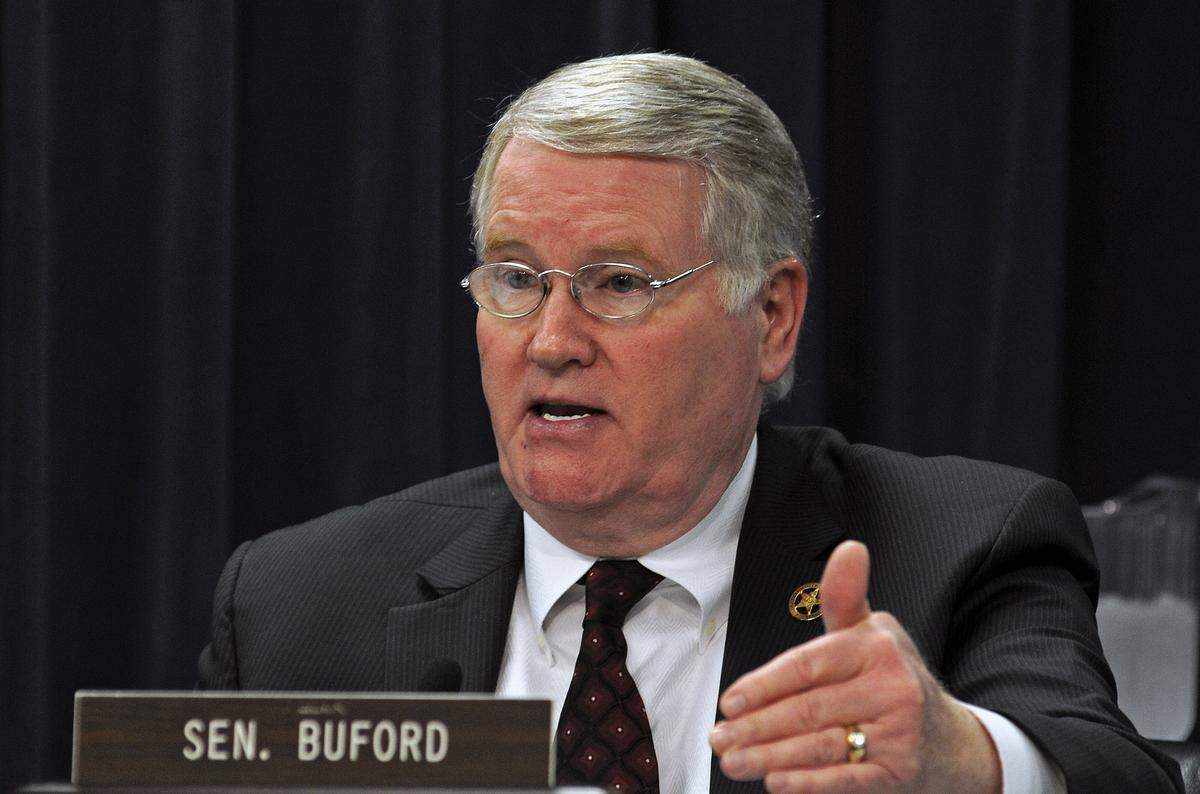
It will be as if the Kentucky Republican Party has moved its headquarters from 105 W. Third St. in Frankfort to the third floor of the Capitol, said Buford.
“We will have complete say in legislation and are likely to keep the chambers for at least several more years,” he said.
In Tuesday’s elections, Senate Republicans gained two long-held Democratic seats.
In Central Kentucky’s 7th District anchored by Frankfort, Republican Adrienne Southworth, who was deputy chief of staff for former Lt. Gov. Jenean Hampton, was victorious in replacing Democrat Julian Carroll, a former governor, who did not seek re-election this year.
And Senate Minority Caucus Chair Johnny Ray Turner lost his seat to Republican Johnnie L. Turner, a former state representative, in southeastern Kentucky’s 29th District.
House Republicans expect to add 13 new faces to their caucus, including Killian Timoney, who defeated Democrat Shirley Mitchell in a Lexington seat left vacant by retiring Republican Stan Lee.
Republican candidates in the House knocked off six Democratic incumbents and won seven seats left vacant by Democrats not seeking re-election.
From the minority to the majority party
Republicans now rule the House and Senate with their largest membership numbers in a century. With at least 60 percent of the membership in both chambers, the GOP has what is called a super majority. That allows the party to pass tax legislation in odd-numbered years and constitutional amendments without any support from the minority party.
The GOP has come a long way.
According to the Legislative Research Commission, Democrats controlled the House 80-20 and the Senate 30-8 in 1974.
Republicans started chipping away at Democratic legislative control in the 1990s. They took over the Senate in 2000 and the House in 2016.
Buford said national politics was a factor in Democrats’ losing ground in the state legislature, notably in the administrations of Bill Clinton from 1993 to 2001 and Barack Obama from 2009 to 2017.
He also said the 1990 Kentucky Education Reform Act “did not help Democrats, not with the school reforms enacted but with the $1.3 billion tax increase that accompanied it.”
Republicans also gathered political ammunition, he said, with conservative Christians by opposing creation of the Kentucky Lottery in 1989 and the Kentucky Health Care Reform Act of 1994 that redefined the state’s insurance market.
The Kentucky legislature has “never been a place known for wild-eyed liberals. Our Democrats have been mostly conservative but Republicans got even more conservative over the years and the people joined in,” said former state Rep. Brent Yonts, a Greenville Democrat who was in the House from 1997 to 2016.
Former House Speaker Greg Stumbo, D-Prestonsburg, joined the House in 1980. He served until 2004, when he became the state’s attorney general through 2008. He returned to the House and was speaker until 2017.
“When I started in the legislature, the House had 16 or 17 Republicans and the Senate one or two,” said Stumbo. “It definitely has shifted. Nothing is forever in politics. Our democracy is predicated on change.”
Stumbo said the Republican shift has happened in legislatures across the South.
“I think what happened is that the people were talking ‘God, guns and gays’ and Democrats didn’t take it seriously. Republicans pounced on that and still are. President Trump, quite a showman, took advantage of trying to use Christians.”
Today, said Stumbo, more and more Kentuckians are voting for a party instead of a person.
“You have a hard-working, friendly legislator like Johnny Ray Turner, a Democrat, and he gets beat,” he said. “I understand many ballots in that race were straight party tickets. “
Stumbo said many people have told him since he lost his House seat in 2016, “We like you, have nothing against you, but we’re going with the Republicans.
“We have good candidates but it’s the party that has to formulate a new plan.”
Kentucky Senate President Robert Stivers, R-Manchester, said Friday in a Frankfort news conference with U.S. Senate Majority Leader Mitch McConnell, R-Louisville, and state House Speaker David Osborne, R-Prospect, that Kentucky “wants to go in a direction we want to move in.”
“The people have said loudly they want Republican control of the state legislature,” said Osborne. “We plan to do that.”
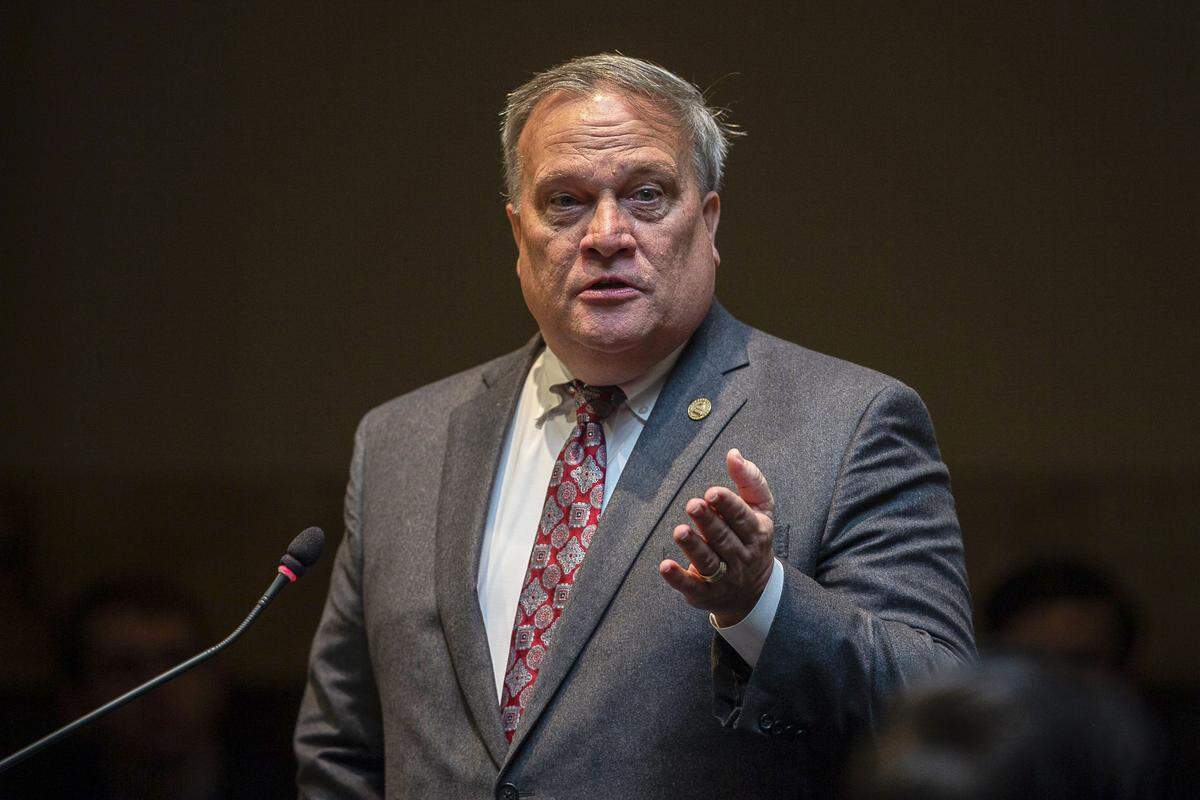
That will translate into more conservative laws from the legislature, especially on issues like abortion and guns.
Big in Republican lawmakers’ aim is Gov. Andy Beshear, a Democrat. They have sharply criticized him for not including them when formulating restrictions to curb COVID-19 in Kentucky.
Still, a poll in late October by Spectrum News/IPOS showed that 66 percent of Kentuckians support Beshear’s handling of the virus.
How long will GOP domination last?
Republican control of the Kentucky General Assembly is expected to continue at least several more years, especially since GOP lawmakers will get to redraw the boundaries of legislative districts more to their liking based on this year’s census data.
Stivers said redistricting may occur in the 2021 legislative session “if the population figures are ready. If not, we will tackle the issue in 2022.”
Republicans in the state House will then get their first shot in a century at redrawing legislative lines. The Republican-led Senate got to redraw its district boundaries in 2012.
Buford noted that the GOP this summer lost its first Senate race in 10 years in a special election to fill the seat of retiring Republican Ernie Harris of Oldham County. Louisville radiologist Karen Berg defeated Republican businessman Bill Ferson.
“We will take care of that district in redistricting and bring it back to the Republicans,” said Buford.
What can Democrats do?
Retirng state Sen. Carroll said it’s time for Kentucky Democrats to “look at becoming more middle-of-the road,” especially on the issues of abortion and guns.
“I have been suggesting for 12 to 15 years that Kentucky Democrats consider an organization like the Democratic Leadership Council for conservative members of the Democratic Party,” said Carroll.
The DLC was a non-profit founded in 1965 that said the national Democratic Party should shift away from the leftward turn it took in the late 1960s, 1970s and 1980s. The idea was to win back middle-class voters and it touted Clinton’s presidency.
“Kentucky does not agree with the national Democratic Party and it is time to create a companion party to allow members to be conservative on issues like abortion and guns,” Carroll said.
The former governor said he realizes some Democrats will disagree with him, “but if we don’t do something we are going to continue to lose.”
Carroll said he plans to devote his life after the legislature to create such an organization for the Democratic Party.
Republicans have tried and “have been quite successful in trying to paint all Democrats as ultra-liberals,” said Carroll. “I know many Democrats who are conservative on social issues. The Democratic Party has to find a place for them.”
“Our party now has one foot in the casket. If we don’t do something, you can throw in the whole body,” he said.
This story was originally published November 6, 2020 at 3:51 PM.