‘We didn’t win anywhere.’ After election shellacking, can KY Democrats save themselves?
Kentucky Democrats got shellacked in this month’s election.
President Donald Trump won the state by 26 percentage points. Senate Majority Leader Mitch McConnell won by 20 percentage points. Republicans now hold a 75-25 super majority in the Kentucky House of Representatives and a 30-8 super majority in the Kentucky Senate.
That is the challenge that awaits Colmon Elridge, the new chairman of the Kentucky Democratic Party.
“The truth is, Republicans have cleaned our clock in ways we need to understand,” Elridge said. “And I think the sooner we can do that, the better we can turn the corner and begin to do the things that I hope and believe will lead us to success.”
Elridge, from Scott County, is taking the helm of a Kentucky Democratic Party at its weakest point in more than a century. Looking out at a more polarized electorate than ever — where Trump accelerated an exodus of rural Democrats, restructuring the party alignment in the Eastern part of the state — Democrats have to figure out a way to claw back into relevancy.
For four years, Democrats have pledged that they would rebuild the party. They’ve held summits. They’ve formed PACs. And in that time they’ve lost seats in the legislature and Gov. Andy Beshear and Lt. Gov. Jacqueline Coleman are the sole statewide elected Democrats, in what may have been an anomaly, winning a tight race against the historically unpopular former Gov. Matt Bevin.
It is a long road. From rebuilding a bench of candidates to rehabilitating the image of Democrats in an era of partisan social media, one where many voters are still rejecting evidence that Joe Biden is the President-elect.
Part of the solution, Elridge said, will be to take lessons from Republicans. Lessons about messaging, lessons about organizing at the local level and lessons about recruiting candidates.
“The Republicans have honestly tapped into something,” Elridge said. “And I can both respect their political acumen while being opposed to a good chunk of what they stand for politically. The two are not mutually exclusive.”
But in order to rebuild the party, Democrats will first have to figure out their identity. After years of being portrayed by Republicans as socialist, anti-gun, ant-religion baby killers that look down on middle America and care more about political correctness than helping people get good jobs, Elridge said it’s time to push back.
“We first have to figure out, as a party, what our value set is, what our vision is,” Elridge said. “And I think that will greater inform how we message that and how we engage in those conversations across the commonwealth.”
A rural exodus
One thing is clear — Democrats have lost rural America.
And, because Kentucky is a rural state, that means the Democrats have largely lost Kentucky.
“It’s going to be a battle for the hearts and minds of the people in rural communities,” said Rep. Angie Hatton, D-Whitesburg, when asked about how the party rebuilds.
Hatton is one of two Democrats left in the House of Representatives from Eastern Kentucky, a one-time Democratic stronghold. She said after seeing the results of November’s election, she thought a lot about whether the party should just abandon the rural areas and focus on more urban areas of the state, where more Democrats live.
But, the more she looked at the results, the more she realized Democrats lost everywhere. They lost seats in Louisville and failed to pick up seats in Lexington. They struggled in Northern Kentucky and Western Kentucky; in urban, suburban and rural districts.
“We didn’t win anywhere,” Hatton said. “The way I can explain that for this particular election is the Trump factor.”
Trump has excelled at a type of identity politics, one where he has appealed to rural Americans who like his brand, his persona and who feel like they’re heard by him.
It isn’t Trump alone. Republicans, as a whole, have focused their message on rural America.
Elridge said Republicans intentionally created an image of liberals — one intended to make Democrats seem out of touch with the rural parts of the country.
“We’ve been kind of assigned this latte liberal,” Elridge said. “Almost every person running this cycle got a mailer that had them and Nancy Pelosi like they had just gone out to a bar when I guarantee you none of those folks have ever met her and she doesn’t know who any of them are.”
Much of the political messaging of the Trump era has been about “us versus them.” He positioned himself as the man representing the little guy, who was sent to Washington D.C. to break up a system that wasn’t helping rural America.
“They have been able to convince rural Kentuckians that the biggest threat to our lifestyle is immigration,” Hatton said. “They (voters) manage to forget that their votes will affect their access to healthcare, access to education, access to unions. Those are the things that always mattered to Eastern Kentucky.
Hatton said the Republican messages have been reinforced by the churches, who have helped put abortion front-and-center in the political discussion (she pointed out that she’s had to vote on 15 abortion bills and that all of her votes have been pro-life).
Teri Carter, a progressive columnist who lives in Anderson County, said the political topics the people in her community are most focused on are the ones that play to fear: abortion, guns and immigration.
“No, Democrats do not kill babies at full term,” Carter said. “We have to stand up and say that’s nonsense.”
Carter said she has hope that with Trump out of office, the political conversation will be dialed down and less intense, which may help people have better conversations about the issues. But she also said Democrats can’t only focus on policy and ignore some of the fears the national Republican Party has stoked in rural communities.
“They don’t want to talk about policy,” Carter said. “They think about what they’re afraid of.”
Big-tent party, small crowd
Rural Kentuckians are not a monolith.
Take, for example, the fact that there were Black Lives Matters protests in Anderson County (Trump 72.9%, Biden 25.3%), in Estill County (Trump 78%, Biden 20.7%) and Calloway County (Trump 65%, Biden 33.2%).
“I don’t believe it’s a monolith at all,” Carter said. “I think there’s a fantasy on the Trump Republican side that it is a monolith.”
But figuring out how to make inroads with rural Kentuckians — while not alienating reliable Democratic voters in Kentucky’s cities — is one of the biggest challenges facing the party.
While Hatton’s anti-abortion rights stance may be the thing that helps her maintain her seat in the House of Representatives, it could also make it challenging for her to ever win a Democratic Primary in a statewide election.
Former House Minority Leader Rocky Adkins, another pro-life Democrat, won Eastern Kentucky handily in the Democratic Primary for Governor in 2019, but struggled in Louisville.
After Democratic nominee Amy McGrath lost to McConnell by 20 percentage points, some in the Democratic Party argued that there was no point in running a centrist candidate statewide, even though she outperformed Biden.
“What have we gotten running centrist candidates?” Carter asked. “We lost by 20 points. People are looking for courage of conviction.”
Carter mentioned state Rep. Charles Booker, D-Louisville — who captured enthusiasm and excitement in the Democratic primary for U.S. Senate in June, only to fall short of McGrath — as the type of candidate who can win people over with his convictions.
One of Booker’s key messages was that Democrats shouldn’t shy away from the ideas and policies Republicans use to tie them to the national Democratic Party.
Beshear’s campaign tested that theory when he ran against Bevin, accepting an endorsement from the abortion rights group NARAL right before the Democratic primary instead of avoiding the issue. Bevin’s campaign tried to emphasize abortion during the campaign — at one point holding a press conference to accuse Beshear of accepting “blood money” by taking donations from the owner of EMW Women’s Clinic in Louisville. In the end, Bevin’s unpopularity outweighed Beshear’s stance on abortion.
For Hatton, she believes there is still room in the party for Democrats who are pro-life and support the Second Amendment (Hatton joked that when people say Democrats want to take their guns she says she doesn’t need to because she has her own). She says she’s a Democrat because she believes her party is the one that stands up for poor people and the disenfranchised.
“I believe a pro-life Democrat is the best thing for my community,” Hatton said. “And if I didn’t believe that, I would get out of the way.”
To her, the key is in messaging: combating the Republican message that Democrats want to kill babies and take your guns, while defining Republicans on issues like healthcare, education and taxes.
“We’ve never been able to show the distasteful things that apply to Republicans,” Hatton said.
Along with glaring holes in the party — like the relatively few Democrats holding statewide positions, the lack of cohesive messaging and the baggage of national Democrats — Elridge will have to figure out how to keep a small crowd happy under a big tent.
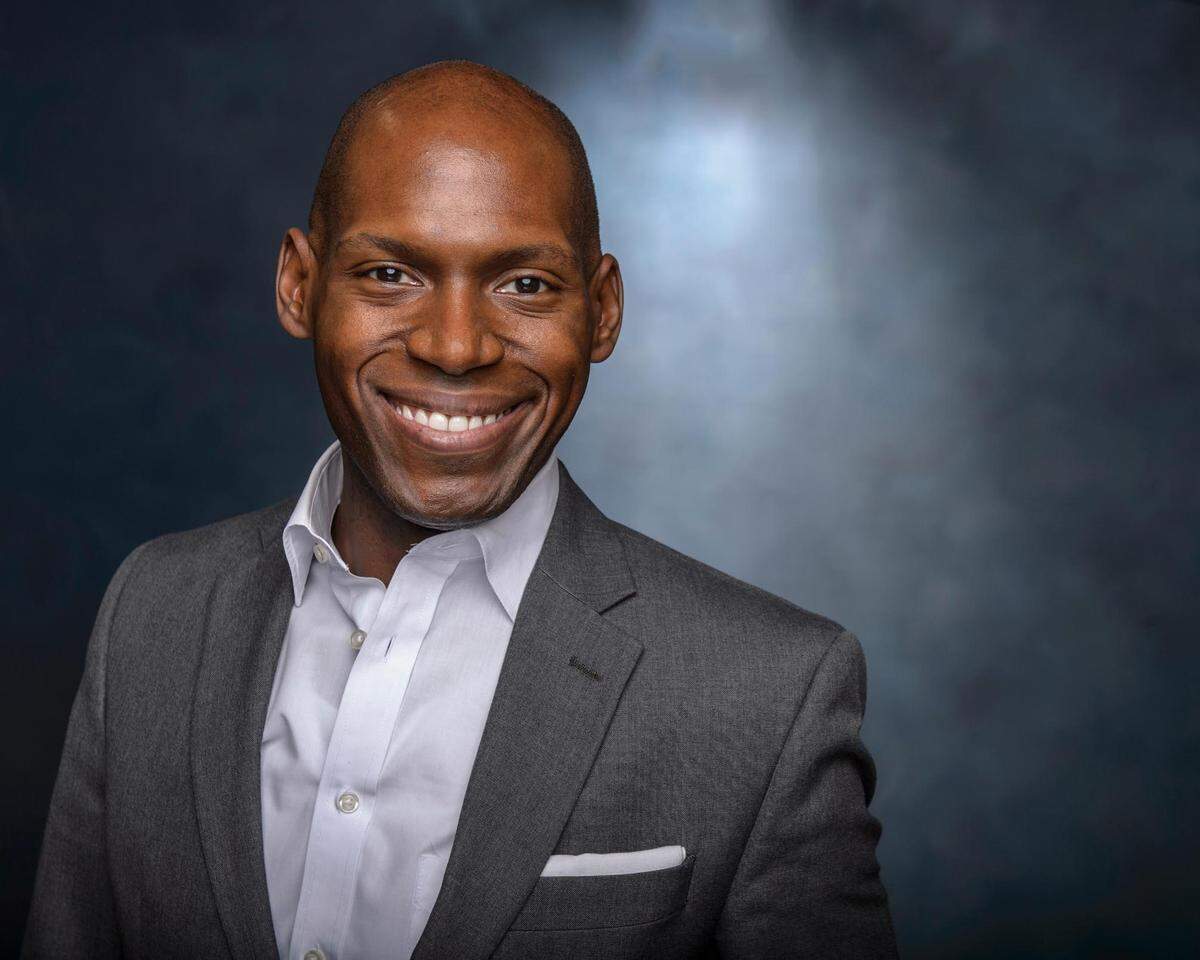
Only a few days into his job, he said he didn’t have the answers for how the party moves forward. He said he wants to start at the local level, by identifying community leaders and giving them the tools they need to grow in the party and that he wants to get rid of the notion that people need to “wait their turn” to be elected to higher office.
He said there need to be a lot of hard conversations, both with people who have left the party and those who feel taken for granted.
Mostly, he said there isn’t much time to figure it out.
“I’m hoping that the sense of urgency, the truncated timetable and just the realization of the high stakes are enough to get everybody to the table and enough for us to, not come up with something that’s perfect, but that can get us to live another day,” Elridge said.
This story was originally published November 27, 2020 at 10:00 AM.