Senate panel pares back courts bill after fiery testimony from Kentucky chief justice
Kentucky lawmakers significantly scaled back a bill Tuesday that would have drastically altered how legal challenges to state government are handled in the state’s courts system.
As originally written, House Bill 3 would have set up randomly selected panels of three judges from across the state to hear legal cases involving state government and the Kentucky Constitution. The higher profile cases are now generally heard in Franklin Circuit Court in Frankfort, where former Gov. Matt Bevin and other Republicans have bitterly complained that the judges are too liberal.
Instead of creating three-judge panels from different regions in the state to hear such cases, a revised version of House Bill 3 would instead require that cases challenging the constitutionality of Kentucky statute, executive orders, administrative regulations and orders from state cabinets be filed in the home county of the plaintiff, rather than the defendant.
If the plaintiff is not a resident of Kentucky, then the case would be filed in Franklin Circuit Court.
The Senate Judiciary Committee approved the revised bill and sent it to the full Senate for its consideration.
“At the end of the day, it’s to prevent one circuit, I don’t care if it’s Franklin or Christian or somewhere else,” said Sen. Whitney Westerfield, R-Crofton, “But one circuit shouldn’t have the power to make decisions of statewide import that way.”
The changes came after Kentucky Supreme Court Chief Justice John Minton railed against the original version of the bill last week, nicknaming it the “Rube Goldberg bill” and saying it “needs to die.”
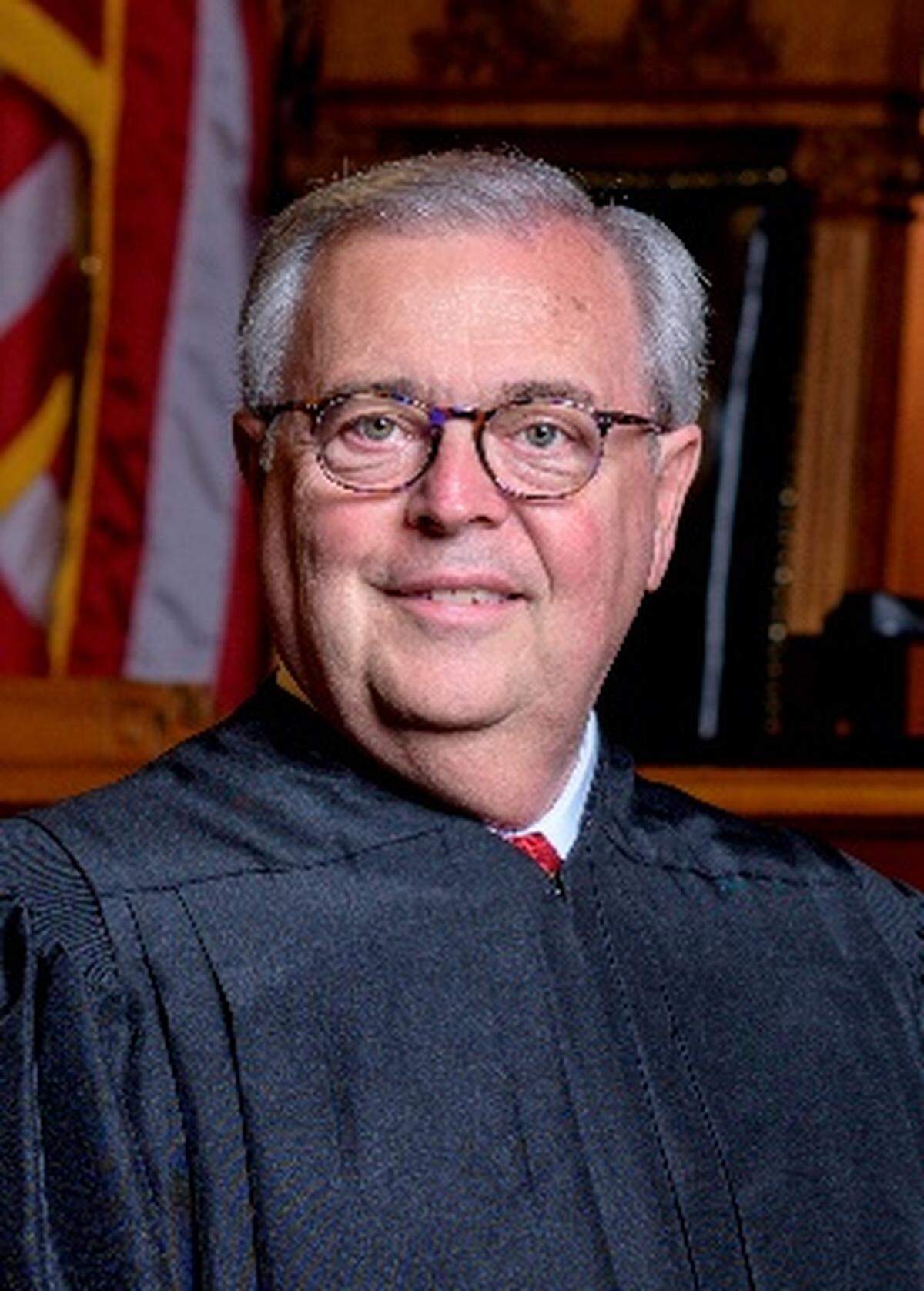
“The reason I really wanted to crawl out of bed and come here today is to tell you that this is an egregious, an egregious invasion of separation of powers,” Minton said last Friday. “This Rube Goldberg bill is an unconstitutional invasion.”
Minton did not speak on the new version of the bill Tuesday and Westerfield, the Senate Judiciary Committee chairman, said it was because Minton believes the new bill respects the separation of powers.
The bill easily passed through committee despite warnings from Tom Fitzgerald, the director of the Kentucky Resources Council, who presented data showing most cases regarding constitutional claims or executive and agency orders already aren’t heard in Franklin Circuit Court.
“What I’ve found is there really is no need for this bill,” Fitzgerald said.
His data, obtained from the Attorney General’s Office, showed that of the 261 civil cases involving constitutional claims in 2020, only two were heard in Franklin Circuit Court. Only nine civil actions named a state agency or state official and only two of them were heard in Franklin Circuit Court.
He warned against passing a bill that’s a “solution to a problem that doesn’t exist.”
Westerfield, though, said the data proved that the bill won’t have the effect its critics claim.
“I think it speaks to the fact that this isn’t going to bring the sort of enormous change people assume it’s going to make,” Westerfield said. “That a lot of these claims are being filed in other places already.”
This story was originally published January 12, 2021 at 3:38 PM.