KY lawmakers to vote on teacher pension bill that would raise stakes for new hires
Kentucky lawmakers on Thursday will start moving a Republican-backed bill intended to change the retirement benefits for teachers hired after next Jan. 1, requiring them to make larger contributions and work at least 30 years instead of the current minimum of 27 years.
The House State Government Committee plans to vote on House Bill 258, which would create a new tier of educators in the Teachers’ Retirement System of Kentucky, said the chairman, state Rep. Jerry Miller, R-Louisville.
No actuarial analysis for the bill, showing its fiscal costs and benefits, had been published as of early Wednesday.
The bill would not affect teachers already enrolled in TRS. Lawmakers hope that might defuse some of the tensions that led to large teacher protests at the Capitol in past sessions when pension changes were discussed.
“This is all about new hires,” said the bill’s sponsor, state Rep. C. Ed Massey, R-Hebron.
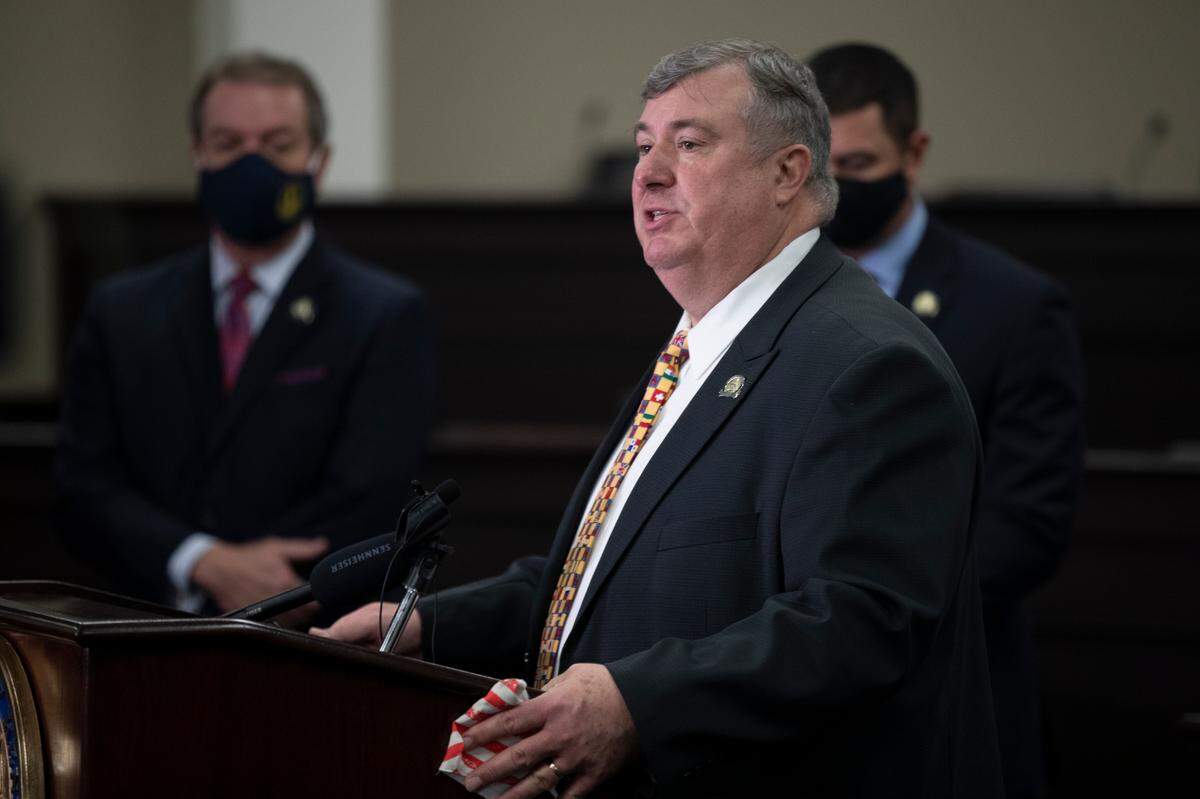
“The biggest concern that I had, and it was the concern of the educators in our group, was the recruitment and retention of new hires,” Massey said. “There are already teacher shortages in certain subject areas, so it can be hard enough to find good people now. We wanted to know, what could we offer them that would be acceptable?”
Instead of a traditional pension, new teachers would pay into a hybrid retirement package that pairs a defined-benefits plan with a defined-contributions plan. Benefits would be enhanced if they worked to age 65.
Currently, Kentucky teachers on average retire at age 59, according to TRS. A typical retirement income is about $38,800, and that’s entirely dependent on a pension. Unlike most workers, Kentucky teachers are not eligible for Social Security retirement benefits.
Sponsors say changes are necessary because the current teacher pension plan cannot continue without massive infusions of state cash. As of June 30, the $20.8 billion TRS had only 58.4 percent of the assets it’s expected to need to cover future liabilities.
“I think people are coming to the conclusion that the way we’re doing this now is not working and is not sustainable over time,” Massey said.
“I am convinced that if we do nothing, if we kick this can down the road again, when we finally do address it — and we’re going to have to, sooner or later — then the changes will be even more drastic than this,” he said.
Dividing teachers
The bill is creating a rift among educators. The leaders of some mainstream teacher groups say Massey’s plan is the best deal possible given Republican super-majorities in the legislature that insist on pension changes. But frustrated rank-and-file activists in the education community are pushing for strong opposition.
Kentucky teachers should not let themselves be divided into a two-tier system, with older teachers enjoying traditional pensions and newer teachers paying more and working longer in the classroom, said Gay Adelmann, acting president of the advocacy group Save Our Schools Kentucky.
“It’s a good way to divide and conquer,” Adelmann said.
“Because five years from now, when one-third of our teachers are new and they’re in this less generous retirement plan and then the lawmakers go after the existing pensions, they’re not going to feel the kind of loyalty that would make them stand beside us and fight,” she said. “And why should they, if we’re selling them out right now?”
The Kentucky Education Association and the Jefferson County Teachers Association say they neither oppose nor support the bill; they are only “tracking” it, having worked with Massey as he drafted it, to offer their guidance.
“I think probably just about every teacher wishes the current plan could be left alone. But I also think the new plan is a reasonable attempt at finding common ground, because all of the stakeholders were involved in its development,” said Brent McKim, president of the Jefferson County Teachers Association.
Changing benefits
Under Massey’s bill, new teachers would get a retirement package consisting of a foundational benefits plan, comparable to a defined-benefits pension; a supplemental benefits plan, comparable to a defined-contribution 401(k); and retiree health benefits.
The percentages of salary that teachers and the state would contribute toward the retirement package would shift from what it presently is, putting more of the burden onto teachers and capping the state’s obligation at 10 percent.
At present, teachers pay 12.855% of their salaries toward their pensions and retiree health care. Massey’s bill would raise that to 14.75% for new teachers.
There is no disputing that new teachers would be required to pay more, Massey said.
“We’ve always been transparent about that. We’ve never said otherwise,” he said, adding that two of his three daughters are teachers, as were both of his parents.
If the funding level for the foundational benefits plan fell below 90 percent, the TRS Board of Trustees would be required to correct it. The corrective steps could include tapping a stabilization reserve fund created by excess contributions as well as diverting some of the state’s future contributions to the teachers’ supplemental benefits plans.
Full retirement benefits would not begin until teachers reached age 55 with at least 30 years of service, or age 60 with at least 10 years of service, or age 65 with at least five years of service. Retirement benefits would be enhanced for every month after age 60 that a teacher stayed on the job, until age 65.
For younger teachers who change careers, they would be vested in TRS after five years. If they wanted to leave for a different job after that, they could withdraw their contributions and the state’s supplementary plan contributions, plus 2.5% interest. Presently, departing teachers cannot withdraw any of their employer’s contributions.
Younger teachers might appreciate that “portability,” said McKim of the Jefferson County Teachers Association.
“I think the Millennials coming in now take a more fluid approach to their career where they may not plan to stay at the same job forever. They’re not necessarily looking to spend their career in one place, in one district, the same way that people in our generation were,” McKim said.
Ultimately, McKim said, teachers must face the reality that Republicans overwhelmingly control the Kentucky legislature, and Republicans believe pension changes are needed. Refusing to work with GOP lawmakers won’t do anything but deny teachers a voice in the process, he said.
“This was a choice between a bill where we at least could be at the table for its design and a bill that the legislature was going to pass without us being involved,” McKim said. “Given the priority the Republicans place on revising TRS, and given that they now hold 75 percent of the House and 80 percent of the Senate, it’s likely that they’re going to pass this bill.”
This story was originally published February 3, 2021 at 10:03 AM.