Kentucky Senate committee to vote Thursday on bill to protect historical horse racing
A bipartisan group of state senators on Tuesday filed a bill to protect historical horse racing, a lucrative form of racetrack gambling thrown into legal limbo last September by the Kentucky Supreme Court.
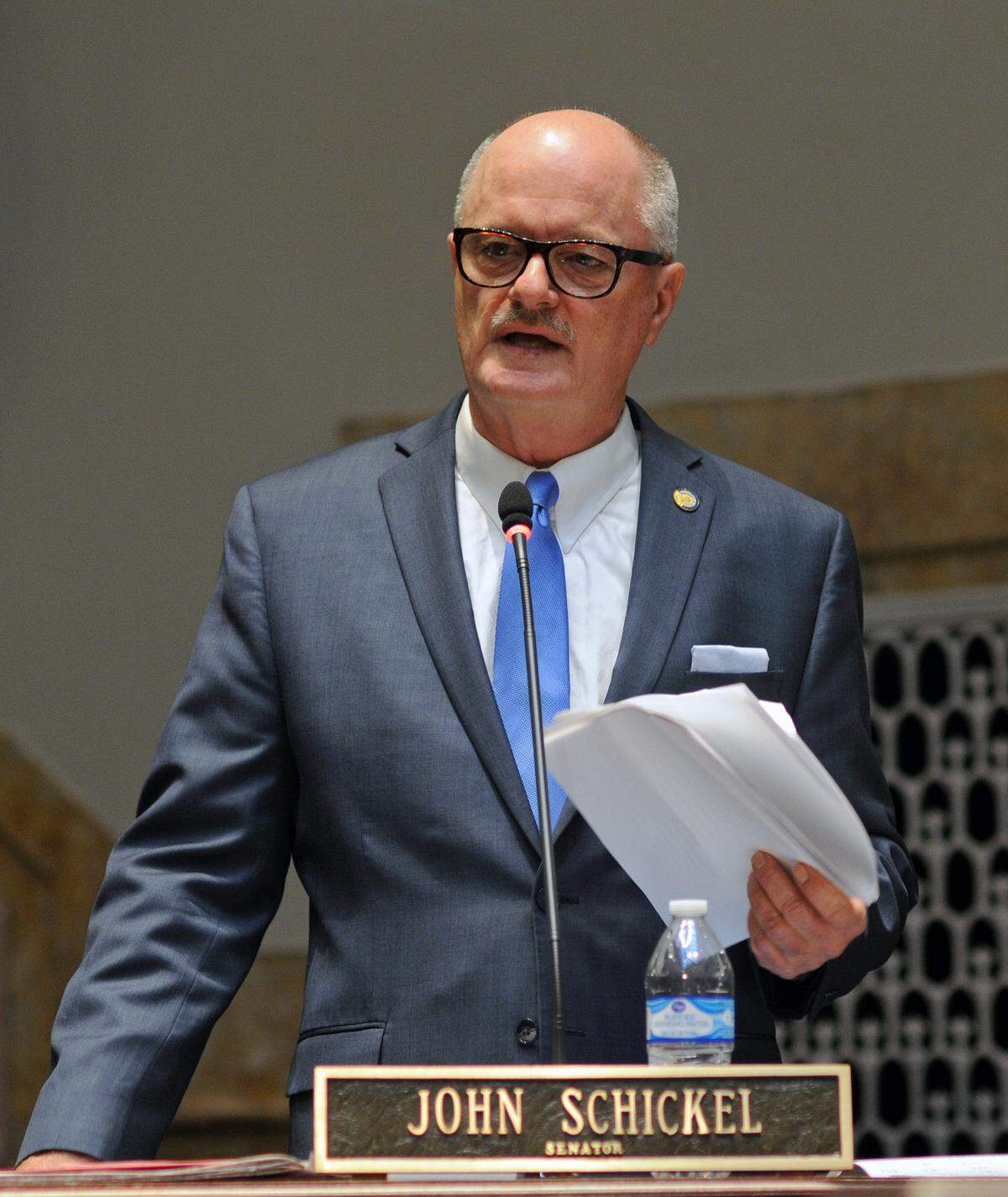
Senate Bill 120 is scheduled for a vote Thursday at the Senate Committee on Licensing and Occupations. The committee’s chairman, state Sen. John Schickel, R-Union, is also the bill’s lead sponsor.
“This effort is about preserving a system of wagering we’ve known for live racing for decades and historical horse racing for the last ten years,” Schickel said in a statement.
“This is about maintaining the status quo. Our immediate action as legislators is critical to protecting current and future jobs and economic development across the commonwealth,” he said.
Among the bill’s other sponsors are Senate President Robert Stivers, R-Manchester, and two Democrats, Sen. Reginald Thomas of Lexington and Sen. Dennis Parrett of Elizabethtown.
The bill would broaden the definition of parimutuel wagering to include betting on “previously run” horse races at racetracks as approved by the Kentucky Horse Racing Commission. This is intended to cover the slots-like gambling machines that allow players to bet money on the outcomes of old horse races.
The state Supreme Court last year unanimously declared that historical horse racing is not parimutuel wagering, and therefore, is not legal under the state constitution.
There are presently six locations in Kentucky for historical horse racing, although at least one of them, at the Red Mile in Lexington, temporarily closed following the Supreme Court’s refusal to reconsider its decision.
Last year, the total handle for historical horse racing in Kentucky was $2.2 billion, up 11 percent from the previous year.
With so much money on the line, the horse industry is pressing lawmakers for a quick fix to the Supreme Court decision.
“Historical horse racing is an integral part of Kentucky’s signature equine industry and our economy as a whole and has helped position Kentucky as a worldwide leader in racing,” one industry group, the Kentucky Equine Education Project, said in a statement on Tuesday.
“With real jobs and investment on the line, we urge the members of the Senate Licensing and Occupations Committee to promptly move this legislation forward so that the commonwealth can continue to benefit from historical horse racing, now and in the years to come,” KEEP said.
More legal challenges are likely to follow even if Schickel’s bill becomes law, because some gambling opponents say a state constitutional amendment would be necessary to make the gambling machines legal.
Kentucky lawmakers debated for many years over a proposed constitutional amendment that would allow casino gambling, such as slot machines. But backers never found enough political momentum to put such an amendment on the ballot for voter approval.
Gambling opponents complain that historical horse racing machines are essentially the same as slot machines, installed over the past decade without the benefit of the constitutional changes that lawmakers once sought.
Lawmakers this year also are under pressure to raise the comparatively low tax rate on historical horse racing, which is less than the tax on live and simulcast racing in Kentucky as well as on slot machines in neighboring states.
Despite bringing in billions in revenue last year, the state’s tax collected on historical horse racing was only $33.8 million, of which the General Fund got $15.1 million. The rest was diverted to purses and programs that benefit the horse industry.
A coalition of 17 groups, including the Kentucky Education Association, sent a letter to lawmakers Monday urging them to to raise the “deeply inadequate” tax rate on the gambling machines.
House Bill 156, filed by state Rep. Kim King, R-Harrodsburg, would raise the tax on historical horse racing, but the horse industry opposes it, and that measure has not advanced so far.