KY regulators tell utilities to drop their late fees, but a lawmaker is pushing back
The Kentucky Public Service Commission is taking a new approach to late-payment charges levied by utilities, saying they create “a hardship” for poor people already struggling with their bills but show “no material effect on the percentage of customers paying on time.”
While negotiating new rates with utilities, the PSC has issued a batch of orders since November instructing four local water districts and electricity provider Kentucky Power to drop late fees. In a sixth case, the PSC has opened an investigation into whether the Ohio County Water District is charging late fees without state authorization.
First up was the Hyden-Leslie County Water District, ordered to forego a late fee bringing it nearly $50,000 a year in a place where one in three people live in poverty. In 2019, the district disconnected 242 customers for failure to pay.
“The record here shows that Hyden-Leslie District, like other similarly situated utilities, has relied on these fees as a significant portion of its income, and the process disproportionately affects those customers who already struggle to pay for service,” the PSC wrote on Nov. 6.
“It is not reasonable to continue to collect late fees that do not have the intended impact on customer’s behavior,” the PSC wrote.
In response to the PSC’s philosophical shift, a Kentucky lawmaker is sponsoring a bill to let water districts charge late fees regardless of what the state regulatory agency says.
Rep. Josh Bray, R-Mount Vernon, said in an interview this week that rural water districts rely on customers paying their bills each month. The risk of getting hit with a late fee, generally 10 percent of the water bill, prods people to open their checkbooks, Bray said.
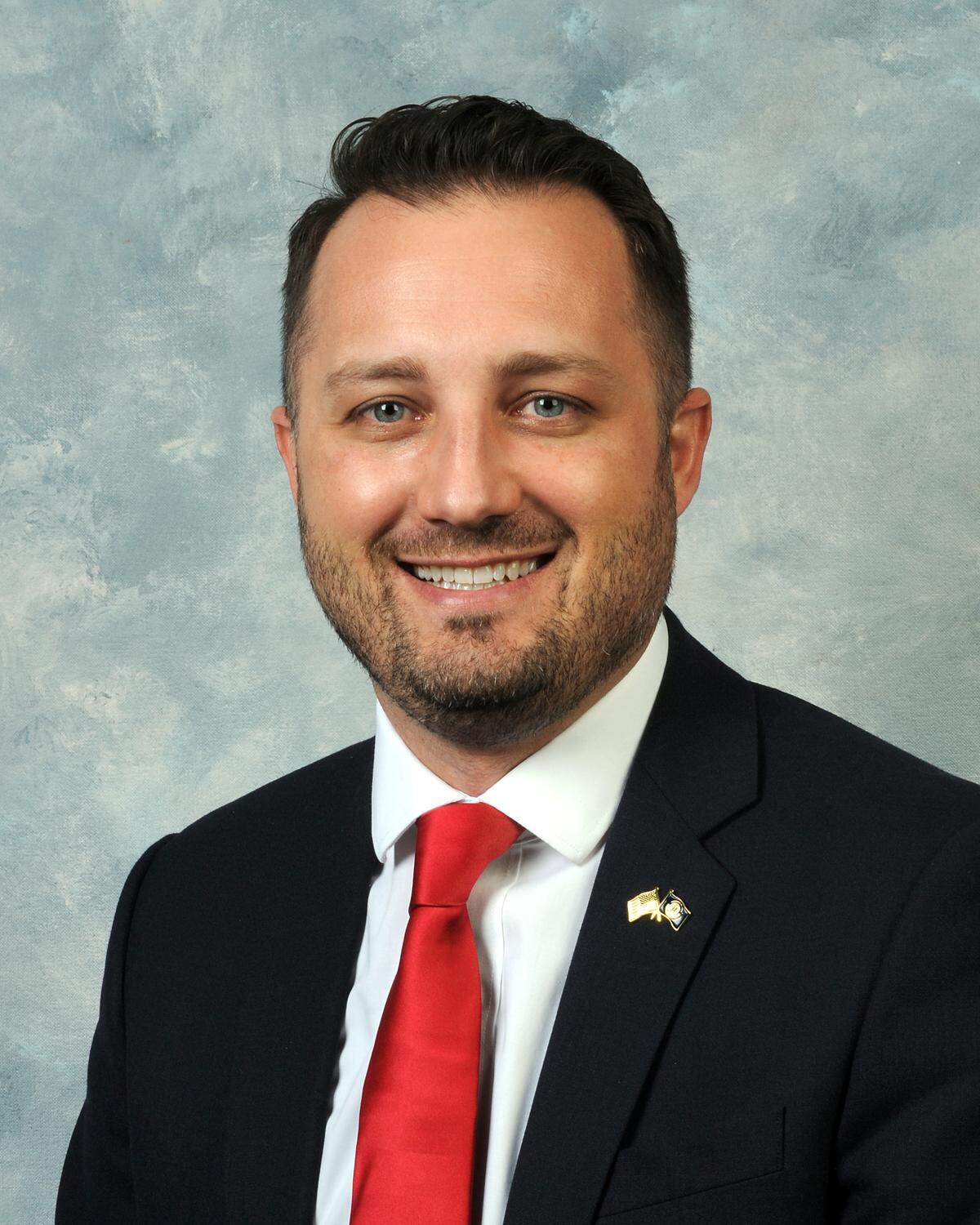
Before his election to the House, Bray was city administrator in Mount Vernon, which operates a municipal water system. The lawmaker said he’s familiar with how Kentuckians pay their utility bills — barely in time, in some cases.
“If there’s no penalty for a late payment, a lot of people just aren’t going to pay it until right before the service is cut off,” Bray said. “Imagine what that does to a water district from a cash flow perspective.”
Bray’s House Bill 272 is posted for action to the House Local Government Committee.
PSC’s new attitude
At the heart of the PSC’s new attitude on late fees is a 21-page opinion it published last September.
Gov. Andy Beshear’s administration issued a COVID-19 moratorium on utility cut-offs and late fees for 2020, both of which expired later in the year. The PSC used that time to study how late fees are collected across a wide swath of Kentucky utilities. It determined that they generally serve no useful function.
For late fees to make sense, the PSC said, there should be evidence that they compel people to pay utility bills on time. Based on data from the state’s utilities, the PSC said, that does not appear to be true.
“On the whole, it appears that the on-time payment rates for customers — that is, the percentage of customers who pay on time each month — has changed little, and in some instances has increased, as compared to multiple periods preceding the outbreak of COVID-19 in Kentucky,” the PSC said in September.
“Considering all utilities surveyed were unable to assess the late fees that nearly all of them ordinarily charge and were unable to disconnect for nonpayment, this result was unanticipated and indicates that late fees may have little impact on the timeliness of at least residential utility payments,” the PSC said.
The PSC will use what it learned from its 2020 study as it negotiates future rate cases with utilities, said agency spokeswoman Karen Wilson this week.
“The pandemic has provided the commission with evidence that challenges conventional wisdom, and the commission’s decision-making must be based on the evidence, rather than philosophy or personal preference,” Wilson said.
Some of the water districts say they don’t agree with the PSC’s conclusions, although they’re not in a position at present to do much about that.
L.J. Turner, manager of the Hyden-Leslie County Water District, said he doesn’t like imposing late fees, but he also believes it’s unfair for customers who pay their bills on time to absorb the costs of those who don’t. Also, he said, the late fees aren’t large; at 10 percent of the bill, they might be a few dollars extra on one month’s water bill.
“Every industry, any kind of bill you pay has late fees for a reason. You don’t want people to prioritize paying other bills ahead of yours,” Turner said. “Someone has four or five bills to pay, they don’t have a lot of money, it stands to reason they might put off the one they know doesn’t have any penalty on it.”
Draining precious dollars
Bray’s House bill would reverse a mercifully wise course being taken by state regulators, said Tom FitzGerald, director of the Kentucky Resources Council.
FitzGerald said he has written to Bray and urged him to drop the legislation.
“Based on the evidence that is now available to us, we can see that late fees don’t have any impact on whether people make their payments on time. They make their payments on time if they have the money, and they don’t if they don’t,” FitzGerald said.
“What late fees do successfully is penalize people who already have fallen behind,” he said.
An advocate for the poor in Southern Kentucky said she is concerned that late fees drain precious dollars from relief funds intended to help people struggling with their utility bills.
“It hurts a lot,” said Alicia Polston, executive director of the Lake Cumberland Community Action Agency, based in Jamestown.
“Most of the folks we assist are very low-income,” Polston said. “When you’re facing a late fee on top of the original bill, it just puts you even deeper into the hole that you’re supposed to be digging out of. And if we’re helping you with your bill, then that is one less dollar available for us to assist another family.”
Last year, roughly 3,500 households claimed about $1 million in CARES Act funds provided for water and wastewater bill assistance that were channeled through the Lake Cumberland Community Action Agency.
More aid should be coming. The $900 billion COVID-19 relief package that Congress passed in December included $638 million specifically for water bill assistance for poor households.
“These are people who just don’t have the money to pay,” Polston said.
“More likely than not, without assistance, their water would have been cut off,” she said. “I mean, folks would have survived. They would go to their neighbor’s house or maybe a friend’s house. They would take a sponge bath. People know how to get by without running water if they have to. But I don’t want to see that happening.”