
Kentucky lawmakers advancing bills to give legal liability shield over COVID-19 infections
Kentucky lawmakers are advancing two different legal liability measures intended to block lawsuits over COVID-19 infections during the pandemic.
A Senate committee on Tuesday voted to send Senate Bill 5 to the Senate floor. The 20-page bill, which was rewritten and expanded shortly before the hearing, would protect businesses, governments, health care facilities and “essential service providers” from civil liability over COVID-19 unless they demonstrated “wanton, willful, malicious, grossly negligent” conduct.
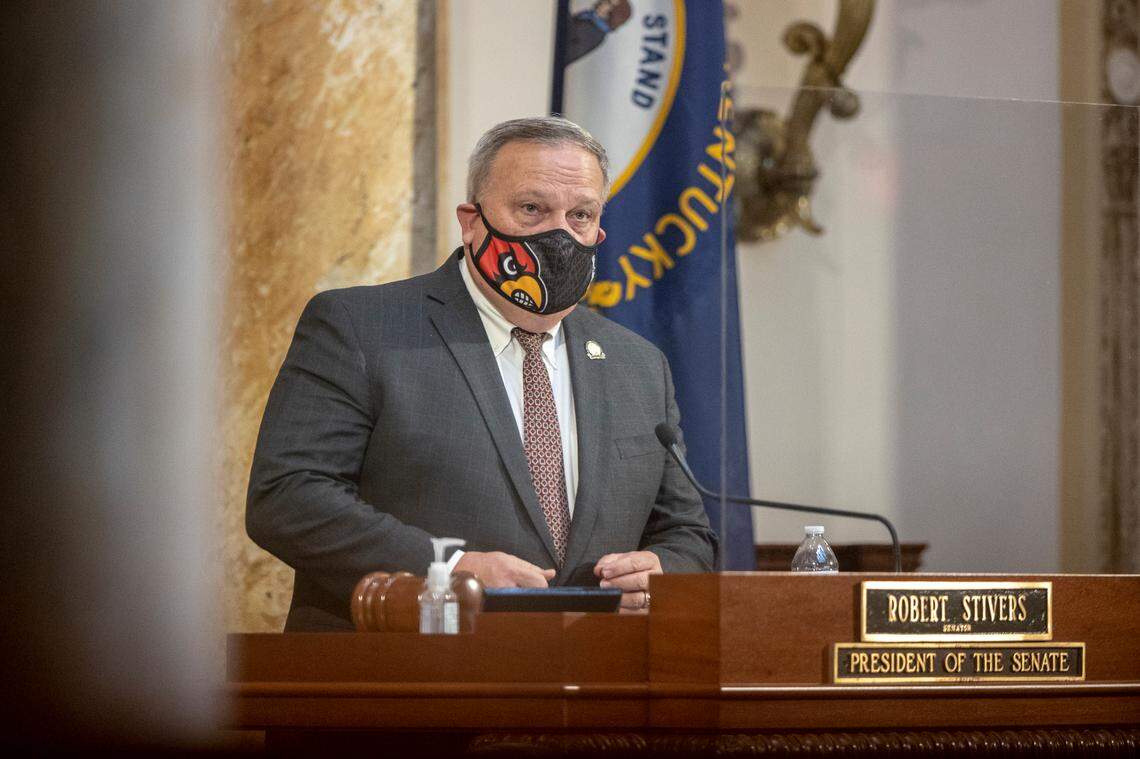
“We’ve listened and we’ve tried to come through with all the different scenarios, which are tough, to create a bill that would ultimately give protections to those individuals operating within whatever guidelines may be in existence at the time,” the bill’s sponsor, Senate President Robert Stivers, R-Manchester, told the Senate Committee on Economic Development, Tourism and Labor.
Several people spoke against the bill at the committee hearing. Some senators said its language is overly complicated and contains loopholes that could allow unintended consequences, such as legal immunity for “essential service provider” motorists who caused a fatal crash.
Some of the critics said they prefer another liability measure, House Bill 10, which the House overwhelmingly passed and sent to the Senate on Jan. 9. The House bill is only two pages long, creating a civil liability shield for those who acted “in good faith,” such as following federal COVID-19 safety guidelines at their businesses.
The state’s business groups are lobbying for a legal liability shield to block a potential wave of litigation that could arrive as Kentuckians who have dealt with COVID-19 infections start assigning blame to health care facilities, stores, offices, schools and other locations.
More than 30 other states have enacted some version of legal liability for businesses related to COVID-19 infections, according to the Kentucky Chamber of Commerce.
As of Monday, the state of Kentucky reported 378,793 confirmed cases of COVID-19 since last March and 4,091 deaths.
Sen. Chris McDaniel, who owns a concrete company that employs 40 people, told his colleagues on the Senate panel Tuesday that it would be unfair for businesses to be sued for alleged COVID-19 infections on their premises if they implemented all of the safety measures recommended at the time.
“Life has changed very quickly and your decisions have to be made very quickly, and they carry a tremendous amount of impact,” said McDaniel, R-Taylor Mill.
“There are thousands of us across the state who did the best we could,” McDaniel added. “And you know, there are some exclusions in here for people who were grossly negligent or willfully or intentionally. But the rest of us, you’re literally doing the best that you can. You’re going out and buying bottles of Dawn to put in the trucks.”
Jay Vaughn, a Louisville attorney who is president of the Kentucky Justice Association, told the Senate committee that he has several concerns with Stivers’ bill. The language seems to extend liability protection to vehicle crashes, Vaughan said, and it shortens the statute of limitation during which certain lawsuits can be filed from five years to one year.
Sen. David Yates, D-Louisville, agreed that Stivers’ bill seems to offer legal liability to cases not directly tied to COVID-19 infections. If a truck driver was designated an essential worker during the pandemic and he caused a terrible crash, wouldn’t his legal negligence be erased under the bill’s language, Yates asked Stivers.
That depends on how you define “essential,” Stivers replied.
“If somebody blows through a stop sign and hits you, is that negligence when they are a doctor and defined as essential? Well, that all depends on the fact-specific situation. So I’m not gonna be able to say yes on this and I’m not gonna be able to say no,” Stivers told Yates.
