Poll: Most in KY support automatic restoration of voting rights to former felons
Kentucky voting rights advocates are applying pressure in an attempt to jump start a stalled bill that would automatically restore voting rights to people convicted of certain felonies after they have completed their sentence.
The League of Women Voters of Kentucky released polling results Thursday that found 67 percent of Kentuckians support automatically restoring someone’s voting rights after they have finished their felony sentence. The poll, conducted by Mason-Dixon Polling & Strategy between February 1 and February 4, found that 28 percent of Kentuckians opposed automatically restoring the voting rights. It surveyed 625 registered voters by phone and had a margin of error of plus or minus four percentage points.
“A constitutional amendment is needed to bring Kentucky into the norm nationally and Kentuckians show strong, sustained support for this commonsense change,” said Fran Wagner, president of the League of Women Voters of Kentucky.
A bill that would make that change, House Bill 232, is floundering. The proposed constitutional amendment, which would require voter approval in 2022 — would automatically give voting rights back to anyone who was convicted of certain felonies after they have served their prison sentence, probation or parole unless it was already restored to them through a pardon. The bill has not been assigned to a committee, signaling that it has little chance of passing as the legislative session hits its halfway point.
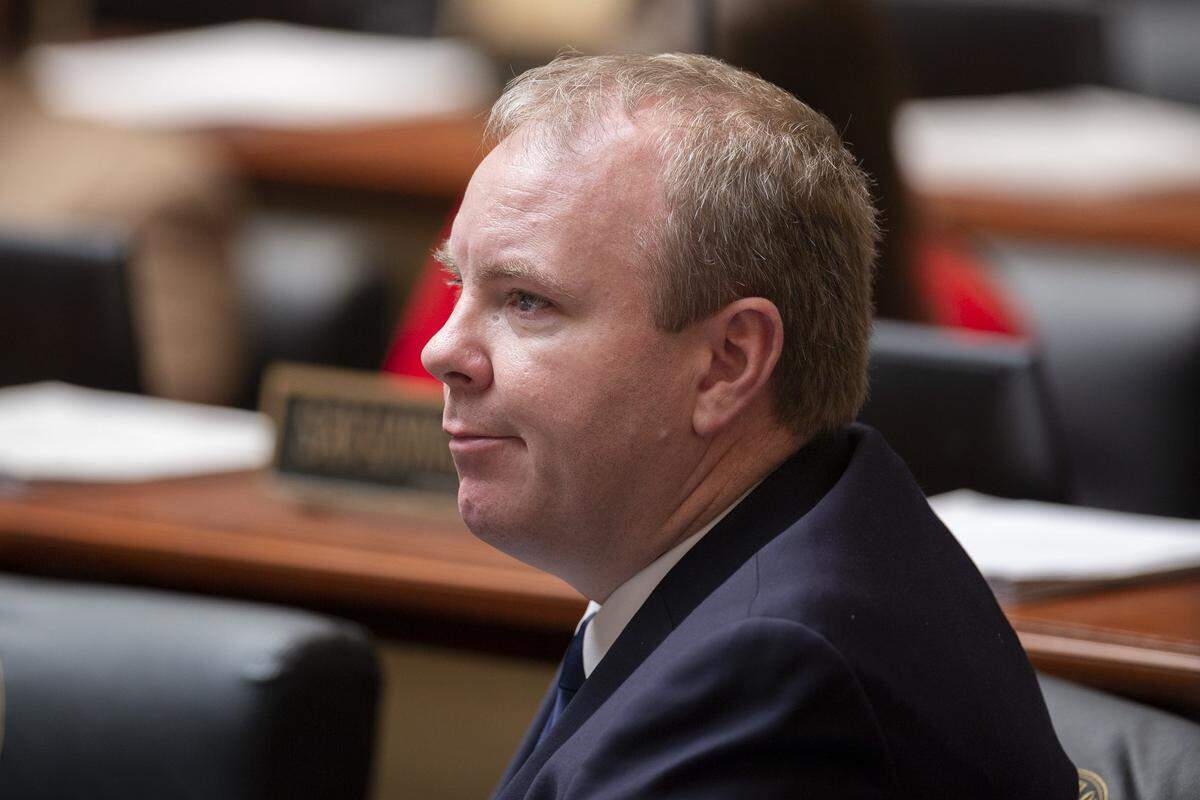
Rep. Jason Nemes, R-Louisville, who sponsored the bill, said timing seems to be the biggest thing standing in the way of the bill. It comes after nationwide protests over racial bias in law enforcement. Many in the heavily Republican legislature opposed the protests and are reluctant to take much action on criminal justice measures.
“There are a number of people I hear that are concerned about running anything on criminal justice given the environment over the last year,” Nemes said.
Gov. Andy Beshear restored voting rights to about 140,000 former felons in Kentucky through an executive order shortly after taking office in December 2019. But advocates, who have pushed for the automatic restoration of voting rights for years, are uncomfortable with the fact that the process currently depends upon who is in the governor’s mansion.
Gennaro Vito, a professor in the Department of Criminal Justice at the University of Louisville, called the loss of voting rights an “invisible punishment” that stays with people long after they have finished serving their sentence.
“There’s no reason to extend that punishment,” Vito said.
He also pointed to his own study that showed the restoration of voting rights would not have changed the results in the 2008 presidential election in Kentucky.
“If there’s reticence about one party or another gaining particular support if we restored felon voting, that’s not true.” Vito said.
According to the poll, 76 percent of Democrats support restoring voting rights compared to 56 percent of Republicans and 65 percent of Independents.
This story was originally published February 18, 2021 at 2:10 PM.