KY passed a Good Samaritan law to stop drug overdose deaths. Is there a loophole?
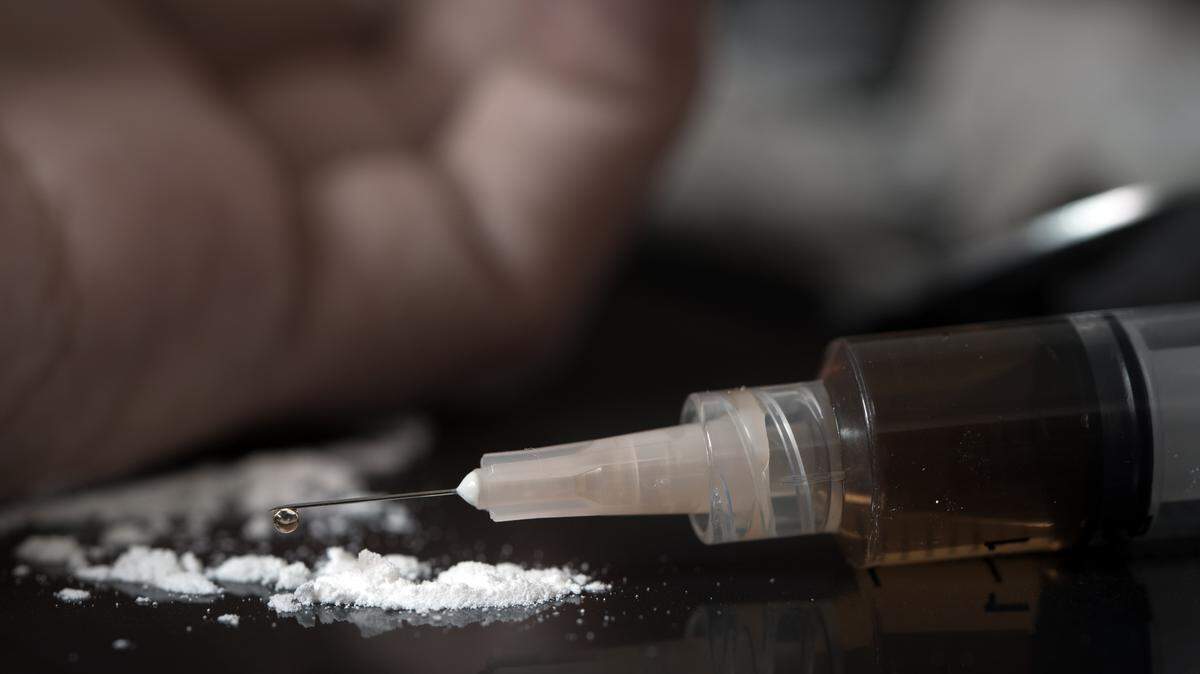
Prosecutors are asking the Kentucky Supreme Court to endorse a loophole they believe they’ve found in the state’s Good Samaritan law, meant to help prevent drug overdose deaths.
In 2015, facing one of the nation’s deadliest drug epidemics, the Kentucky legislature passed a law intended to provide criminal immunity when someone calls authorities for help with a suspected overdose.
Under the law, police essentially look the other way if they find drugs or paraphernalia lying around a drug user who needs emergency medical assistance. Legislators said they didn’t want Kentuckians continuing to die because they or their friends hesitated to dial 911 for fear of going to jail.
At least 40 states have enacted similar immunity laws.
“The priority is first to save lives and then maybe sort things out later. We certainly don’t want people penalized when what they really need is help,” John Tilley, a former state legislator who helped write Kentucky’s law, said in a recent interview.
However, some prosecutors opposed the law and soon found a possible loophole. The way the law is written, it shields those who are using drugs or their associates, who also might be using drugs. Either way, these are people who know that illegal drugs are present at the scene when they call for help.
But if an innocent bystander discovers a drug user unconscious in public and calls for help, that stranger often doesn’t know what’s wrong.
It might be an overdose, or it might be a heart attack, a stroke or some other medical emergency. The Good Samaritan law is irrelevant in these instances, prosecutors say, because the person dialing 911 has no reason to believe the call could lead to an arrest. They’re just reporting a person who seems to be passed out.
“A state’s immunity provision should be triggered only in cases where emergency personnel are summoned for emergency medical assistance with a drug overdose,” wrote Assistant Attorney General Courtney Hightower in briefs submitted to the Supreme Court.
Bystanders calling for help
The two cases to be argued before the Supreme Court on March 17 involve similar drug-related arrests that happened in Lexington four years ago.
▪ On April 13, 2017, Brenda Estes found a car parked halfway into her front yard on Atlanta Drive. Passed out behind the wheel was 28-year-old Lindsey Erin Wilson.
Estes had no idea who Wilson was or why Wilson’s car was in her yard. When she couldn’t rouse Wilson by knocking on the car window, she called police for help.
Lexington police Officer Rebecca Saylor arrived. She found needles, cup lids, tourniquets and heroin residue inside the car with Wilson. Awakened by the officer, Wilson refused medical treatment and was charged with possession of drugs and drug paraphernalia and driving under the influence. She entered a conditional guilty plea and ended up serving 30 days in jail, with an order to report to addiction treatment.
▪ On Dec. 26, 2017, Leslie Phillips was walking through the parking lot of the Home Depot on Richmond Road when she saw a man passed out in the front seat of a Nissan with the door open. Concerned, Phillips called 911 for help.
An ambulance arrived. So did Lexington police Officer Christopher Carrington. The officer woke the man, 39-year-old Craig Louis Milner, and allegedly spotted evidence inside the vehicle that indicated Milner had been smoking meth. There allegedly was more evidence in Milner’s pockets, which Carrington found during a search.
Milner was charged with possession of drugs and drug paraphernalia and public intoxication. He has spent some time in jail during the case, but court records indicate the charges remain pending as issues related to the evidence are appealed.
Fayette Commonwealth’s Attorney Lou Anna Red Corn, who prosecuted Wilson and Milner, said she wants drug users who get arrested to receive addiction treatment as part of their sentence. But it can be hard to convince addicts to enter treatment without the threat of jail time hanging over their heads, Red Corn said.
“Sometimes people are ready to go into treatment and they are willing to do that voluntarily. Other times, it needs to be an alternative to something,” Red Corn said. “It’s the carrot and the stick.”
Who is a Good Samaritan?
Judges in Fayette Circuit Court split over whether the Good Samaritan law should have shielded Wilson and Milner from criminal charges, but the Kentucky Court of Appeals later ruled against both defendants.
To trigger the Good Samaritan law, a caller must at least believe that someone has overdosed on illegal drugs and therefore could be at risk of arrest if the authorities are notified, the appellate court said.
“(The Good Samaritan law) provides that a person shall not be charged with either possession of a controlled substance or possession of drug paraphernalia if, in good faith, medical assistance for a drug overdose is sought from emergency services because the person appears to need medical assistance,” the Court of Appeals wrote in Wilson’s case.
However, the public defender appointed to represent Wilson and Milner in their appeals said such an exact reading of the law misses its larger purpose: quickly helping people who appear to be sick.
“Lindsey is the person this legislature intended to save. Her circumstances are exactly what the statute contemplates,” wrote attorney Steven Nathan Goens in one of his briefs to the Supreme Court. “She was prosecuted as a result of a call for help by a Good Samaritan who recognized Lindsey needed help.”
It’s unrealistic to expect most bystanders, faced with an unconscious person, to conduct a medical exam or search someone’s pockets or car for evidence of drug use before they call 911, Goens added. They’re just going to make the call, not knowing what’s wrong, he wrote.
“Requiring a Good Samaritan to be certain that an overdose was occurring before the exemption would apply would potentially expose both the person overdosing and the Good Samaritan to danger,” the defense lawyer wrote.
Overdose deaths have been rising again in Kentucky after a brief respite. In 2019, there were 1,316 fatal overdoses among Kentucky residents, or 69 more than in 2018, according to the Kentucky Office of Drug Control Policy.
Tilley, the former legislator who helped write the Good Samaritan law, said it includes “good faith” language that — depending on how the law is interpreted — could cover a 911 call for someone suffering “physical illness” that “a layperson would reasonably believe requires medical assistance.” The caller would not necessarily have to report the problem as a drug overdose, Tilley said.
However, Tilley added, the General Assembly did not intend to make the Good Samaritan law entirely open-ended. For example, he said, if police “walk up on” an overdose while they are serving a warrant at a property, they can file drug charges based on evidence they see in plain sight.
There wasn’t much discussion during the 2015 legislative session about how innocent bystanders witnessing an unconscious drug user in public would fit into the law, he said.
“This is an interesting question,” Tilley said. “I can see why it made its way to the Supreme Court.”