KY pension agency must release report on possible improper activities, judge orders
Kentucky’s state pension agency has paid $1.2 million to a New York law firm to investigate “any improper or illegal activities” in its billions of dollars in controversial hedge fund investments — but few people know yet what’s been uncovered.
A final report on the investigation was supposed to be published earlier this month. Instead, the governing boards of the Kentucky Public Pensions Authority repeatedly have met in closed session this month to discuss what the agency describes as a “preliminary draft” that needs more work. Board members won’t discuss the report publicly.
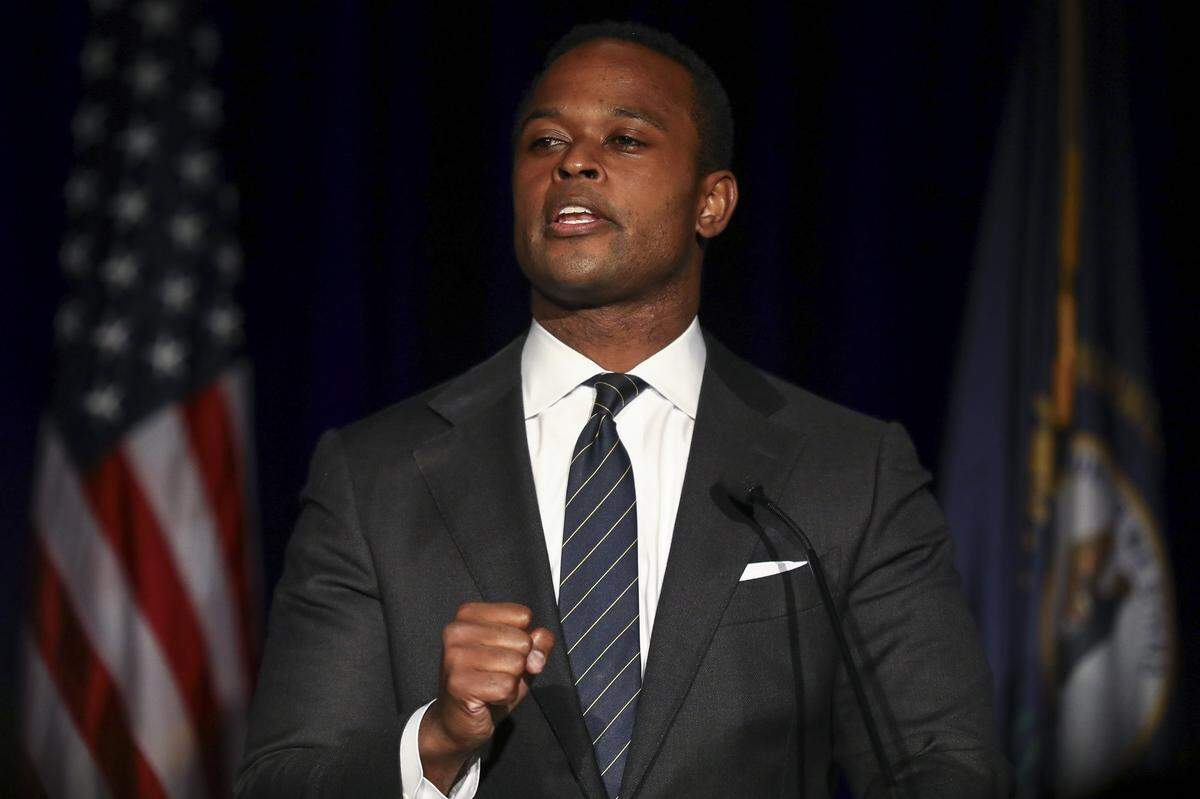
Frustrated by the delays, a Frankfort judge has given the KPPA until May 17 to share a final copy of the investigative report with Attorney General Daniel Cameron’s office or else face penalties in his courtroom.
“The court is acutely aware that this will be the third extension that the court has granted for completion of this investigation,” Franklin Circuit Judge Philip Shepherd wrote in an order on Thursday. “Therefore, this will be the final extension that the court will grant for KPPA to turn in its investigative report to the attorney general.”
Meanwhile, some public employees who are pushing for reforms at the pension agency say in court filings that they’re suspicious, worried that “this report is apparently being massaged and re-massaged” to conceal improper activities before Kentuckians are allowed to read it.
That claim, made in a court filing this week by lawyers for a group of public employees, was denied by attorneys for the pension agency.
At the heart of the matter is a lawsuit filed in 2017 against several out-of-state hedge fund firms by a handful of public employees whose pensions are administered by KPPA.
According to the suit, which has bounced through layers of trial and appeals courts, the hedge fund firms cheated KPPA on $1.5 billion in investments starting in 2011. Blame was shared by some KPPA trustees and employees, the lawsuit alleged.
The firms sold funds that were “extremely high-risk, secretive, opaque, high-fee and illiquid vehicles,” leaving KPPA in poor financial shape, according to the suit. KPPA today faces an unfunded pension liability of $25 billion.
Any damages collected from the suit would go to the pension agency, the plaintiffs have said.
The defendants in the case — KKR & Co., Prisma Capital Partners, The Blackstone Group and Pacific Alternative Asset Management — have denied wrongdoing.
KPPA has mostly stayed on the sidelines during the litigation, initially choosing not to join as a plaintiff.
But after the Kentucky Supreme Court ruled last summer that the original plaintiffs lacked standing to bring their suit, Cameron — as attorney general — asked to intervene and join the case in their place. The current standoff in Franklin Circuit Court is happening because Cameron’s office does not want to proceed further until it has a chance to see the pension agency’s investigative report about its hedge fund investments.
There also is a chance that, based on what the report reveals, KPPA might change its mind about suing the hedge fund firms.
“Now that the Supreme Court of Kentucky has determined that the original plaintiffs lacked standing to pursue their claims, it is no longer clear that KPPA will refuse to pursue claims against defendants. Certainly, the results of the investigative report could sway KPPA into holding a different position regarding its participation in this litigation than it held in 2017 and 2018,” Shepherd wrote on Thursday.
KPPA has paid New York law firm Calcaterra Pollack to conduct an investigation of its hedge fund investments. A summary report of the law firm’s findings should be made available to the public without violating attorney/client privilege, according to the pension agency’s contract.
Hedge funds are privately run, usually with high management fees, put together in hopes of beating the stock market, or at least hedging against an economic downturn.
Hedge funds long have been a controversial investment for the state pension agency, with some lawmakers and other critics complaining about the funds’ complex, expensive fees and often lackluster returns.
Although the current lawsuit is still stuck in a relatively early stage, lawyers for the public workers gathered enough documents to level accusations of “self-dealing” against the hedge fund firms and some KPPA insiders.
For example: The plaintiffs alleged that Prisma won improper influence over the KPPA hedge fund portfolio when the pension agency’s then-chief investment officer, who previously worked for Prisma, let a Prisma executive be embedded at the KPPA offices as an adviser, and later, when a Prisma retiree with financial interests in the company was named to the pension agency’s board of trustees.
Prisma countered by saying that its Daniel Boone Fund generated $139 million in net returns for KPPA, and that its various relationships with KPPA were understood by the pension agency’s governing board
William Cook, the Prisma retiree who served on the board of trustees and who was named as a defendant in the suit, said he abstained from voting on all Prisma-related business at KPPA.
This story was originally published April 23, 2021 at 9:24 AM.