KY fish and wildlife board violated open meetings law when hiring its chief. Now what?
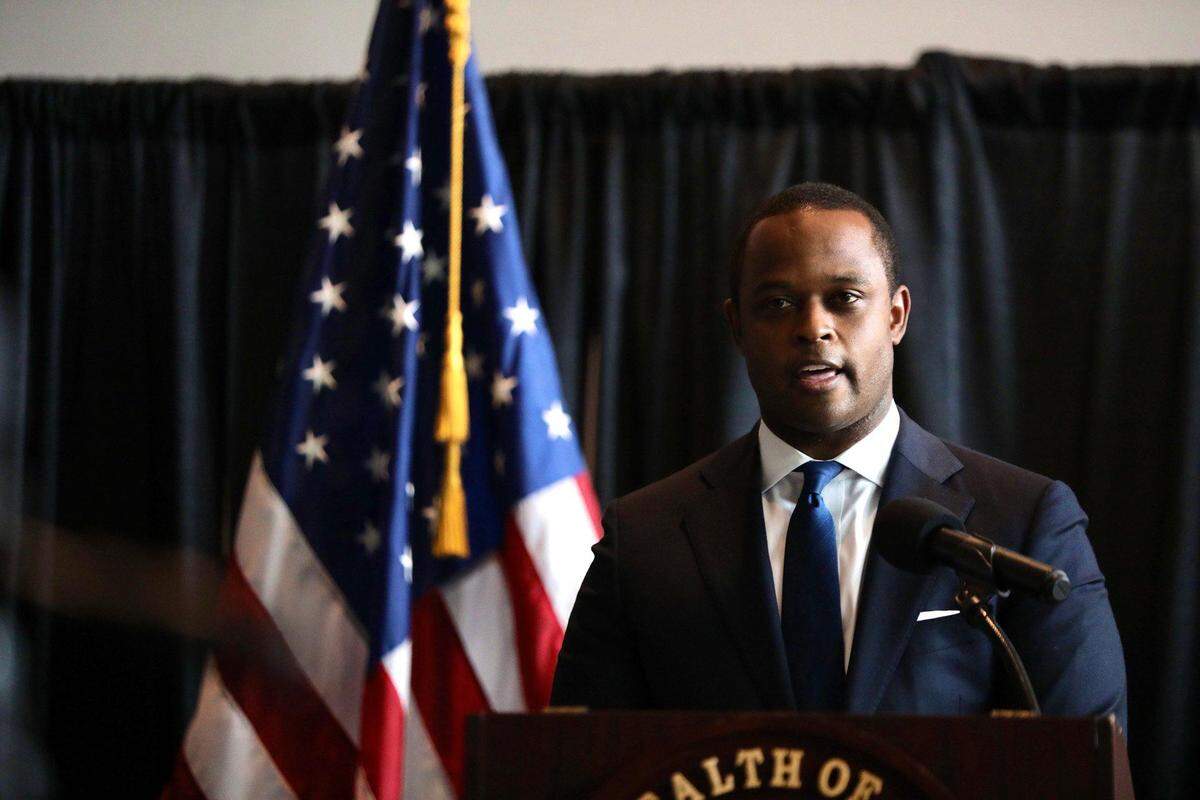
The Kentucky Fish and Wildlife Commission violated the Kentucky Open Meetings Act three times this year and last in connection with its controversial reinstatement of Rich Storm as its commissioner, says a decision by Attorney General Daniel Cameron.
The seven-page decision released Monday and filed May 17 said the commission violated the law when it went into closed session without first providing sufficient explanation to close the meetings.
Dr. Karl Clinard, a Somerset orthodontist who is the board’s chairman, said it was a technical violation with no intent of breaking any law or hiding anything from the public.
He said department attorneys for the last 2 1/2 years he has been chairman have given him a statement to read to go into closed session and “no one has complained about it until now.”
Larry Richards, an Oldham County sportsman, claimed in two written complaints to Clinard that the panel at its Jan. 31, April 1 and April 14 private sessions to discuss Storm violated open meetings law when it failed to adequately explain the purpose for entering closed session.
Richards also claimed that the commission could not discuss Storm in closed session but Cameron said the commission did not run afoul of the law by discussing personnel matters during the closed meetings.
The commission denied Richards’ assertions that it had violated the law and Richards then appealed to Cameron for the decision.
Richards said this week that he wants the commission to open up the selection process for a commissioner.
“Let’s open it up for any and all applicants,” Richards said in a telephone interview. “I have nothing personal against Mr. Storm except to say I don’t think he’s qualified. The only reason he got the job in the first place was Bevin wanted him to have it.” Storm first became commissioner in January 2019 during the administration of Republican Gov. Matt Bevin.
Richards said he doubts the commission will start the process anew.
“I think they will try to have a special meeting and attempt to give a reason for closing the session and then do what they did before,” said Richards.
Clinard said he does not think the commission has to take any more action regarding Storm “because all we have now is a technicality.”
He noted that Cameron’s decision said the commission made a “technical violation” by failing to state whether the personnel matter that was to be discussed in closed sessions was one of potential appointment, discipline or dismissal.
Cameron said it is apparent that the commission intended to discuss Storm’s appointment. “But even though that fact was apparent, state law required the commission to state whether the discussions would be about appointment, discipline, or dismissal,” he wrote. “Its failure to do so violated the Act.”
Amye Bensenhaver helped Richards with the appeal to Cameron. She is a retired state assistant attorney general, who for 25 years specialized in Kentucky’s open records and meetings laws. She is a co-founder of the Kentucky Open Government Coalition.
Bensenhaver said “there is no such thing as a technical violation of the Open Meetings law” and she is not sure the commission “can simply try to do a do-over.”
She referred to a 2012 Kentucky Supreme Court case involving a closed meeting of the Bourbon County Board of Education — Carter v Smith.
It said: “A public agency cannot ratify actions improperly taken in closed session. When conversations and actions regarding the public’s business should not have occurred in private in the first place, an agency cannot render those actions valid by simply taking a vote in open session without any discussion of the matter.
“Clearly, the rationale behind this reasoning is that any ability to ratify actions done improperly renders the Open Meetings Act meaningless. Ratification cannot be allowed to legitimize unauthorized conduct at an improperly closed session.”
Bensenhaver said Richards’ best argument may be “that the illegality associated with going into closed session vitiated the legality of the closed session—which prior attorneys general would have deemed illegal in any case.”
She said Richards has 30 days to appeal Cameron’s decision to Franklin Circuit Court.
“I just want to make this right. I am tired of all the commission’s games,” said Richards.
Clinard said if a court rules that more action is needed, “we will meet and follow the rules, as I think we already have done.”
The state Tourism, Arts and Heritage Cabinet oversees the Fish and Wildlife Resources Commission. It has been at loggerheads with the commission over Storm’s appointment.
Despite objections from Gov. Andy Beshear, the Fish and Wildlife Commission in April gave Storm a new four-year contract to be commissioner for $140,000 a year and jumping to $147,000 in each of the next three years. It included other benefits like sick leave days, health insurance and state payment of FICA, a U.S. federal payroll tax.
Beshear and the commission argued for months over who could appoint the commissioner and set the salary — the executive branch or the commission. The commission first hired Storm in 2019 during the Bevin Administration and the Beshear Administration stopped paying his salary last July.
The Republican-led legislature this year approved a new law over Beshear’s veto that made Storm’s comeback possible. The measure allows the Fish and Wildlife board to appoint its own commissioner and set the salary for the job with the approval of the legislature’s Government Contract Review Committee.
A lawsuit over authority of the commission is pending in the Kentucky Court of Appeals.
This story was originally published May 25, 2021 at 1:45 PM.