Prosecutors try to block parole hearings for Ky. inmates serving a life sentence
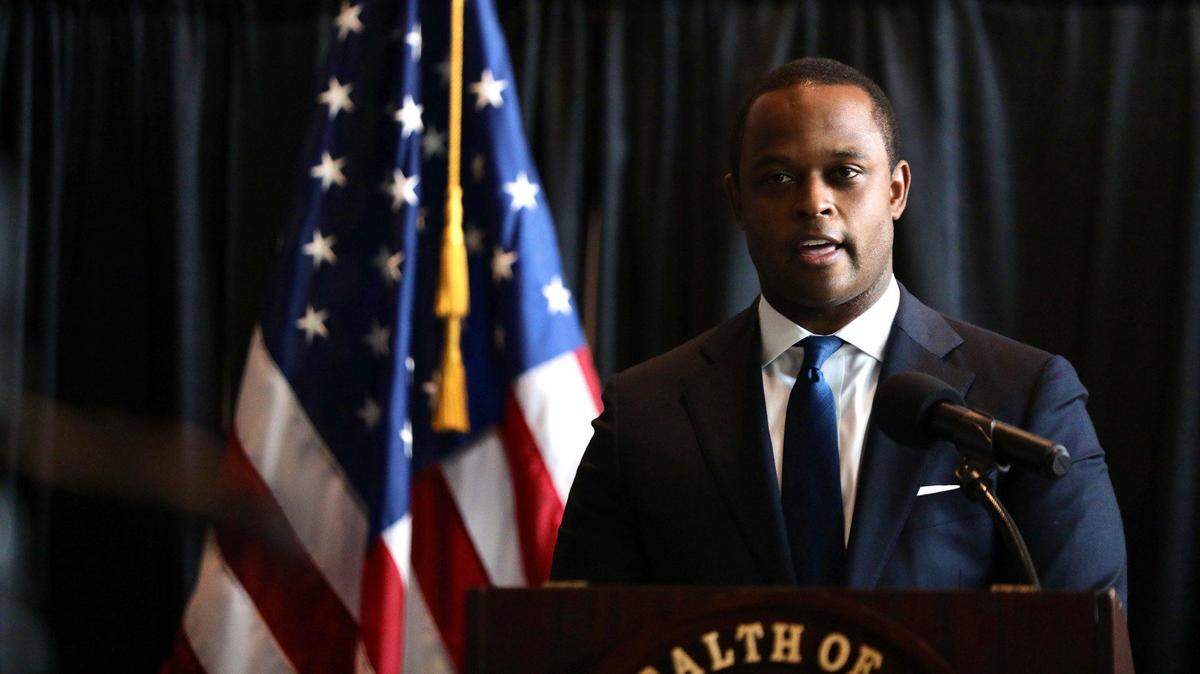
The state’s top prosecutor sued Friday to overturn a policy under which several convicted murderers would get new chances at parole despite earlier orders to spend the rest of their lives behind bars.
Kentucky Attorney General Daniel Cameron and Jackie Steele, commonwealth’s attorney for Laurel and Knox counties, filed the complaint in Laurel County.
Commonwealth’s Attorney David L. Dalton filed a similar complaint in Pulaski Circuit Court this week.
The issue in the lawsuits is a change the Kentucky Parole Board made in April. Under its old rule, the board could issue a “serve out” order at the first parole hearing of people serving sentences of life or life without parole for a minimum of 25 years.
A serve out order meant the inmate would spend the rest of his or her life in prison.
Under the change, the board could no longer issue a serve out order at an offender’s first parole hearing. That could apply in many cases going forward.
But the board also applied the change retroactively, giving another chance at parole to 45 inmates who had been ordered to stay in prison until they died.
The change angered prosecutors and family members of crime victims, who said they felt they had closed the book on one of the most painful events in their lives only to find they would have to fight again against parole for an offender.
“The crime victims and their families affected by this directive have already gone through the excruciating process of one Parole Board hearing, and they were given assurance by the board that those responsible for carrying out heinous and violent crimes would spend the rest of their lives in prison without the possibility of parole,” Cameron said in a news release.
Cameron, a Republican, called the policy change a “startling reversal” by the board that disregards the rights of crime victims and fails to follow the law.
If the policy is allowed to stand, “Kentucky families will be forced to relive these terrible crimes, and a dangerous precedent will be established for how the Parole Board can issue directives and treat crime victims,” Cameron said.
Steele said the board made the change without notifying victims’ families or prosecutors after earlier agreeing that the inmates at issue should stay in prison for life.
“To reverse course now is unconscionable,” Steele said.
The lawsuit by Cameron and Steele argues that the Parole Board did not follow the procedure required to put forth a new regulation, which includes allowing public comment and having and review by a legislative committee.
The new rule also purports to grant rights to prisoners that they’re not entitled to under existing law, the complaint argues.
The Parole Board didn’t follow its own procedures for reconsidering earlier decisions and gave at best inadequate consideration to crime victims’ “dignity or sense of finality and justice” by allowing new hearings for people it had previously said wouldn’t be eligible for parole, the lawsuit said.
The inmates previously given serve outs but eligible for another parole hearing under the rule include Donald Terry Bartley, who took part in the murder of Tammy Dee Acker, a University of Kentucky student stabbed to death in Letcher County in 1985; Stephanie Spitser, who strangled her 10-year-old stepson, Scotty Baker, to death in Clay County in 1992; Leif Halvorsen, who was sentenced to death for taking part in a triple homicide in Lexington in 1983; Clawvern Jacobs, who was convicted of kidnapping Judy Ann Howard, a student at Alice Lloyd College in Knott County, sexually abusing her and beating her to death with rocks in 1986; and Jeffrey B. Coffey, convicted of murdering two teenagers on a date in rural Pulaski County in 1985.
The new rule doesn’t mean any of the inmates will get out of prison. The Parole Board could deny them release again.
The Department of Corrections said the change on serve-out orders was a response to litigation.
A number of inmates have challenged how the Parole Board handles cases.
One argument is that it is unconstitutional for the board to issue a serve out that turns a sentence of life, or even life without parole for 25 years, into what is in effect a death sentence.
The challenges argue that the Parole Board doesn’t have legal authority to issue serve outs, removing parole eligibility in cases in which the legislature and courts have said people would be eligible for parole.
Timothy G. Arnold, director of the Post-Trial Division at the state Department of Public Advocacy, told the Herald-Leader last month that the experience of defense attorneys is that the Parole Board orders serve outs for people because they didn’t make a good impression on members of the board, “and are now expected to pay for that with their lives.”
The lawsuit by Cameron and Steele says the board “disingenuously claims” that it had to change the serve-out rule because of litigation by inmates.
Franklin Circuit Judge Phillip Shepherd said in a ruling last year that the board has the authority to issue serve outs, according to the lawsuit.
The lawsuit by Cameron and Steele seeks a restraining order and preliminary and permanent injunctions to prevent the Parole Board from using the new policy.
Barry L. Dunn, a deputy attorney general, said in an interview that if a judge in the circuit covering Laurel and Knox counties issues an order blocking the Parole Board rule, it could apply to cases statewide.
The lawsuit is against the Parole Board, the individual members in their official capacity, and the state Department of Corrections.
A spokeswoman said the board could not comment on pending litigation.
This story was originally published June 11, 2021 at 6:29 PM.