KY Supreme Court: Low-income people don’t have to pay to remove felony records
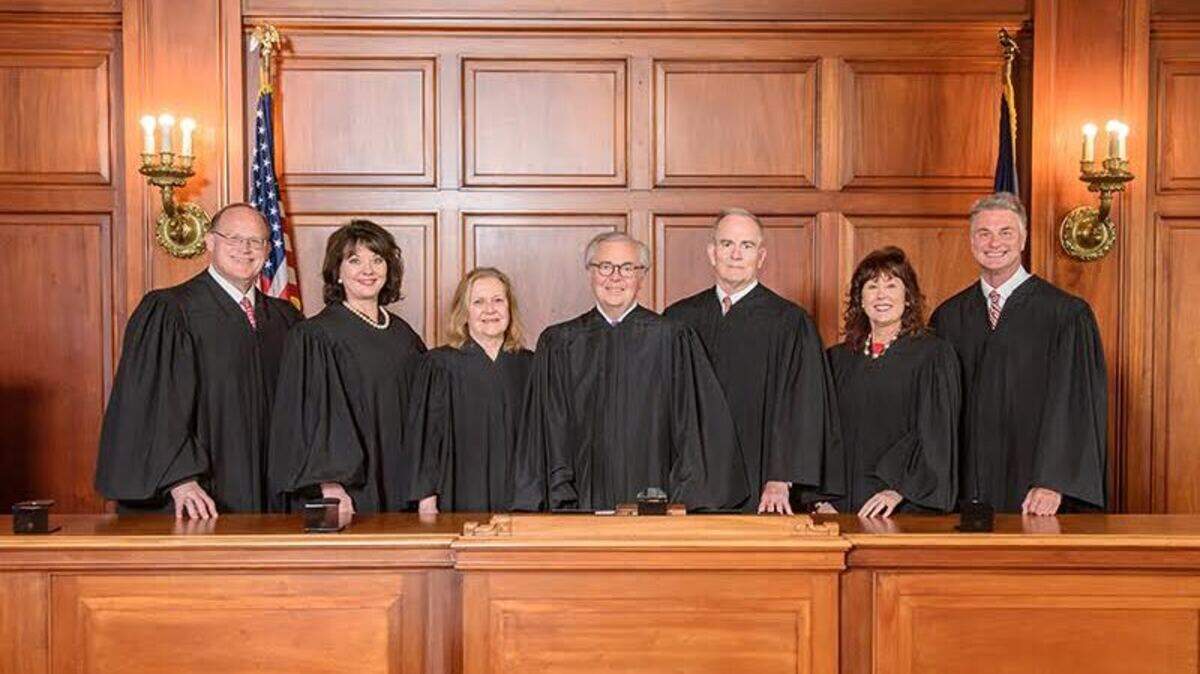
The Kentucky Supreme Court ruled Thursday that low-income people should not have to pay fees to get old felony convictions cleared from their backgrounds.
The high court sided with Frederick Jones of Jefferson County, who in 2018 asked to have a 20-year-old felony theft conviction expunged from court records.
Kentucky previously required $340 in assorted fees that Jones said he could not afford. Lower courts denied his motion to proceed in forma pauperis, or “as a pauper.”
But Jones is entitled to file a separate court action, such as a felony expungement application, for free under the state’s in forma pauperis statute, Justice Michelle Keller of Covington wrote for the unanimous court decision.
“We can identify no other situation in our commonwealth where a judge renders a judgment that a litigant is entitled to a benefit under the law, but that litigant cannot obtain the benefit of that judgment unless and until he pays a fee,” Keller wrote.

The high court sent Jones’ case back to Jefferson Circuit Court for further action.
Thursday’s decision drew immediate praise from members of the Kentucky Smart On Crime Coalition, a collection of groups that lobby for reforms in the criminal justice system.
“There shouldn’t be a class divide when it comes to the justice system. The lack of a fee waiver was another obstacle to successful reentry because housing, employment and services are vital for a real second chance,” said Kungu Njuguna, policy strategist for the ACLU of Kentucky.
In 2016, the General Assembly passed a law allowing certain nonviolent Class D felonies to be removed from public record if applicants wait five years after completing their sentences. State law already allowed the expungement of misdemeanor convictions.
However, Kentucky charged fees as part of this process. That included a $50 filing fee, a $40 certificate of eligibility fee and a $250 expungement fee that is split between commonwealth’s attorneys, Kentucky State Police, the Administrative Office of the Courts and the Kentucky Department of Libraries and Archives.
“We recognize the hardship our holding may place on the agencies who benefit from the expungement fee,” Keller wrote. “However, we cannot allow that potential hardship to color our analysis of the statutes at issue.”
Republican Attorney General Daniel Cameron’s office argued against waiving the fees for low-income people. Cameron’s predecessor, Democrat Andy Beshear, now the governor, essentially took no position on the matter when the case was before the Court of Appeals in 2019.
This story was originally published December 16, 2021 at 3:17 PM.