Kentucky lawmakers revive bill to block release of information about public officials
Kentucky lawmakers are reviving a controversial proposal to block the release of some information held in public records about a broad category of public officials, including judges, hearing officers, prosecutors, police officers, firefighters, corrections officers, 911 call center dispatchers and social workers.
At the request of the officials, Senate Bill 63 would exempt from the Kentucky Open Records Act a swath of “personally identifiable information” about them, such as their tax and property ownership records, marriage certificates, dates of birth, home addresses, personal phone or email addresses, Social Security numbers, heath care data, vehicle registrations, personal financial account numbers and “employment location or assignments.”
The bill also would shield such information about the officials’ families if the relatives requested it.
The General Assembly passed a similar measure last year, but Gov. Andy Beshear vetoed it, calling it “overly broad” and “impractical.” Beshear said a different measure that he signed into law — an “anti-doxxing” bill that criminalized the online publication of personal information with the intent to harass or harm someone — achieved lawmakers’ desired results more effectively.
But one of the public records bill’s original sponsors, Sen. Danny Carroll, R-Benton, is making another attempt by filing SB 63, which is assigned to the Senate Judiciary Committee.
Carroll’s newest proposal would include civil penalties, allowing officials and their relatives to sue people for compensation and punitive damages if they released protected information in violation of the law.
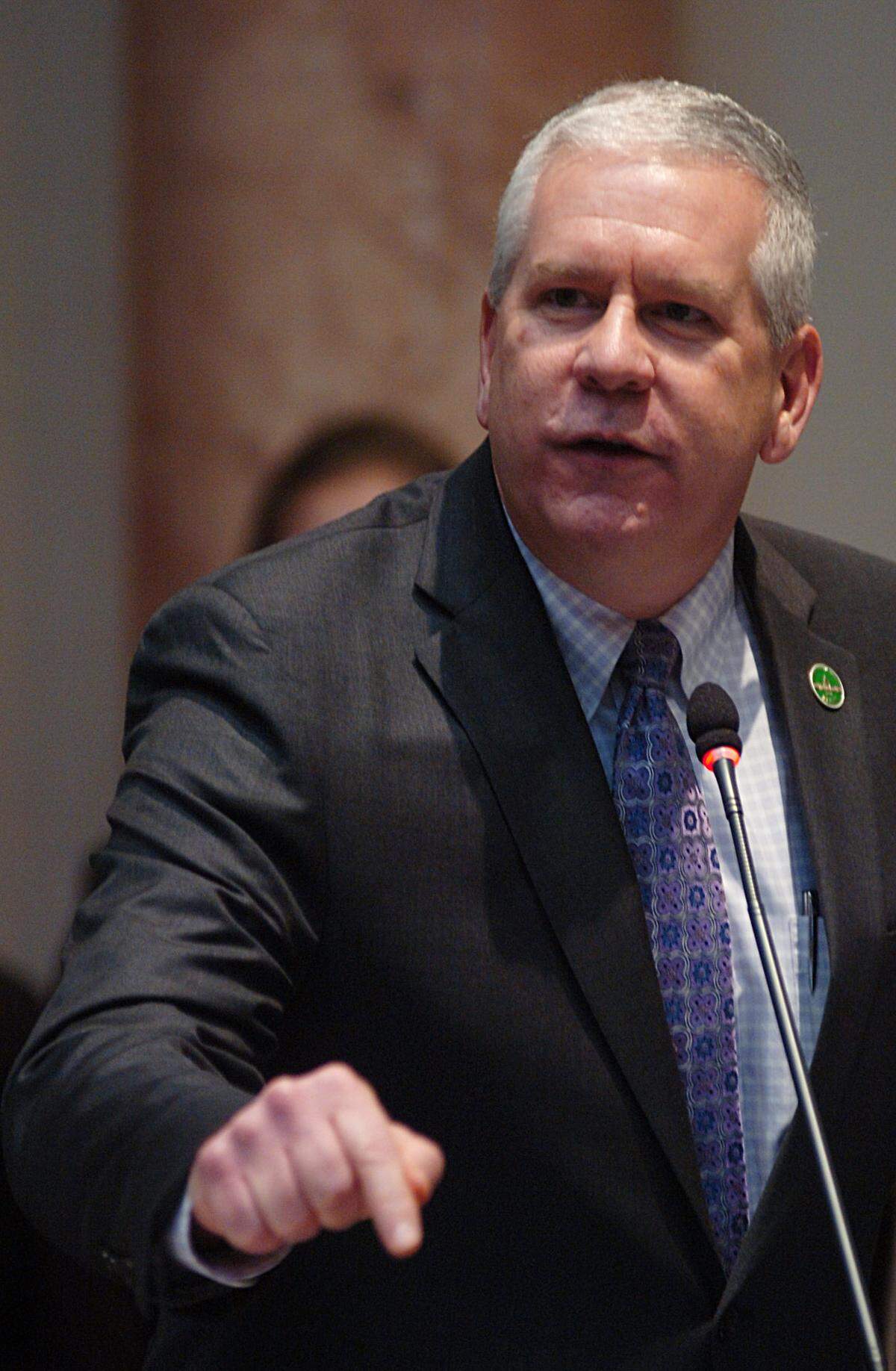
Carroll was out of the office and unavailable to comment this week due to illness. A legislative colleague who worked with him on last year’s bill, Rep. John Blanton, said lawmakers want to protect public officials from physical harm.
Blanton cited the 2000 shooting death of Fred Capps, a Kentucky commonwealth’s attorney murdered in his own home by a criminal suspect he was prosecuting, and the more recent attack in 2020 on the home of a federal judge in New Jersey that left the judge’s son dead and her husband wounded.
Information found in government records can lead an angry person straight to the front door of a public servant they want to hurt, said Blanton, R-Salyersville.
“I’m simply trying to find a way to protect people, especially in the criminal justice system, from attack,” Blanton said. “I’m not opposed to anybody writing an article good, bad or indifferent about somebody.”
However, First Amendment groups, including the Kentucky Press Association, are criticizing the bill as a reckless assault on the Open Records Act that journalists and other citizens use to look behind the scenes at what local and state governments are doing.
Much of the material cited in Carroll’s bill, such as Social Security numbers and health care data, already is exempt from disclosure under the Open Records Act, said Amye Bensenhaver, a retired state assistant attorney general and co-founder of the Kentucky Open Government Coalition.
However, other exemptions in the bill are “more nebulous,” such as a public official’s “location or assignments,” which could be broadly applied to many job-related records that show where an official works and what he does, Bensenhaver said.
For example, a judge has no right to expect records to be withheld because they connect him to a particular courthouse, she said. Campaign donations posted online by the Kentucky Registry of Election Finance identify donors by name, occupation and address, including some public officials covered by Carroll’s bill, she said.
And while it might seem personal to some, there can be legitimate public interest in the tax and property records of public officials, she said.
Bensenhaver said the bill’s gravest risk is “the chilling effect” it creates by threatening public agencies with the possibility of a lawsuit unless they spend days scrubbing records for any possible violations — or simply denying requests, to err on the side of caution.
”This is a solution in search of a problem,” Bensenhaver said. “We have a well-developed body of law that already protects private information. This is a completely unworkable bill that upends our disclosure statute and makes it a non-disclosure statute.”
Among its many objections to the bill, the Kentucky Press Association, like Bensenhaver, warned that it would spread fear and confusion among the local and state government employees tasked with responding to Open Records Act requests.
“This category of people entitled to these new protections is so broad and ill-defined, it could include a substantial percentage of all Kentuckians — which means that agencies charged with implementing the bill will have no real way of knowing who is, and who is not, covered by its terms,” the KPA said in a written statement.
“Simply put, this bill is an affront to the Constitution and principles of open government,” the KPA said. “No legislator can support this bill and call themselves a champion of government transparency.”
Blanton said he understands the critics’ concerns, having worked on the same issue during the 2021 legislative session.
While he can’t speak for Carroll, Blanton said, “I can tell you that I am open to discussion on this when it comes over to the House, if I’m the one who carries it or if I play any role on it over here. I am willing to work with whomever on accomplishing what we want to do with this legislation without causing any harm to anyone.”