Pool owners might need to add barriers to keep out children under Kentucky House bill
Residential pool owners in Kentucky would need to erect barriers around their pools to keep out young children under a bill approved Tuesday by a House committee.
House Bill 196 would be known as the Ava Grace Jenkins Law for a 2-year-old McCracken County girl who died in 2019 after climbing into a neighbor’s pool and drowning.
“We just want to prevent the loss that we have experienced — hopefully to prevent that from happening to anyone else,” Ava’s father, Bryan Jenkins, told the House Committee on Veterans, Military Affairs and Public Protection.
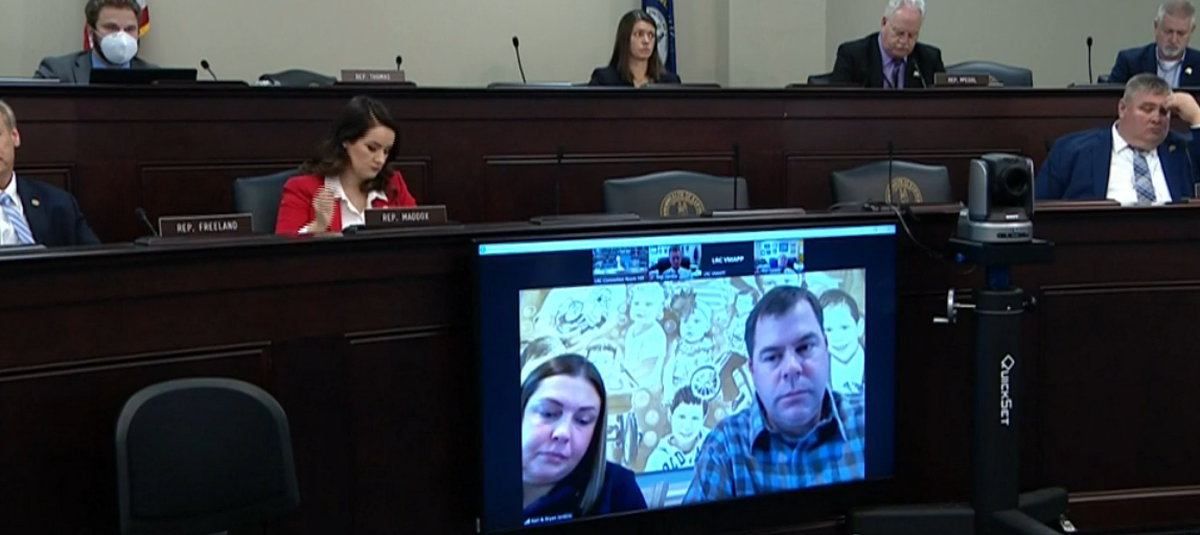
“Drowning is a leading cause of death in children under the age of 4,” Bryan Jenkins said. “There’s just not enough, I guess, anything put in place to protect not only the homeowner but also the curious children who might get away from you. I mean, from our yard, we can see the pool where she climbed up a ladder and jumped in.”
The bill would require that within 120 days of the law taking effect, pools must be surrounded by a barrier at least four feel tall. Any gates must be self-closing and self-latching. Homes and garages could form part of the barrier.
The wall of an above-ground pool could serve as the barrier if it’s tall enough, or a secured barrier could be placed over the top. But the pool’s ladder would have to be capable of being locked or removed when not in use.
Violations would bring fines of $50 to $100 per day.
Kentucky common law recognizes the doctrine of “attractive nuisance,” that homeowners are responsible for securing a potentially dangerous condition on their property that might attract children, even if the children are trespassing, said the bill’s sponsor, Rep. Randy Bridges, R-Paducah.
Thirty states already have laws requiring barriers around residential pools, Bridges told the committee.
The bill proceeds to the full House.
Bridges won committee approval for the same bill last year, but it stalled when House leaders sent it to the House budget committee for further study in the legislative session’s waning days.
Children between the ages of 1 to 4 have the highest drowning rates, with most of those deaths occurring in swimming pools, according to the U.S. Centers for Disease Control and Prevention. The CDC reported 200 such deaths in 2019, the most recent year for which data is available.
Two committee members raised concerns with the bill.
Rep. Al Gentry, D-Louisville, asked if the fines could be left to the discretion of local code enforcement officials, rather than being mandatory, because some homeowners might not realize they were in violation until someone notified them.
And Rep. Savannah Maddox, R-Dry Ridge, said that building a fence would cost homeowners $15 to $25 per linear foot. Maddox, who cast the committee’s only vote against the bill, asked Bridges if a pond intended for swimming would be included in the definition of swimming pools.
“Where do you draw the line?” Maddox asked.
The bill exempts large tracts of land of 10 acres or more, which would include most farms with natural ponds or watering holes for livestock, Bridges replied. But for smaller properties, if there is a pond that is used for swimming, then it would be considered a swimming pool, he said.
“This is, and I will be honest with you, a very lax pool law compared to other states,” Bridges said. “We are just trying to do what we feel like is the bare minimum to protect these young children.”