KY House calls for gradual elimination of state income tax, with a broader sales tax
House Republicans dropped their proposed tax changes on their way out of the Capitol for the weekend, calling for the reduction and eventual elimination of Kentucky’s individual income tax in favor of a broader sales tax.
House Bill 8 would reduce the state’s individual income tax rate from 5 percent to 4 percent next Jan. 1, “leaving an estimated $1 billion in taxpayer pockets to be invested and spent in local communities,” according to a news release from the House GOP leadership office on Friday.
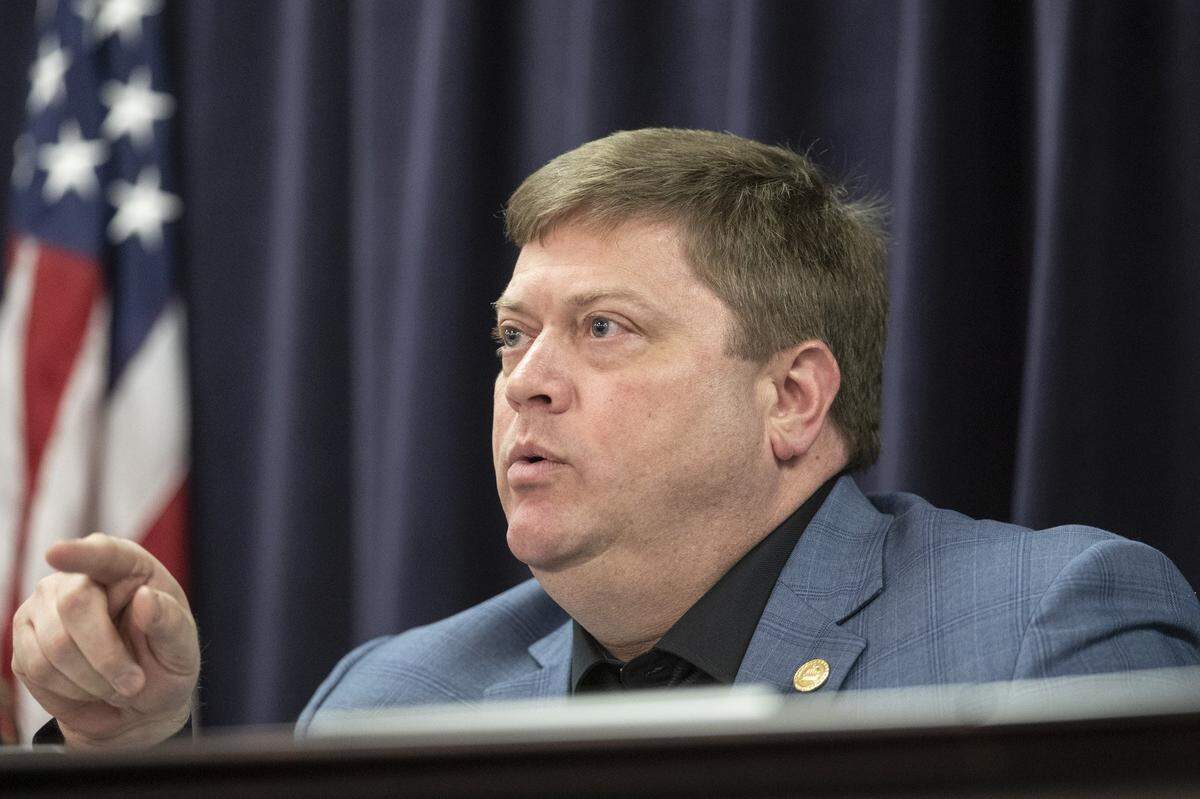
“Building a strong economy today is how we afford the progress we want for tomorrow. To accomplish that, we must focus on policies that empower working Kentuckians instead of continuing with the status quo,” House budget chairman Jason Petrie, R-Elkton, said in a prepared statement.
“After all, there is proof in the adage that if you want more of something, tax it less,” Petrie said.
The state budget is forecast to have a $1.9 billion surplus when the fiscal year ends June 30, giving lawmakers some wiggle room to experiment, but there are competing ideas for how to use that surplus.
Democratic Gov. Andy Beshear has called for reducing the state’s 6 percent sales tax to 5 percent for at least one year to provide inflation relief, at a cost of $340 million And on Thursday, the Senate budget committee approved a bill that would give $1.15 billion in one-time income tax rebates to Kentuckians later this year.
The House bill aims to continue reducing the income tax rate to 4 percent, with an eventual goal of eliminating the tax. But that depends on whether Kentucky’s General Fund hits certain “triggers” in additional revenue raised by the sales tax, which would be applied on more goods and services.
For example, the income tax rate would drop to 3.5 percent on Jan. 1 of the year following the fiscal year in which General Fund receipts exceeded $13.75 billion. It would drop to 3 percent when receipts exceeded $14.5 billion, and so on, with the income tax disappearing after receipts exceeded $20.5 billion.
The General Fund collected $12.8 billion in fiscal year 2021, but it’s on a path to exceed $13.79 billion this year and $14 billion in fiscal year 2023, according to the state budget office.
Among the several dozen newly taxed items under the House bill would be personal financial planning; advertising, marketing and graphic design; taxi cabs, car rentals and personal transportation, such as Uber and Lyft; private mail services; temporary rental services, such as AirBnB and VRBO; pleasure watercraft docking; non-medically necessary cosmetic surgery; body guards; residential and non-residential security systems; road and travel services; and non-primary residential electricity.
There also would be a battery reclamation fee for electric and hybrid motor vehicles and a tax on the use of fee-for-service charging stations. That money would go to the General Fund as well as the Road Fund.
The bill would not expand the sales tax to groceries or medicine, which long have been considered essential purchases and therefore politically off-limits. There would be no reduction in the income tax on corporations or limited liability entities, House GOP leaders said.
Shifting from the income tax to the sales tax would be dramatic for a state budget that last year collected $5.1 billion from the former and $4.5 billion from the latter.
But it follows on a trend the legislature began in 2018 when it previously dropped the top income tax rate from 6 percent to 5 percent and applied the sales tax to additional items, such as landscaping, small animal veterinary care and dry cleaning.
Critics of the shift to sales taxes, including the Kentucky Center for Economic Policy in Berea, warn that it puts an unfair burden on poor people, some of whom pay little to no income tax, but who spend much of their money on goods and services. In an analysis of the new House bill on Friday, KCEP called it “a giveaway to the wealthy.”
“If anything in the direction of HB 8 becomes law, Kentucky will be forced to ravage funding for its schools and other public institutions and will face a bleak future where the wealthy are even wealthier and the rest of Kentuckians have scant access to education, health care and other critical needs,” KCEP said in its analysis.
Backing the plan are business groups, led by the Kentucky Chamber of Commerce, which says Kentucky needs to change how it taxes people and companies in order to be more competitive for employers. Phasing out Kentucky’s income tax will make the state attractive as it looks to recruit new economic opportunities, the Chamber says.
“Kentucky relies on individual income taxes for revenue far more than the national average,” the Chamber said in a recent report. “Income taxes are not only more economically harmful than consumption-based taxes but also serve as less stable sources of state revenues.”
This story was originally published February 25, 2022 at 12:50 PM.