‘Tough love’ or ‘very cruel’? Plan to cut jobless benefits advances to KY Senate floor
A controversial plan to cut jobless benefits in Kentucky in an effort to spur people back into the workforce faster is nearing the end of its trip through the legislature, with supporters calling it “tough love” and opponents calling it “a very cruel bill.”
On Tuesday, a narrowly divided Senate Committee on Economic Development, Tourism and Labor voted 6-to-4 to approve House Bill 4. It proceeds to the full Senate.
The bill would shrink the time that unemployment insurance is available, down from the current 26 weeks, by indexing it to the statewide unemployment rate during a recent three-month span. And it adds new rules requiring people to search for work more frequently and take “suitable” jobs in their region more quickly.
Backers, led by the Kentucky Chamber of Commerce, say employers want more people to apply for work. Kate Shanks, the Chamber’s senior vice president for public affairs, told the Senate committee that Kentucky had the nation’s longest average duration spent on unemployment insurance from 2009-2019, at 19 weeks.
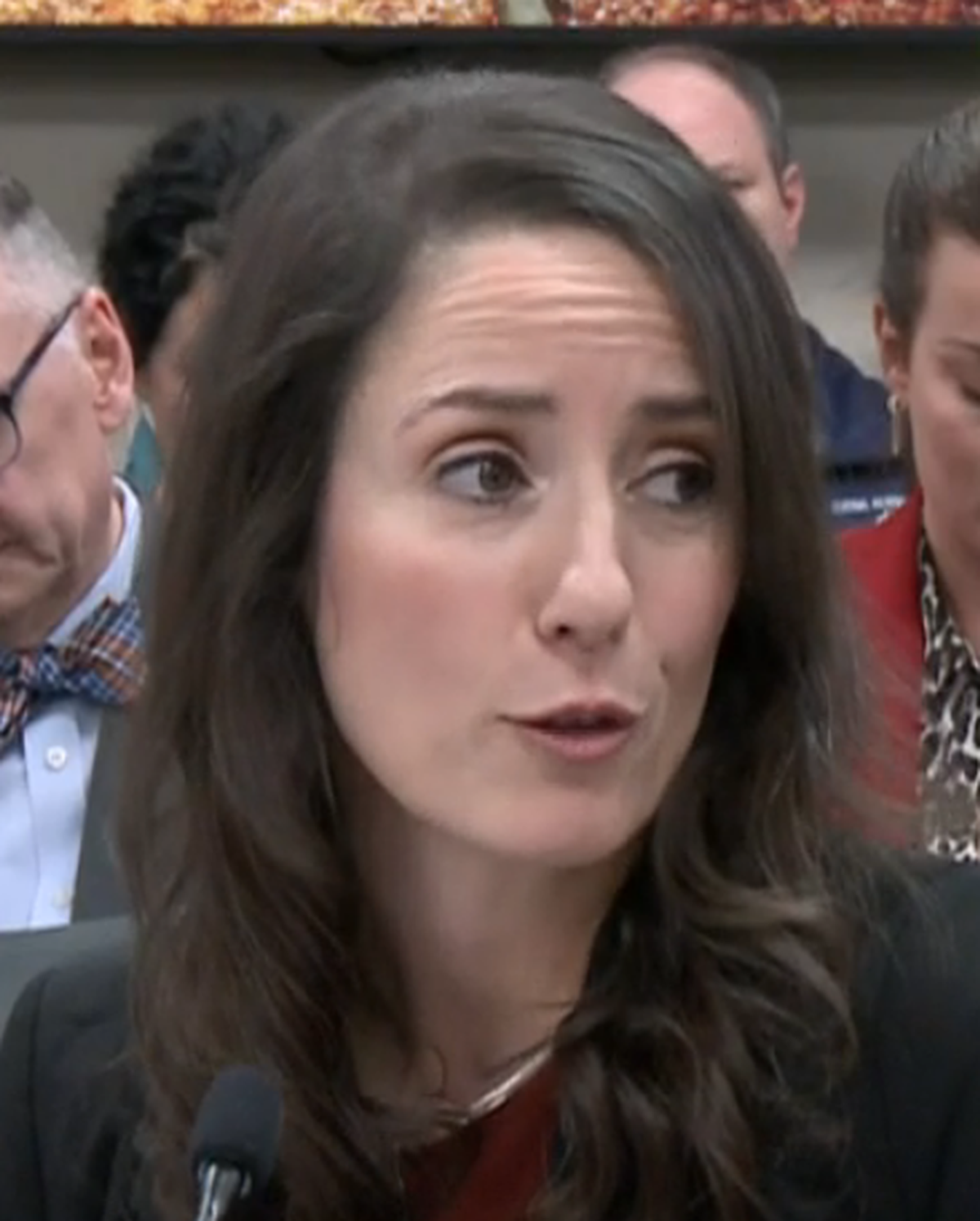
Members of the committee agreed that “Help Wanted” signs are everywhere.
“Employers right now are looking desperately to bring people on, and not just in low-wage positions by any stretch of the imagination,” said Sen. Chris McDaniel. R-Ryland Heights.
“If you’re in Northern Kentucky right now, you literally drive down the interstate with billboards draped down the side (advertising) entry-level positions, no experience necessary, $18 an hour,” said McDaniel, who owns a concrete company. “I know plenty of us that are hiring $20 an hour, no experience necessary, with full benefits. Right now, we can’t fill positions.”
‘A very cruel bill’
Opponents, including labor and religious groups, told the Senate committee the bill would slash a vital safety net. People eligible to collect jobless benefits only get a few hundred dollars a week, on average, and by definition, they are workers temporarily between jobs, not idle loafers, they said.
Under the bill, Kentuckians could be forced within six weeks to take a job that paid barely half of what their last job paid, critics said. Among the reasons people haven’t returned to work faster, they said, are a lack of child care, few jobs in their chosen field that offer fair compensation and health concerns due to the COVID-19 pandemic.
Sen. Phillip Wheeler, R-Pikeville, voted against the bill and angrily protested that, in Eastern Kentucky, a scarcity of good jobs can make it difficult for people to leap back into the workforce as fast as the new rules would demand.
“I think this is a very cruel bill. I think it hurts areas of Kentucky that have already been suffering,” Wheeler said.
“These are people who have actually been out there working in the economy who are entitled to these benefits. These are people who have been on the front lines, doing the yeoman’s work, getting out there and performing a job under very difficult circumstances and sometimes for very little wage,” Wheeler said.
Democratic Gov. Andy Beshear opposes the proposed jobless benefits cuts. Labor Secretary Jamie Link sent a letter to lawmakers Feb. 21 estimating the cost of implementing the bill at $13 million, for hiring additional unemployment insurance staff to enforce its rules and making the necessary technical changes to the computer systems.
How HB 4 works
The bill would end the 26 weeks of jobless benefits currently provided in Kentucky, as in most other states.
Instead, people would collect benefits from between 12 to 24 weeks, with the length determined by a calculation known as “indexing.” The state would use the average statewide unemployment rate of a recent three-month span of time to determine how long jobless benefits should last.
Critics say basing current benefits on months-old unemployment data leaves people vulnerable when the economy suddenly crashes, as it did in spring 2020 after the arrival of the COVID-19 pandemic led to widespread shutdowns.
If the bill had been law in spring 2020, the jobless only could have collected 14 weeks of benefits, because the index would have been based on the average unemployment rate from fall 2019 of 4.1 percent, according to an analysis by the Kentucky Center for Economic Policy.
The bill would let the jobless add five more weeks of benefits, not to exceed 26 weeks overall, if they enroll in an approved job training or certification program, with an emphasis on high-wage and high-demand occupations.
But it also would set stricter eligibility standards for keeping benefits. Instead of one job search activity per week, people would have to complete five verifiable job search activities, including at least three job applications or job interviews. Other activities could include job fairs or seminars.
And under the bill, after six weeks on benefits, people would have to consider employment offers to be suitable if the jobs were within 30 miles of their homes; if they were capable of doing the job, regardless of their experience or training; and if the jobs paid up to 120 percent of their weekly benefit amount.
The bill would create a method for employers to report people to the state if they don’t accept a suitable job offer or if they miss a job interview. The reports could be used to strip people of their eligibility to continue collecting jobless benefits.
This story was originally published March 2, 2022 at 9:00 AM.