Local politicians want control of Ky. public libraries. What will be lost if they get it?
The private University of Pikeville wanted the one-story building in downtown Pikeville that’s occupied by the Pike County Public Library. But the library wasn’t prepared to surrender it.
Local politicians grew angry at the library.
At the June 22, 2021, meeting of the Pike County Fiscal Court, Judge-Executive Ray Jones criticized the library for standing in the way of the university’s expansion, which he said would bring good jobs. Former Gov. Paul Patton is among the influential community leaders backing UPike, Jones said.
“I am very upset about it,” Jones told the audience that day.
“I plan on calling on some of our legislative delegation to introduce legislation to change how we choose library board members,” said Jones, a former Democratic leader in the state Senate. “I do not have the authority to pick and choose who I nominate, who I think would be the best people for those jobs.”
The library lost the subsequent fight in Frankfort.
During the 2022 General Assembly that just concluded, Sen. Phillip Wheeler, R-Pikeville, successfully sponsored Senate Bill 167, which gives elected county leaders the authority to take control of their local libraries.
Under the bill, county judge-executives could decide library board appointments on their own, discarding the current system where they are given two state-vetted finalists selected by the library board.
County fiscal courts could veto capital spending of $1 million or more, thwarting library renovations or expansions and the construction of new branches.
And with fresh leadership in place, the bill would let libraries hand their buildings over to “educational institutions” like the University of Pikeville, either leasing out existing facilities on unspecified terms or building new facilities on behalf of those schools or universities.
Democratic Gov. Andy Beshear vetoed the bill last week. Beshear said it would jeopardize the political neutrality of libraries and force them to use their facilities to subsidize other institutions, including private, for-profit schools.
However, the legislature’s Republican super-majorities have enough votes to override Beshear’s veto when the General Assembly returns to Frankfort on Wednesday and Thursday to conclude its 2022 session.
The bill has triggered alarms statewide, not least among patrons of the Pike County Public Library. Nearly 80 percent of the county’s 58,000 people have a library card, according to data the library reports to the state.

Marcella Anderson and her children and grandchildren appreciate both the downtown Pikeville library and a larger branch location about four miles to the north. Anderson said she doesn’t fully understand what the legislature has done, but she knows it could doom her downtown library.
“I don’t agree with that,” said Anderson, an outpatient therapist at Mountain Comprehensive Care Center.
“We have a lot of low-income housing in that area,” she said. “The children use that library. They can walk there. They go there for food programs. In the summers, there are activities so they have a safe place to go. I don’t see why we would give that away to a private college that already owns plenty of property all over the place around here.”
Apart from deciding the fate of library buildings, library officials say, politicians could try to influence the books and programs that go inside them.
“Whenever you have political control, it’s going to benefit that politician and their backers,” said Louella Allen, Pike County’s library director. “It’s not going to be for the benefit of all the population and the needs of the entire population. So special interests will come in at that point.”
The University of Pikeville declined to comment for this story.
Jones, who did not return calls seeking comment, told the fiscal court audience last June that he has fond boyhood memories of libraries, having grown up across the road from one in the Pike County community of Virgie.
“But things have changed a lot,” Jones added. “Very few people don’t have access to the Internet, to online resources.”
Mixing politics and libraries
Senate Bill 167 would affect the entire state, not just Pikeville.
The bill would end the independence that public libraries traditionally enjoy from the tumult of politics, said Shannon Oltmann, associate professor of library science at the University of Kentucky.
“You know, almost everything is politicized these days — news sources, social media. It’s hard to find unbiased information,” Oltmann said.
“But you can go to the library and find trustworthy sources as well as a wide range of perspectives,” Oltmann said. “A library board that is highly politicized one way or the other might frown upon that goal. They might put pressure on the library to only collect books and materials that align with their political views.”
“Furthermore,” she said, “if the library gets a challenge to its materials — let’s say, some people in the community don’t like a certain book — normally, we expect the library board to support the goals of intellectual freedom and free access for everyone.”
“But a board that’s heavily politicized might say, ‘We don’t want those sorts of books in the library, take them all out,’” she said.

In most of Kentucky’s 120 counties, libraries have been established since 1960 by citizen-petition as nonpartisan taxing districts, both self-governed and self-financed. (A dozen library systems are organized differently. Libraries in Lexington and Louisville, for example, have governing boards, but they are funded by local governments.)
To fill their boards, these libraries collect names of volunteers from the community; vet finalists with the Kentucky Department for Libraries and Archives, to check their professional qualifications; and finally, submit two choices for each seat to the county judge-executive, who can pick one or the other.
The sovereignty of libraries has been a sore point to elected leaders who otherwise rule their turfs.
This is especially true when libraries spend money on buildings or build up cash reserves in the bank in preparation for such an ambitious project. The libraries’ property tax rates and revenue traditionally could not be touched by county politicians, who grumbled when square footage was added for more books, children’s play areas and meetings rooms.
Bills challenging the independence of library boards have floated around Frankfort for years, and litigation disputing the taxing authority of libraries made it to the Kentucky Court of Appeals before it was struck down in 2015.
As a compromise , the legislature in 2020 capped the amounts that library boards and similar taxing districts can raise without fiscal court approval. On their own, they only can claim the “compensating rate,” yielding them the same revenue as the previous year
Political turf battles
Kentucky politicians have scrapped with their local libraries for years.
In 2015, for example, the Daviess County Fiscal Court objected to plans to spend up to $3.7 million to expand the Owensboro library. Judge-Executive Al Mattingly complained to library board members that a bigger library was not necessary with Owensboro High School “right across the street,” with plenty of rooms that could be borrowed at night and on weekends after students left.
“Quit building your silos,” Mattingly said. “When the library would have a need for a meeting or a program and needs to house more people, I’m certain some sort of an arrangement could be worked out.”
But library officials said it would be impractical for them to share an off-hours high school. Libraries and schools aren’t the same thing, they said. Anyway, they added, the county politicians had no say over the expansion.
“At the end of the day, the only people the library board answers to are our consumers and the taxpayers who use the library,” said library board treasurer Jeremy Edge.
Three years later, in 2018, then-Sen. Tom Buford, R-Nicholasville, tried to pressure libraries in Jessamine and Garrard counties into canceling public forums scheduled to be held in their meeting rooms by his Democratic challenger, a college history professor.
The library directors refused to stop the events, telling Buford that their rooms are open to everyone regardless of political party or ideology. The senator remained upset, they said.
“I explained to (the directors that) I have been a very good friend of libraries and I did not think this was a very good use of public funds,” Buford told the Herald-Leader at the time. “To me, it was unethical.”
SB 167 backers: We need accountability
Backers of Senate Bill 167 said they want greater accountability. Any public institution that collects taxes, as most Kentucky libraries do, should be overseen by elected officials whom voters can remove, they said.
“In many ways, the current taxing districts are unaccountable to the voters at large,” Wheeler, the senator from Pikeville who sponsored the bill, told the Senate Committee on State and Local Government last month.
“I think the vast majority of our library boards do function well. But there are some that don’t,” Wheeler said. “And when you run into a bad situation ... there’s really nothing that county government can do to clean that up.”
Although a struggle for the Pikeville library building launched the bill, Wheeler cited a different example for the Senate committee. He introduced Lawrence County Judge-Executive Phil Carter, who has been feuding with his county’s public library.
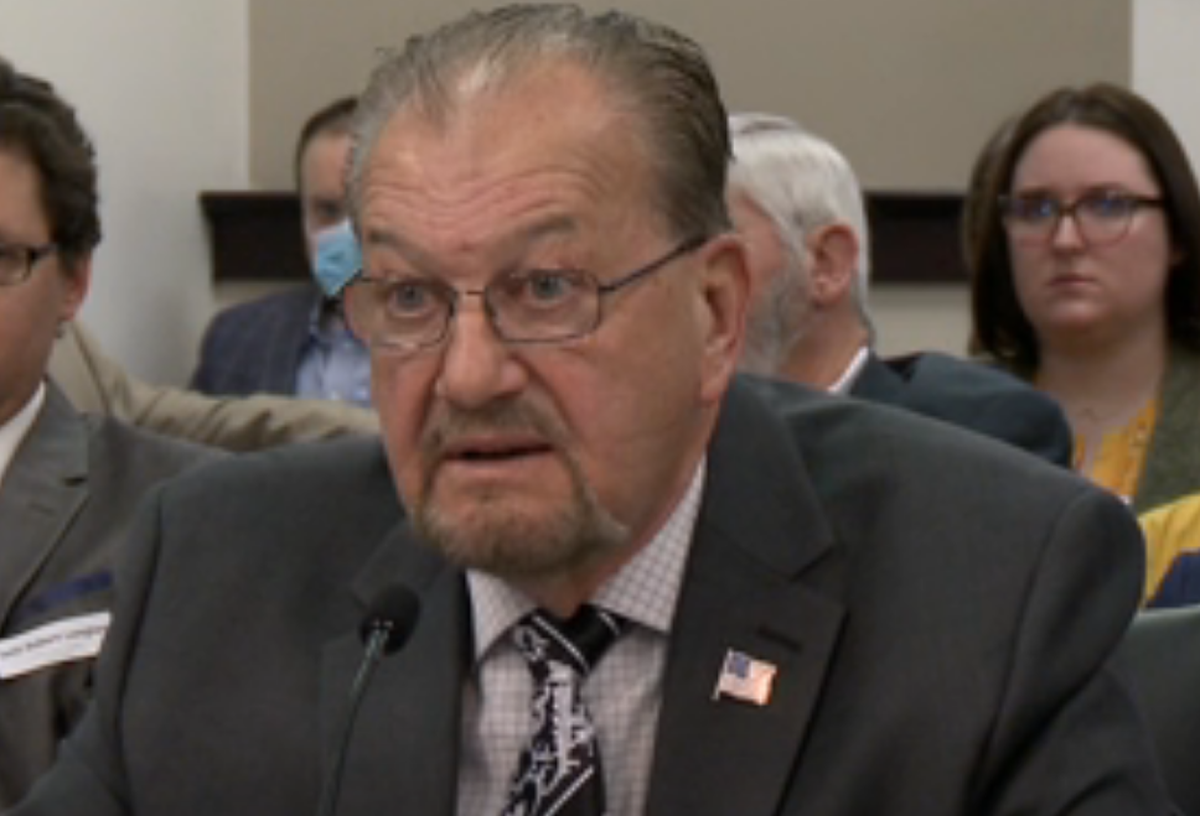
Carter told the senators that the Lawrence County Public Library charges residents too much in property taxes and wasted millions of dollars a few years ago on a frivolous renovation.
“It was a disaster,” Carter testified. “We just need some oversight.”
Carter, who did not return calls for this story, failed to mention a couple of political twists to the feud.
One, the library board chairman is former Democratic Judge-Executive John Osborne, whom Carter, a Republican, defeated in 2018. (The men battled each other in earlier campaigns, as well.) Two, the construction manager on the library’s 2019-20 renovation is Carter’s challenger in this year’s May 17 GOP primary.
A gamble with every election
Carlie Pelfrey, Lawrence County’s library director, disputes Carter’s allegations.
Pelfrey said the library has lowered its property tax rate for five years. Using a cash reserve of about $4 million, she said, it remodeled its building in Louisa, adding a 5,000-square-foot wing that is now an open, light-filled children’s section.
Meanwhile, the library trimmed its annual operating revenue from $1.4 million to $1.28 million over the most recent five-year period reported to the state, from 2015 to 2020. It spends less on an average per capita basis than other Kentucky libraries.
With 21,000 books on site, the library last year reported 66,560 visits in a county of nearly 17,000 people — many of them obviously repeat customers.

“It’s a lovely space and a very welcoming environment,” said Ross Compton, a family advocate at the Louisa Head Start program who brings dozens of preschool-aged children into the library to learn and to play.
“We’re in a relative desert in this region when it comes to cultural activities,” Compton said. “So the library is a real hub of that sort of thing. It’s where people go.”
Yet, Pelfrey said, in four years as judge-executive, Carter has shown little interest in the library other than to insist on naming whomever he wants to the library board and getting mad as his unsolicited appointments are rejected.
The library had to hire a lawyer to object in writing when Carter kept sending over the name of Lawrence County Attorney Michael Hogan to fill a board vacancy, she said.
Hogan recently pleaded guilty to federal wire fraud related to the theft of several hundred thousand dollars from his public office. He faces up to 20 years in prison when he’s sentenced in July. Hogan’s wife, a legal secretary in his office, pleaded guilty in the same criminal case.
“Obviously, we’re grateful that he didn’t end up on our board and he did not have access to our public funds,” Pelfrey said.
Given the judge-executive’s frequent criticism of the library, Pelfrey said she’s not optimistic about the future if Senate Bill 167 becomes law.
“I don’t anticipate a collaborative relationship with the judge. I don’t anticipate a fluid working working relationship. It hasn’t been that way for the last four years,” she said.
Pelfrey added: “I see a lot of libraries talking about Senate Bill 167 on our listserv (group email discussion), saying, ‘Oh, we have a great working relationship with our county judge, he’s wonderful!’”
“Well, we had that, too, at one point,” she said.
“But the reality is that all of the libraries in this state are only four years away from the situation that we’re in now,” she said. “When the tides change every four years with every election, it’s always a gamble how your relationship is going to go. And I worry about what that is going to mean for our resources and for our materials and for our staff.”
This story was originally published April 11, 2022 at 10:46 AM.