
In record-setting year for lobbying in Frankfort, who spent the most? What did they get?
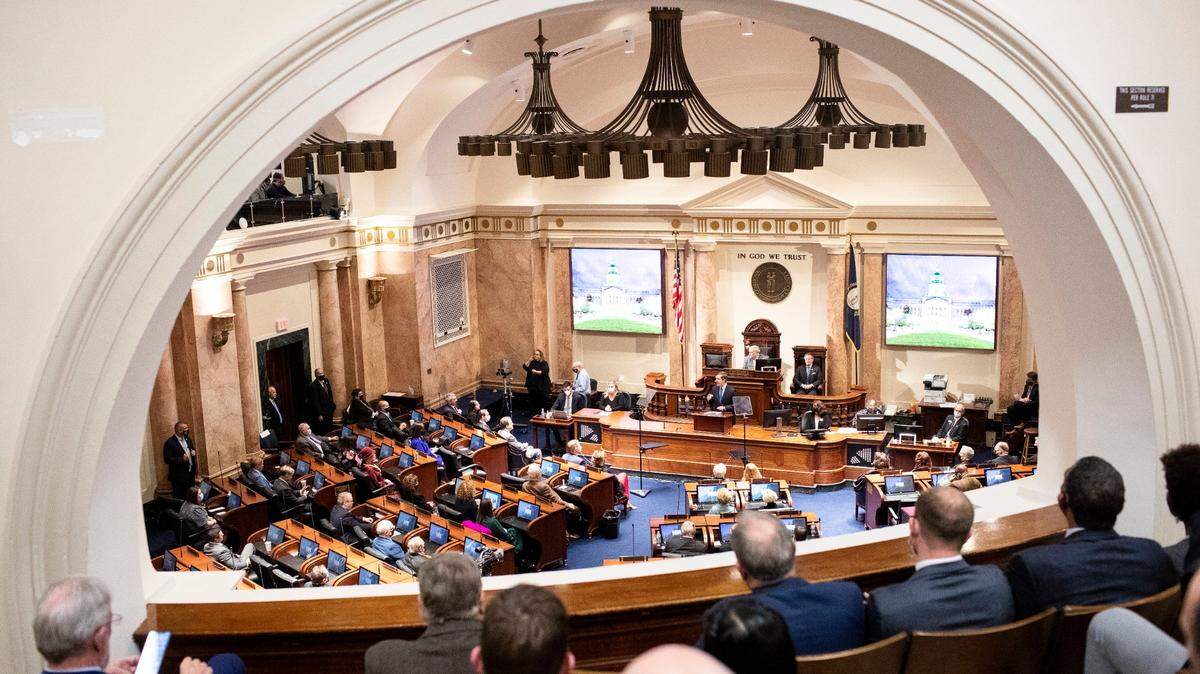
More so than any other year in Kentucky history, lobbying groups unloaded cash in their efforts to influence legislation in the statehouse this session.
Combined, lobbying groups spent $11,130,780 during the 90-day General Assembly according to reports from the Legislative Ethics Branch Commission, which publishes information detailing the activity of lobbyists and their employers. The mark beats a record set in 2018, when $10.67 million was spent to influence legislators in Frankfort.
As has been the case in years past, the state’s top lobbying spender this session was the Kentucky Chamber of Commerce. The chamber spent almost $184,000 on lobbying for or against more than 70 bills. The Kentucky Hospital Association spent the second-most, with more than $149,000 spent lobbying.
20 lobbying groups spent more than $50,000.
John McCarthy, former state GOP Chair and current owner of McCarthy Solutions, made more than $350,000 during the session by lobbying on behalf of dozens of organizations – his most lucrative client was the cigarette industry giant Altria Client Services, LLC.
Former Democratic state auditor Bob Babbage, of Babbage Cofounder, made $279,500 during session. He lobbied on behalf of multiple pharmaceutical companies as well as the Bail Project and gun safety efforts, among others.
Stephen Huffman, chief of staff for former lieutenant governor Steve Pence, netted $252,000, with high-dollar contracts lobbying for multiple organizations related to the horse industry.
27 people made six figures lobbying the Kentucky legislature. Another 13 cleared $70,000.
What bills did they lobby for or against?
The Kentucky Chamber of Commerce: $183,949
The chamber is an advocacy group that aims to advance the interests of Kentucky businesses and economic growth, with over 3,8000 business members. It lobbied legislators on dozens of bills this session.
House Bill 8, a bill that has introduced a sea change in Kentucky tax policy with the target of eventually eliminating the personal income tax, was a major priority of the chamber’s. It passed this session, and will begin to take effect next year.
The chamber also successfully lobbied for a bill that slashed unemployment benefits for Kentuckians as well as one that require the state to consider the financial costs to private industry before enacting new regulations — without also considering the possible public benefits of those regulations.
The chamber has created some rifts in the Republican party, with ‘Liberty’ candidates speaking out against it, based on bills that it has lobbied against. That includes House Bill 28, an anti-COVID vaccine mandate bill that was carried by now 2023 gubernatorial candidate Rep. Savannah Maddox, R-Dry Ridge, and defeated in committee. Their stance on those issues has drawn the ire of Northern Kentucky GOP Congressman Thomas Massie.
Additionally, the Kentucky Chamber of Commerce keeps a strong online media presence, operating a news blog and a newsletter as well as an active social media promoting various causes.
Kentucky Hospital Association: $149,046
The Kentucky Hospital Association spent more than $149,000, advancing a few noncontroversial bills and one that labored through the legislative process.
The organization lobbied bills that sailed through both chambers, like one that expanded access to remote pharmacy databases and another that supported a pipeline for nurses.
It also lobbied an issue about ambulance services in Kentucky, which faced a rough road in the General Assembly. House Bill 777, sponsored by Louisville GOP Rep. Ken Fleming, became law after Fleming withdrew two other bills also dealing with emergency medical services. Kentucky is currently one of just two states – the other being Hawaii – that allows ambulance services via a certificate of need process, and HB 777 loosened up that process.
American Civil Liberties Union of Kentucky: $128,258
The American Civil Liberties Union of Kentucky spent a hefty chunk of change, more than $128,000, lobbying the legislature this session. They took loud, though unsuccessful, stands against a few major social conservative priority bills: one that banned transgender girls and women from participating in womens’ sports, one that further restricted access to abortion in the state of Kentucky and another that attempted to tackle the perceived practice of Critical Race Theory in school instruction.
Altria Client Services LLC: $126,793
Formerly Phillip Morris, cigarette and tobacco product company Altria spent $126,793 lobbying the General Assembly this session.
Bills of focus: a bill that never got assigned to committee from Rep. Mary Lou Marzian, D-Louisville, which would have significantly increased the taxation of cigarettes; and one that made small changes to the
Notably, no major changes to the way that Kentucky taxes cigarettes found any momentum in the legislature. Listed alongside a select number of bills lobbied is a note stating that they lobbied for “matters pertaining to the manufacture and sale of tobacco products.”
Pace-O-Matic of Kentucky: $106,150
Pace-O-Matic flooded money largely into lobbying against one bill: House BIll 608, which would have banned slot-like ‘gray machines’ or ‘skill games.’ At least during this session, they won.
The bill died in the final hours of the General Assembly, and was somewhat tied to the fate of House Bill 606 which would have legalized sports betting in Kentucky.
Burning Barrel by Pace-O-Matic is one of the more prominent brands of ‘gray machine’ – so called for occupying a ‘gray’ area in Kentucky law – gracing the walls of convenience stores, gas stations, and Fraternal Order of Police lodges across Kentucky. One of the key arguments against House Bill 608 was that it would be creating winners and losers, with the horse parks coming out on top once again.
The original bill, from Rep. Killian Timoney, R-Lexington, banned all gambling outside of charitable gaming, the lottery or horse racing and slot-like historical horse racing machines.
Kentucky League of Cities: $102,195
The Kentucky League of Cities was quite active this past session, and saw several successes along with one major defeat in the legislature.
They lobbied for bills that passed easily: one that cut red tape on interlocal agreements and another that eliminated the requirement that cities engage consultants to evaluate local-only tax increment financing districts.
One loss: a pair of bills that would have kicked off the process for allowing local governments to tax residents in a number of ways they aren’t currently allowed. Those bills, House Bills 475 and 476, sailed through the House but hit a roadblock in the Senate.
KLC Executive Director/CEO J.D. Chaney said he had to court Democratic Senators, and got the support of nearly all of them, to get close to the constitutionally required three-fifths majority in the Senate for the constitutional amendment, House Bill 475, and its companion bill.
“I think more and more legislators, as evidenced by the vote in the house, realize that for Kentucky to fully embrace the idea of tax reform there has to be change at the local level. The Senate just wasn’t there yet in terms of having the understanding,” Chaney said.
Pharmaceutical Care Management Association: $86,168
PCMA’s legislative priorities centered around a bill that would have limited pharmacy benefit managers, for-profit administrators of prescription drug programs for commercial health plans. Despite House Bill 475 easily clearing the House, it died in the Senate without receiving a committee hearing.
Advocates for the bill said that it would put community pharmacists on a more equal footing with pharmacy benefit managers, according to the Courier-Journal, but the PCMA joined an effort to beat the bill by arguing that it would increase the cost of health plans. The orgnaization spent $52,634 on statewide internet, television and newspaper advertising on HB 457, according to the Legislative Branch Ethics Commission.
Another bill lobbied was one from Sen. Max Wise, R-Campbellsville, on “step therapy,” which requires patients to try a lower cost prescription drug that treats a given condition before “stepping up.”
Greater Louisville, Inc. (GLI): $82,290
Like its statewide counterpart, GLI lobbied for both House Bill 4, the one cutting unemployment benefits, and House Bill 8, which reduced the personal income tax. It also lobbied on House Bill 1, the state’s budget bill.
GLI stood behind Rep. Samara Heavrin, R-Leitchfield, in the passage of House Bill 499, a bipartisan-backed piece of legislation that creates a fund “incentivizing employers to contribute to the child-care costs of its employees.” The state match for that program is greater for employees who make less money.
Like KLC, GLI supported House Bills 475 and 476, but ultimately failed in that regard. GLI was also a big backer of House Bill 86, which would have established a state affordable housing tax credit, but never got assigned to a committee.
Kentucky Retail Federation: $82,118
The Kentucky Retail Federation’s lobbying focused mainly on opposing House Bill 475, according to the Steve McClain, the organization’s director of communications and public affairs. A representative from the federation argued in a committee meeting that giving cities or counties the option to implement different taxes beyond those that are currently authorized would unfairly pass new taxes onto consumers and businesses.
Other big spenders
A few other major spenders on lobbying the state legislature include Anthem Inc. and its affiliates, which spent over $70,000; Kentucky Farm Bureau spent more than $60,000; the Kentucky Petroleum Marketers Association spent nearly $58,000; the Kentucky Association of Electric Cooperatives cleared $57,000 and the Kentucky Equine Education Alliance spent almost as much.
This story was originally published June 8, 2022 at 12:29 PM.