
After withdrawal from GOP race, Maddox refunds more big-dollar donors than smaller ones
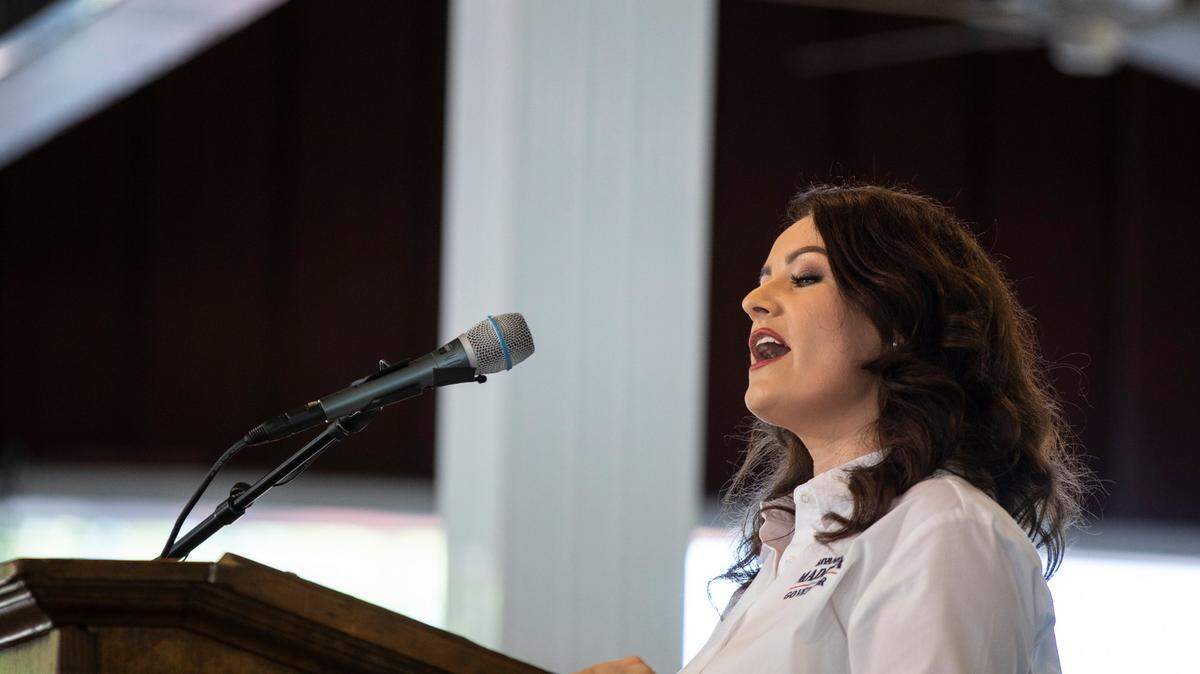
Rep. Savannah Maddox, R-Dry Ridge, made a splash in her brief run for the Republican nomination for governor before dropping out in December. She cited a lack of fundraising as the primary reason for leaving the race.
In the wake of her dropout, it appears that Maddox’s campaign has fully refunded donors who gave her the maximum amount, $2,000, at a significantly higher rate than low-dollar donors. $2,000-dollar individual donations were around ten times as likely to get full refunds as those who donated less than $1,000.
This practice goes against state election finance rules, according to Kentucky Registry of Election Finance Executive Director John Steffen. The statute says that if refunds are given, they should be doled out proportionately to “all contributors.”
But Maddox said in a statement that she planned to keep much of the funds for a future run, and that an advisory KREF opinion indicates that her actions were permissible.
“Any individual who requests a refund from the campaign will be provided one, which is permissible under KREF Advisory opinion 95-010,” Maddox said. “Our campaign is willing to return money to people who need it in this challenging economy. However, if supporters want to stay in the fight, the money will be used in a future campaign.”
Holding funds for a future campaign is allowable. It is one of six accepted uses for unspent campaign dollars, along with pro rata refunds to all contributors, giving it back to the state, transferring to caucus campaign committees or county/state parties, or donating to a 501(c)(3) charity.
The opinion cited was written in 1995 by KREF’s general counsel, stating that it was permissible for a campaign to refund a single $10 donation. Steffen said that he believed Maddox’s campaign relied on the opinion “in good faith.”
“I stand by my interpretation of the statute, but its application in the exact manner it is written would be difficult. I think this old opinion represents the agency’s effort to mesh the statute with some sort of practical application of it, based on contributors’ desires,” Steffen said.
The statute, KRS 121.180(10)(d) states that if a candidate chooses to refund donors a remaining balance of funds on a candidate’s account when the campaign is over shall be distributed to donors on a pro rata (proportional) basis based on how much the funds raised have already been spent. Maddox had spent a little over half of her campaign’s $237,037 total raised.
The portion of the statute mentioning that refunds should be “pro rata” has been law since 1976, according to the Legislative Research Commission.
More than 40% of the people that Maddox’s campaign gave full refunds to gave her $2,000. Less than 10% of the more than 570 individual donations to Maddox’s campaign were for the maximum amount.
Only 14 of the 46 people given refunds donated less than $1,000 to the Maddox campaign.
None of the 66 people who gave Maddox $20.23, in reference to her 2023 election, were refunded as of early January. The campaign gave out 6 refunds of $100 or less, while 314 individual donations were for $100 or less.
Maddox’s campaign also refunded the candidate’s own $1,200 in itemized donations to her campaign.
In the statement to the Herald-Leader, Maddox said that the campaign was willing to return funds to whoever asked. However, this policy had not been publicly posted by her team since she announced that she would drop out, and was news to donors reached by the Herald-Leader.
Three donors reached by the Herald-Leader were unaware that the Maddox campaign had given out refunds to some other donors. Maddox did not respond to inquiries on whether the people who have been refunded thus far requested it or what future campaign the remaining funds will go toward.
Maddox has become, in her relatively short political career, a celebrity among the unofficial Liberty wing of the Kentucky GOP, an informal Tea Party-adjacent and grassroots-focused faction of the Kentucky Republican party. Elected officials who identify as ‘Liberty’ are mostly concentrated in Maddox’s native Northern Kentucky.
In her bid for governor, she received the endorsement of the Liberty movement’s most prominent statewide figure: 4th Congressional District Congressman Thomas Massie.
The representative from Grant County was seen as a legitimate candidate for governor in a race whose crowded nature might have been to the benefit of someone with a unique political lane.
Many of Maddox’s supporters in her bid for governor supported her fervently. Jan Skavdahl, president of the Northern Kentucky Tea Party, said that those of her political stripe were “so disappointed” to learn of Maddox’s dropout because she was no longer in the race.
Those core supporters, the ones who have known her for years, are more likely to want Maddox to do whatever she wants with the money they gave her.
“People I know from the Tea Party that donated weren’t big donors. Those are the people that hold her most dear to their heart and have known her for multiple years. They would want her to use their money for whatever she she’s going to use it for, so I don’t find that curious that mostly bigger donors are hedging their bets. I haven’t heard one person, and I know tons of people, saying ‘I wonder if we’re going to get our $50 back,’” Skavdahl said.
Skavdahl added that the real issue is that candidates like Maddox aren’t able to fundraise as much from bigger donors because Liberty candidates like her “can’t get bought.”
At least one donor wasn’t exactly thrilled when asked about the news. Greg Schabell, a workers compensation attorney in Northern Kentucky, gave Maddox $250 because he likes her personally and politically and was intrigued at the prospect of electing the first governor from Northern Kentucky since 1900.
“If the statute says pro rata then she should do her due diligence and do that… It seems a little edgy that she would pay the high-dollar donors some money, but not the rest of the people,” Schabell said.
Other donors like Judy Klette, a “very conservative” retiree from Florence who gave $20.23, said that Maddox has her full support to do whatever she wants with the money she gave her campaign.
“She’s a good, good lady and it’s a shame that she doesn’t have the financial backing needed to run for governor. (Not getting a refund) doesn’t matter to me at all. I would tell her to keep it and use it for the next race,” Klette said.
This story was originally published January 12, 2023 at 7:00 AM.