
The top KY GOP gov candidates shared a big stage on Friday. What did they say?
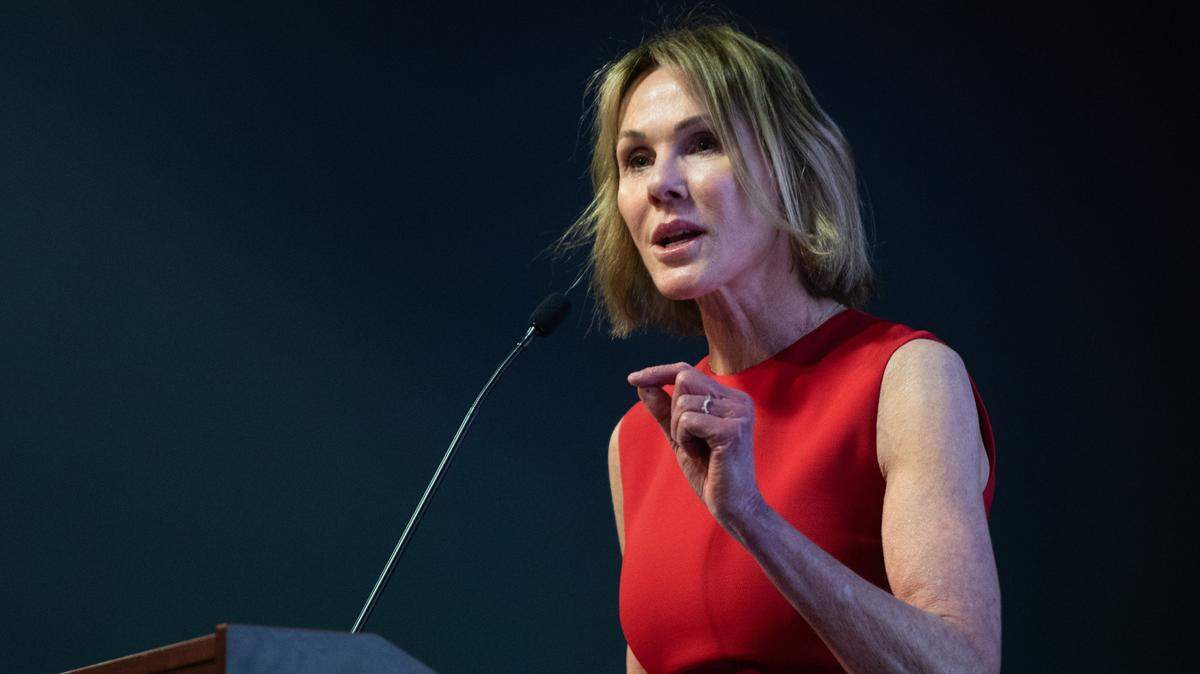
Warren County helped elect Gov. Andy Beshear in 2019 by a slim margin. But all the energy at the local GOP’s Lincoln Day Dinner on Friday night was directed toward making him a one-term governor.
The top candidates in the crowded GOP field took the stage together for the first time this Spring at the event, making their case as to why they were best suited to take on the incumbent to the hundreds in attendance.
For the most part, Attorney General Daniel Cameron, former ambassador Kelly Craft and Commissioner of Agriculture Ryan Quarles said they were all focused on their own campaigns at a large gathering of Republicans for the Warren County GOP Lincoln Day Dinner on Friday night.
This comes as the primary race, set for May 16, is beginning to heat up. A poll released by Fox56 and Emerson College on Thursday showed Cameron leading the pack at 30%, but with Craft trailing close by at 24% and Quarles gaining to 15% without spending money on ads.
“I’m running as Daniel Cameron and (wife) Makenze Cameron, and on the work that we’ve done as Attorney General. I know others will try to attack and do that sort of thing, but I’m about presenting my identity and what we have been able to do over these last three years,” Cameron said in response to a question on attack ads run against him
Craft kept a similarly non-combative tone, only obliquely referring to attacks on Cameron.
When asked about an attack ad on Cameron’s previous statements regarding cash bail from a political action committee (PAC) that is backing the Craft campaign, Craft said that while she is not involved in PAC activities – candidates are barred from doing so – she feels as though it’s accurate.
“TV stations do not play such a thing unless it’s accurate, and what I’m attempting to do with all of my commercials is to present the facts to the voters of Kentucky and to make it a clear choice that Kelly Craft is the one that can be elected governor and defeat Andy Beshear,” Craft said.
Craft didn’t have a response to Cameron, who, a day before the new poll came out had said her campaign was in “freefall.”
“I’m not reading polls. I’m meeting people,” Craft said.
However, her lieutenant governor running mate, Sen. Max Wise, R-Campbellsville, had some brief thoughts.
“Instead of a freefall, it looks like our trajectory is going up. It looks like we’ve got a lot of momentum,” Wise said.
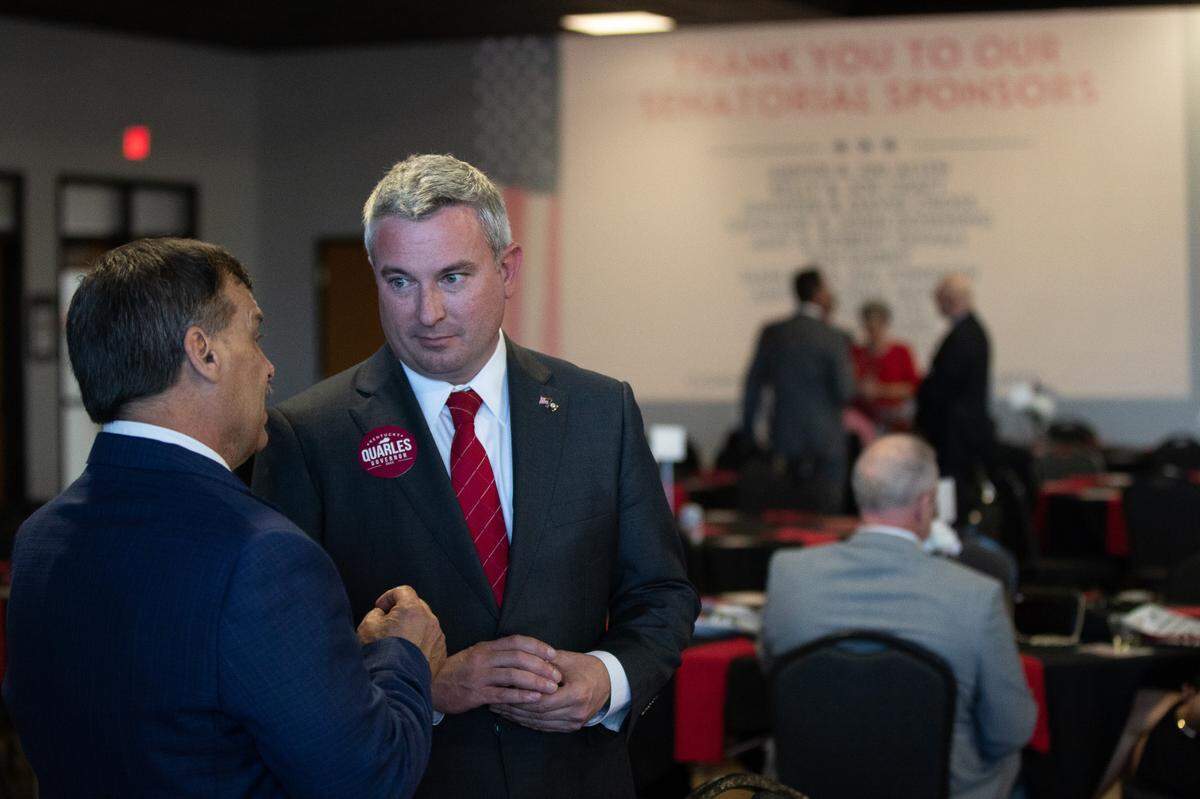
As for the recent polling result, Quarles said that he was “thrilled” by garnering 15% without spending any money on ads as Craft, Cameron and candidate Eric Deters have.
“We’re spending zero dollars on paid media and our grassroots support across the Commonwealth shows that we’re right in the thick of it… It also shows that the past two terms as commissioner of agriculture are paying off.”
Quarles has yet to come out with any statements critical of his GOP competition.
Cameron said that the recent poll “is not” representative of the private polling results that his campaign has done. In January, his campaign released its own poll showing him up on the rest of the GOP competition by a massive margin, one that was largely backed up by a public poll done in the same month.
“There are going to be a lot of polls. We feel good about our position and we’re going to continue to work hard and believe we have the best opportunity to win this nomination and then win in November as well,” Cameron said.
Like Cameron, Somerset Mayor Alan Keck said that he thought the recent poll was “off.” He received only 0.6% of the result in that survey, much lower than he said he would have guessed.
He said “we’ll beat those numbers in Pulaski County alone,” and added that his campaign has enough to get advertisements on television before it’s all said and done.
Unlike Cameron and Craft themselves, Keck offered strong disapproval of the fighting between GOP candidates, saying it “turns people off.”
“That’s one of the reasons that we’ve been so optimistic and positive. I don’t think people want to see another five weeks of mudslinging,” Keck said.
Some other influential Republicans showed up on Friday night. The lieutenant governor under former governor Matt Bevin, Jenean Hampton, said that she was still undecided in who to support for governor.
Hampton is a prominent figure in “Liberty” circles of the state GOP. She told the Herald-Leader that she had “not yet” made a decision on who to endorse for governor, but that she was looking for a candidate to handle the economy and public safety.
Keynote speaker for the night was former Arkansas governor Asa Hutchinson, who recently announced a bid for the Republican nomination for U.S. president.
Hutchinson has been critical of Trump in his nascent run for president. He did not offer support for any particular candidate, stating that all of them performed well in speeches during the event.
He did, however, offer some words of advice for GOP candidates seeking to gain support in a post-Trump party: focus on the future.
“They ought to be focusing on problem solving, and it’s not about the last election. It’s not about, you know, getting even. It’s about the future. I think the candidates — you always try to contrast yourselves and I thought they did that effectively.”
When asked about the endorsement that Cameron has received from Trump and the potential connection between Craft and likely presidential candidate Florida Governor Ron DeSantis, he said he didn’t think endorsements mattered much.
“My experience is that endorsements are not the key in particular this year. So I think it’s about each candidate and what they stand for,” Hutchinson said.
On the issues
Cameron, in his five-minute speech during the dinner, focused on a set of familiar themes. He mentioned his lawsuit against Andy Beshear during the COVID-19 pandemic, which is prominently featured in the first television ad that his campaign released this month.
The attorney general also prominently featured the endorsement he received from Trump in his speech, a fact that a PAC supporting him has flaunted in advertising.
He also didn’t shy away from his record opposing virtually all abortions in the state, as his office has defended Kentucky’s trigger ban on abortion against legal challenges.
“I’m not ashamed to say it: because of pro-life legislation that has been passed by some of the members of our legislature and because of the work of our office, the abortion facilities have been closed in the Commonwealth (since August),” Cameron said.
Craft focused on a suite of issues similar to the ones that she’s focused on in her frequent television ads: the border, drugs, education and foreign policy via her experience as ambassador.
She said that she would seek a criminal justice policy to hand out the death penalty to drug dealers whose products resulted in an overdose death, and she reiterated her desire to “dismantle” the Kentucky Department of Education. She also said that the trades would be lifted up in Kentucky, and touted her connection to the coal industry via her billionaire coal entrepreneur husband Joe Craft.
“My family has created thousands of jobs in the state of Kentucky in the coal industry, our most abundant natural resource,” Craft said. “We have also created jobs in the supply chain around that. I know how to create jobs, and negotiating the largest trade deal in the history of America, I have the contacts to bring it to Kentucky.”
Quarles focused his speech on criticizing Beshear’s actions during the COVID-19 pandemic and touting what he called a groundswell of Republican support around the state.
“We’re going to visit every single county twice and every Dollar General store once so you know we have a lot ahead of us. We also have over 235 endorsements from elected Republicans including one fourth of our judge executives and over 25 members of the Kentucky General Assembly,” Quarles said.
The commissioner of agriculture also argued that he was the most likely to defeat Beshear in the Fall if he were to win the primary. He said that his support in rural swaths of Eastern and Western Kentucky – areas where Beshear very prominently led recovery efforts in the wake of natural disasters – and his working class background as a farmer would give him an edge.