Kentucky transgender minors, families plan to appeal to U.S. Supreme Court over new KY law
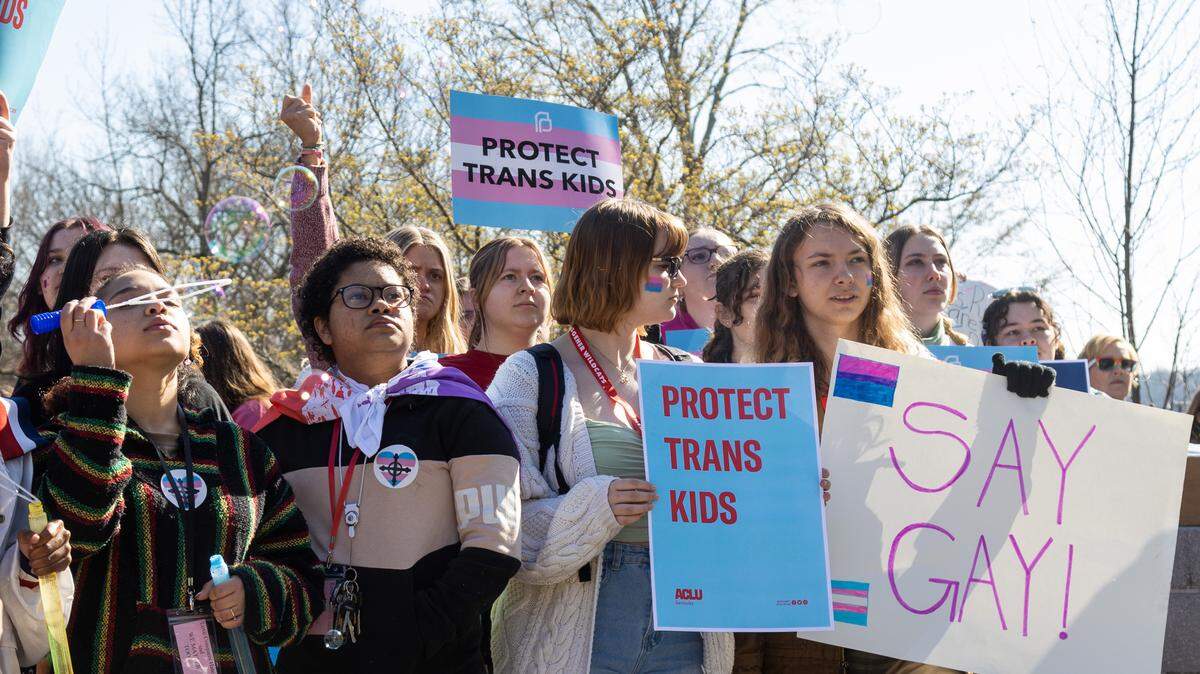
Seven Kentucky transgender minors and their families, who sued the state this summer over a new gender-affirming medical care ban, plan to appeal their case to the U.S. Supreme Court.
The American Civil Liberties Union of Kentucky and National Center for Lesbian Rights, on behalf of those families, announced their intention to petition the high court to overturn the health care ban on Wednesday. If the high court takes this case, which has been combined with a similar legal challenge in Tennessee, it will become the “first” case of its kind “to challenge transgender health care restrictions before the Supreme Court,” both organizations said in a news release.
“This sort of extreme political interference in the doctor-patient relationship has no place in the exam room,” Corey Shapiro, legal director for the ACLU of Kentucky, said in a statement.
More than 20 states have passed similar bans since 2021. Tennessee’s version, passed into law earlier this year, was quickly challenged by three trans plaintiffs and their families. In July, a three-judge panel on the Sixth Circuit Court of Appeals declined injunctive relief to those plaintiffs, restoring the Volunteer State’s ban, and in doing so, consolidated Kentucky and Tennessee’s cases into the same appeals process.
In late September, that same three-judge panel declined, in a 2-1 ruling, to block either law from enforcement while the case continues winding its way through court, allowing both bans to remain in effect.
Chief Judge Jeffrey Sutton and Judge Amul Thapar wrote in their 83-page majority opinion that the matter was one for state legislatures to decide, not “life-tenured judges construing a difficult-to-amend Constitution.”
“No one in these consolidated cases debates the existence of gender dysphoria or the distress caused by it. And no one doubts the value of providing psychological and related care to children facing it,” Sutton and Thapar wrote. “The question is whether certain additional treatments — puberty blockers, hormone treatments, and surgeries — should be added to the mix of treatments available to those age 17 and under.”
Tennessee plaintiffs filed their request to the nation’s highest court earlier on Wednesday, and plaintiffs in Kentucky vowed to do the same this week.
“We are asking the Supreme Court to reverse the Sixth Circuit’s decision so that our clients can continue receiving the necessary, effective health care recommended by their physicians and supported by their parents,” Shapiro said Wednesday. “It’s time to stop criminalizing health care, interfering with personal decisions, and substituting political agendas for the expertise of health care professionals.”
Republican Attorney General Daniel Cameron, who is running for governor to unseat Beshear and who has fought to keep the ban in place, decried Wednesday’s announcement.
“The safety of Kentucky kids has been my top priority,” Cameron said in a statement. “My office has vigorously defended (the ban) since the legislature overrode Gov. Beshear’s veto, and we will go all the way to the U.S. Supreme Court if necessary.”
Major medical associations, more than 20 of which signed on to the lawsuit in support of plaintiffs, unilaterally oppose this type of health care ban, which puts trans kids at “risk of significant harm,” they wrote in an amicus brief.
The Sixth Circuit’s Judge Helen White, who dissented, cited these harms in her 32-page opinion.
“A substantial body of evidence — including cross-sectional and longitudinal studies, as well as decades of clinical experience — shows that these medical interventions work,” White wrote. Such care “improves short- and long-term outcomes for adolescents with gender dysphoria by reducing rates of depression, anxiety, self-harm and suicidality, and brings their mental health into alignment with their peers,” she said.
Shannon Minter, National Center for Lesbian Rights legal director, agreed, saying in a Wednesday statement, “the Sixth Circuit’s decision gives the government essentially unchecked power to prevent parents from making medical decisions for their children.”
Kentucky’s ban on gender-affirming surgeries, hormone therapy and puberty blockers for youth with gender dysphoria has been in effect since July. After this provision — part of the larger Senate Bill 150 — became law with broad Republican backing over Democratic Gov. Andy Beshear’s veto in March, both organizations sued the state in May on behalf of those seven Kentucky families.
The plaintiffs are specifically challenging the law’s prohibition on hormone therapy and puberty blockers, not gender-affirming surgeries. They argue that the denial of such evidence-based care violates the Fourteenth Amendment under the Equal Protection clause, because it discriminates on the basis of sex.
The ACLU of Kentucky also argues it violates parents’ rights to seek and follow medical advice to safeguard their children’s health.
In addition to banning puberty-blockers, hormones and surgeries for kids under 18, SB 150 also outlaws lessons on gender identity and sexual orientation at certain grade levels, prevents trans students from using the bathroom that corresponds with their gender identity at school, and prohibits school districts from requiring faculty and staff use a student’s pronouns if those pronouns don’t align with their sex assigned at birth.
This story was originally published November 1, 2023 at 11:46 AM.