Kentucky’s next attorney general talks fighting drug epidemic, violent crime and Biden
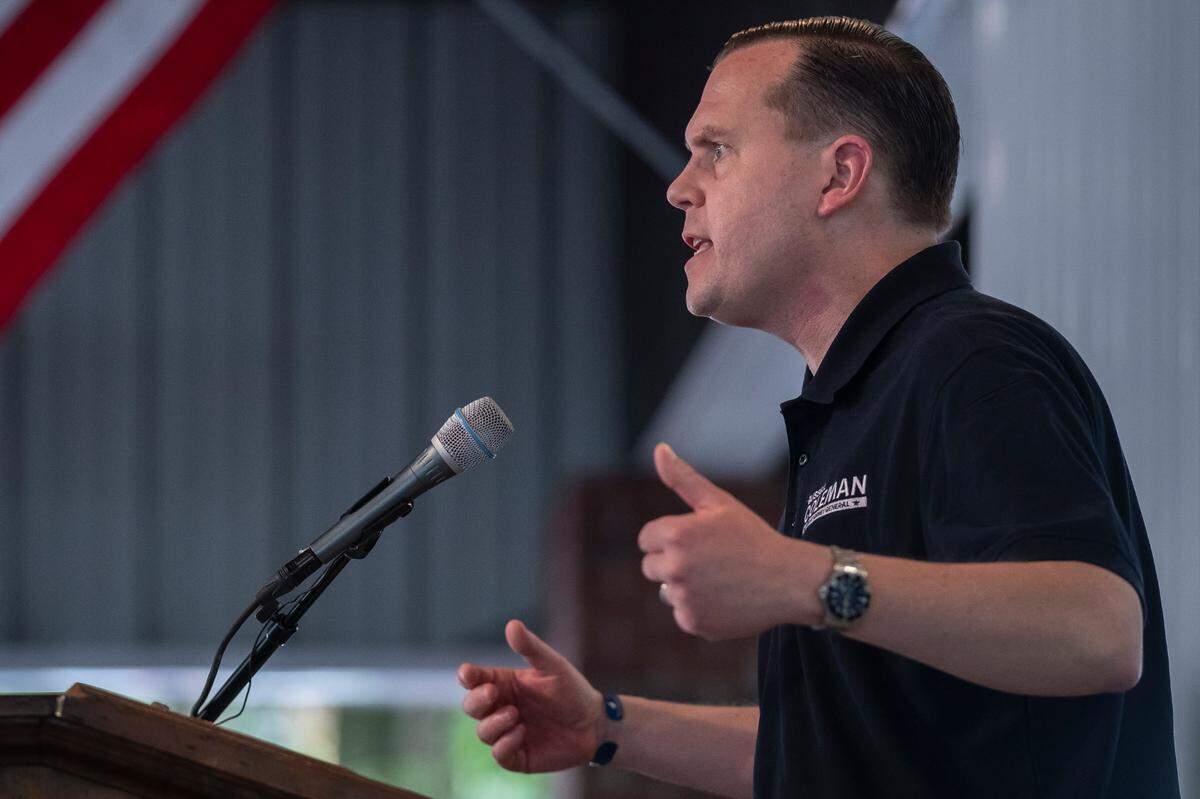
For Russell Coleman, a career in law enforcement has been a lifelong calling.
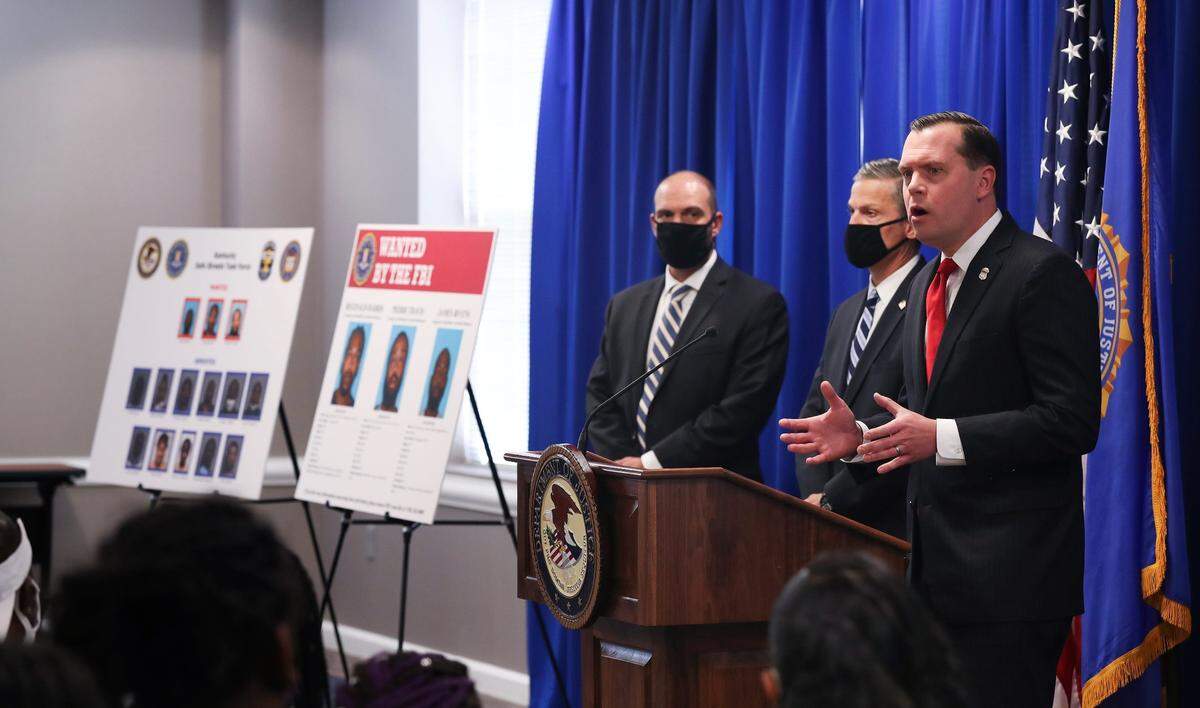
His career has included working as an assistant commonwealth’s attorney, a U.S. Department of Justice staffer for three years, five years in the FBI and a turn as the U.S. Attorney for the Western District of Kentucky under former president Donald Trump.
His next stop: Kentucky’s chief law enforcement officer.
“I’ve never been in elected office. This is my first bite at that apple, but for me, it’s a calling,” Coleman said in an extensive interview with the Herald-Leader.
“I take that term as chief law enforcement officer of the commonwealth — it’s not just a statutory term in the Kentucky Revised Statutes — that’s the nature of this job. It’s the nature of the culture I hope to build at the Attorney General’s office.”
The Herald-Leader sat down with Coleman the week after his decisive victory to become attorney general-elect over State Rep. Pamela Stevenson, D-Louisville.
During that time, Coleman spoke extensively about his plans to tackle Kentucky’s drug crisis, violent crime and child exploitation in the commonwealth. Coleman also acknowledged he hopes to collaborate with Gov. Andy Beshear, a Democrat, when he can.
Still, Coleman expects there will be “an inherent tension” between the two.
Coleman succeeds one of his dearest friends in becoming Kentucky’s top cop, outgoing Republican Attorney General Daniel Cameron, who mounted an unsuccessful bid for governor against Beshear.
The following conversation has been edited for length and clarity.
Herald-Leader: You had a press conference a week after the election and identified combating the drug epidemic as a top priority. What does that look like from a law enforcement and prosecutorial perspective?
Russell Coleman: I’m hesitant to ever say the term “opioid epidemic” because we don’t have just an opioid epidemic. We have a drug epidemic in the state, from the methamphetamine that we see pouring into the commonwealth, that is in some regions the primary drug of choice and the primary threat. We have, truly, a poly-drug threat. The fentanyl that we’re seeing pouring in, which is driving those overdoses, those almost 2,200 overdose deaths last year. The vast majority of those fatalities are driven by fentanyl. Thanks to Narcan, we’ve driven some of those down. A 5% decrease, those are lives saved. I celebrate that. But we’re still looking at 2,200 empty seats in pews, empty seats at kitchen tables. It’s abysmal.
When I talk about the drug epidemic, how could the attorney general sitting in Frankfort impact that? It is working through the most important prosecutors to your readers and the people of this commonwealth. It’s not the AG, and it’s not the United States Attorney, the job I used to have. It’s your county and commonwealth’s attorneys. It’s who Kentuckians are electing in that role. The way that the AG as a force multiplier could have an impact on it is working through our county and commonwealth’s attorneys. They oftentimes feel like they’re on an island. They’re underwater with cases. I was with a commonwealth’s attorney last night that shared some of her statistics. Their entire docket, the criminal docket, seems to be driven by the drug epidemic. It plays a role in so many offenses in some degree.
So how do we make sure that these prosecutors are up-to-date on technology in their cases and using electronic evidence? If there’s a particularly complicated matter, how do we come alongside those commonwealth’s attorneys? In the child exploitation area? In a particularly complex electronic matter? How do we not swoop in and take the case, but how do we come alongside them? The teach a man to fish versus offer a fish.
We want to be good partners. We have 57 commonwealth’s attorneys. They feel like they’re islands, and they’re underwater. And so that primary way of impacting our underwater number of drug overdose deaths and going after the traffickers with degree of vigor is through our county, our commonwealth’s attorneys. You’re just going to see — I’ve used the term plus sizing — but I would say creative approach in how we support them going forward. And they applaud that.
H-L: When talking about tackling drugs, you described it as a ‘three-legged stool’ with law enforcement, treatment and prevention, and you said prevention is what we’re collectively failing at. What do you see as the attorney general’s role when dealing with that prevention realm?
RC: I’m a prosecutor. My background is law enforcement. The last five minutes I’ve approached the drug crisis from the perspective of enforcement. That is my starting point, but it is a three-legged stool for us to be effective.
We have to have the enforcement piece. We have to have the hammer. We have to be going after the traffickers.
We have to incentivize, at times, users to seek treatment, and the criminal justice system can be used to incentivize that. Our drug court program has seen some great outcomes from that. It’s usually labor-intensive. It is a long process, but you will get some great outcomes. That’s leveraging punishment to get a good outcome. Drug courts have a treatment component. We’re doing a better job at treatment. From Volunteers of America here in Louisville, to ARC, Addiction Recovery Care, is doing a great job. We’re seeing some creative approaches and they’re continuing to build out their infrastructure and how they treat.
But what I mentioned in the Capitol Rotunda, and the thrust of your question, is that other leg of the stool and that’s prevention, because we are failing in prevention.
One pill can take our sons and our daughters. Not in some hypothetical universe. The United States Attorney’s Office, when I was U.S. attorney, prosecuted those cases. Prosecutors across the commonwealth are dealing with cases right now where a single pill took our sons and daughters, so we have no margin of error.
I can tell you, it keeps me awake at night, thinking about my three kids. Whether we’re talking about this poison that’s coming from over a porous Southwest border — we are a border state. And I talk about the border because that’s one component that the AG needs to be joined arms and engaging in Washington, D.C., because until we secure that border. The president I served, President Trump, talked a lot about the people and immigration. I know that became, for some, a divisive issue. I wish he had talked more about the stuff that’s coming over that porous border because the dope that’s going in our kids’ arms, whether it’s a methamphetamine or the fentanyl, we don’t produce it here anymore. The readers of the Herald-Leader aren’t seeing those stories about kids in the University of Kentucky pediatric center at Chandler Hospital who have been exposed to clandestine meth labs. You don’t see it at all. I’d like to say we did a great job in law enforcement and drove them out, but what happened is the cartels’ business model changed. The cartel dumped a higher quality product at a low price and what did they do? They completely shifted the market.
The homelessness you’re now seeing in Lexington, and you’re seeing it in beautiful towns like Somerset, that semi-permanent sense of homelessness. You see it in Louisville, particularly downtown. That is driven by that new methamphetamine that we’re seeing dumping in. We have to look at the scale of the threat before we dive in to prevention.
We have to look nationally, look at the data and see what works most effectively in the prevention space, and beg, borrow and steal from whatever state, whatever jurisdiction is doing things that are impactful, and we have to do it on a statewide level here. That will require significant resources, whether it’s use of some of the opioid abatement funds, or where we find those funds, it needs to be a priority.
H-L: I would like to talk about violent crime. You distinguished that this is not just a Louisville, Lexington problem, but also impacting rural communities. How does that mission look different? Rural communities are often left out when discussing the crime problem. It’s very city-focused.
RC: Violent crime has been on the uptick since 2014. There’s this straw dog to look to the year before COVID and ascribe so much of the violence that we’ve seen to COVID. The baseline year shouldn’t be 2019. You need to go back to 2014 because that’s when we started seeing an uptick.
Immediately, we focus on Jefferson County and Louisville, and we should because Louisville especially is on fire. But you’ve seen a 68% increase in rural counties, and what does this look like on the ground? London may traditionally have seen six homicides, and I believe that year they were pushing a dozen. Trigg County, the other end of the state, had five normally, and they’re looking at doubling that to 10. It’s at both ends of the state. Oftentimes it’s driven by a nexus in narcotics, but so often it’s driven by juveniles. It’s driven by — and particularly in Louisville and now in Lexington — it’s gang, group related.
Let’s talk about what the solution looks like. For one, it’s supporting those on the front lines of addressing this: the county and commonwealth’s attorneys. They deal with this every day. It’s making sure they have the tools to do their job. But it’s partnering with law enforcement to tackle the real nexus of this, part of it is, again, narcotics, but part of this is the group-driven dynamic. I will tell you this, as much as I love Louisville and love Lexington, the rest of the state are now looking at those counties as a nexus not only to dope, to the drugs that are passing through Lexington and Louisville, to east Kentucky or the west, but the violence, too.
When I was U.S. Attorney, I went to all 53 counties. It’s very important to be present outside of the Golden Triangle. In Warren County, you want people to show up. You don’t want the conversation always to be Lexington and Louisville. So I showed up and listened, and when I laid out my priorities then, which are very similar if not an analogue of our priorities that we’re talking about now. I talked about getting our hands around violence in Louisville as a priority. Now I talk about Lexington as well. I expected push back. I expected the Drug Task Force Commander in Warren County, Tommy Loving, who runs the Kentucky Narcotics Officers Association to say, ‘oh, there you go again. You’re focused on Louisville.’
They clapped, because so much of the poison and so much of the violence we’re seeing across the state then came from Jefferson, now comes from Jefferson and Fayette. The No. 1 law enforcement challenge in Kentucky, outside of the drug crisis across the state, is violence in Louisville. It is affecting the rest of the state. Louisville is, for better or worse, Louisville is the economic engine of Kentucky and until we collaboratively can tackle this violence challenge, it’s going to be a limiting factor to economic development to growth.
I don’t speak for the mayor of Louisville, Craig Greenberg, but I’ve been very pleased thus far that he is willing to be collaborative. I spoke with the mayor a couple of days ago. We’ll be meeting soon to discuss this very issue. I reached out to the Jefferson commonwealth’s attorney, Gerina Whethers, the day after I was elected. She was the first person I reached out to in my capacity as attorney general-elect to start being collaborative. Of course, I’m a conservative Republican from rural Kentucky. We’re talking about two Ds who may view the world differently, but we have to be pragmatic about this because we are on fire. We have to approach these issues, not just at the beginning of a term, but we have to approach these issues with a sense of urgency across the board.
I would argue that the State Police is the most important agency in all of state government. Full stop. That is the most important agency, writ large, particularly as we’re discussing the public safety space. It’s very important that I find ways in the public safety space to collaborate with the governor, to collaborate with the mayor of the city of Louisville, to collaborate with mayors and elected officials across the commonwealth.
But in terms of the governor, I hope to sit down with him in the near term. I’ll be collaborative when it makes sense, when we can do so for public safety, but there may be an inherent tension there. My first duty is to enforce the laws passed by the General Assembly. That’s the job description in the constitution. So, there may be a tension there, but I want to start this relationship on a positive foot, and I hope to have that conversation. Again, not happy talk. We’re losing our neighbors, so we’re going to approach this with a sense of urgency.
H-L: About the crime bill that several Louisville GOP lawmakers have announced their intent to file. One of the things that they included is a KSP post in Louisville. I know obviously KSP is not under the attorney general, but do you have any thoughts about that? Or any other provisions in the bill that you could see being effective when tackling violent crime in the area?
RC: I’m grateful for their focus on this, again, with a sense of urgency. So we’ll take a look at their proposals. I want to be helpful however I can. You mentioned the State Police post, which I applauded and would love to see. But that said, the governor has indicated some reticence to that. What I do have a responsibility for are the prosecutors and the investigators that serve in the attorney general’s office. Whether there’s a new state police post here or not, it is creating a unit here that’s focused on violence reduction.
We’re going to be present here. I don’t know necessarily what that looks like. I can’t make an announcement now about specifically what matters we’ll be working. But in terms of violent crime, we will have prosecutors present here in Louisville. I also think it’s very important — and I may be stepping into a bureaucratic buzz saw because of the challenges within state government — but the AG has an office that is a few hundred yards from where we sit now. I want to emphasize we sit in an office building in the East End of Louisville, some miles from where most of this violence occurs. The AG’s office needs to be relocated to downtown to the west, western portions of this county. It’s very important that we are located in a place that’s relevant.
H-L: You mentioned reaching out to the governor’s office and addressed the fact that inherently there will be some tension. Different parties, different approaches. In Frankfort in recent years, we have seen the attorney general and the governor butt heads on a lot of different issues. That’s not just a Beshear-Cameron thing; that was a Beshear-Bevin thing, too. That’s what happens when you have an attorney general and governor from different parties. Do you anticipate that you’ll find yourself in situations like that, where you are fighting with the governor in court?
RC: As much as I’ve given you filibuster answers to all of your questions, let me very succinctly address this one and save you some time: I will be collaborative where I can in terms of public safety and protecting Kentucky families, but I will enforce the law. Full stop.
H-L: Another thing we’ve seen with Cameron is he’s been very proactive in either leading or joining coalitions of attorneys general, either pushing back on things in D.C. — which is something you said would be a priority for you — or sometimes, more corporate or civil kinds of issues he weighs in on. Is that something we can expect to see from you?
RC: I will say, one of the eye-opening aspects of running for this job is interacting and building relationships with other conservative Republican attorneys general across the country. It is a great group of very talented folks, both the AGs and their staffs. Attorney General Cameron has built a very solid foundation in that sense from which I can build. There’s a tremendous amount of talent. These are great personal relationships. I’m looking at an AG like Chris Carr in Georgia, who has been a very strong AG. Georgia is a bit of an analogue with Atlanta and the violence, and the AG’s office traditionally did not engage in violent crime mitigation. They’re doing that now it Atlanta, collaboratively, two different parties: the local DA, who has been focused on some issues other than violent crime, as we’ve seen nationally, and the Republican conservative AG are working together in Atlanta to mitigate crime. That’s a great model for me. There’s a lot to be learned.
Dave Yost is the attorney general of Ohio, and he’s offered ideas on how we can tackle both prevention and violence. Attorney General Jonathan Skrmetti in Tennessee has been very helpful, as has the attorney general in West Virginia, Patrick Morrisey, looking at when there is an out-sized regulatory approach, the EPA coming on to farms in terms of the Waters of the United States case. The EPA vs. West Virginia case is an example of where an AG has demonstrated an ability to successfully push back on overreach from an agency.
The lens by which I’ll evaluate looking at these national litigation is always the Kentucky nexus. Is there a strong nexus to this commonwealth? The use of those resources, partnering, does it make sense for Kentucky? It’s not going to be about making news, and our administration is not going to be about generating press releases. It’s about having a substantive impact on these issues.
When there’s overreach from the Biden administration, we will lean in to push back when it impacts Kentucky.
H-L: Going back to criminal work, I want to talk about child exploitation because that was something you highlighted. We all carry a cell phone with us that can put anyone in contact with us, and predators use that for the worst. Can you elaborate on what your work will look like in that child exploitation and protection realm?
RC: Of all those priorities we’ve talked about, and we briefly touched upon public corruption, violence in Louisville, assisting commonwealth’s and county attorneys really robustly. One of those is, we’ll say, first among equals for me, and that is how we plus size our attack on those that are attacking our kids. I come at this as a parent first, of a 15-year-old, a 12-year-old and a 4-year-old that has a hard time getting my kids off screens. I saw as a prosecutor, as a U.S. Attorney during 2020. I saw this significant increase in child exploitation, not only on the dark web, which is some of the most horrendous and evil conduct that I’ve ever been exposed to.
If you looked at the data, the intel, the overlay of that as a parent, we saw kids that were glued to screens, that weren’t in school, where parents weren’t able to supervise that to the degree that would have been ideal. Those converged and it was calamitous for kids.
I’m planning on hiring a senior leader in our department of criminal investigations whose sole focus is to tackle exploitation at a very senior level. This is someone that’s going to lead the team of whether we need additional statutory changes, whether we need to build our training capacity. Training is the difference in whether we’re removing some of these offenders from the street. At the end of the day, that goal is to target-harden the commonwealth. We’re not going to eliminate this conduct entirely, ever, but we can target-harden Kentucky so that these offenders will move on down the road and go elsewhere. They will know that the risk of being caught, the risk of spending significant time in prison is higher if they target kids in Kentucky.
H-L: The last question I have is a little different than the other topics we covered, but still a big one. You know there is a change coming to the attorney general’s office in 2025 because the legislature has now passed this bill that will require that child support enforcement move from the Cabinet of Health and Family Services to the Office of the Attorney General. That’s going to be something that you will have to deal with. Any thoughts about how to operate or improve that function?
RC: It’s one of the topics I’ll be discussing with Gov. Beshear when we meet because it is a topic that our transition team has discussed every day that we’ve met because it is an enormous elephant sitting on the desk of the next attorney general. Your readers may or may not know that the legislature has moved the entirety of the child support services function from the bowels of the Cabinet for Health and Family Services to the AG’s Office. Why did they do that? The legislature was so frustrated that this program had over $1 billion of arrears that has not been collected and so that’s money that kids aren’t getting. That’s money that oftentimes kids that are impoverished aren’t getting. It’s not something I asked for, but as I said my role is to enforce and execute on what the General Assembly directs. And so I view that not only first and foremost, do we need to make sure we’re keeping the trains running on time, that we shrink the bureaucracy, that we rely on our county attorneys who are the principal agent of collecting those dollars.
What excites me, again, are what’s known as fatherhood initiatives. There’s some great policy in other states. One, other states are doing it better than we are. They’re getting money to kids. They’re enforcing the judgments and collecting, but they’re doing things that demonstrate that when dads particularly are paying, are honoring their commitments, are paying in to funds that to support their kids, there’s great data that shows these dads are also engaging more with their kids. If we can include even a small percentile of these dads, to get them engaged with their kids, I mean, the downstream impact on choose a social challenge, the downstream impact is going to be huge. So any improvement in that, how we do our jobs on the child support services component of the AGs office, that is life-changing for these families.
This story was originally published November 27, 2023 at 7:00 AM.