What are ‘tax expenditures?’ State report lays out $9.1 billion in breaks
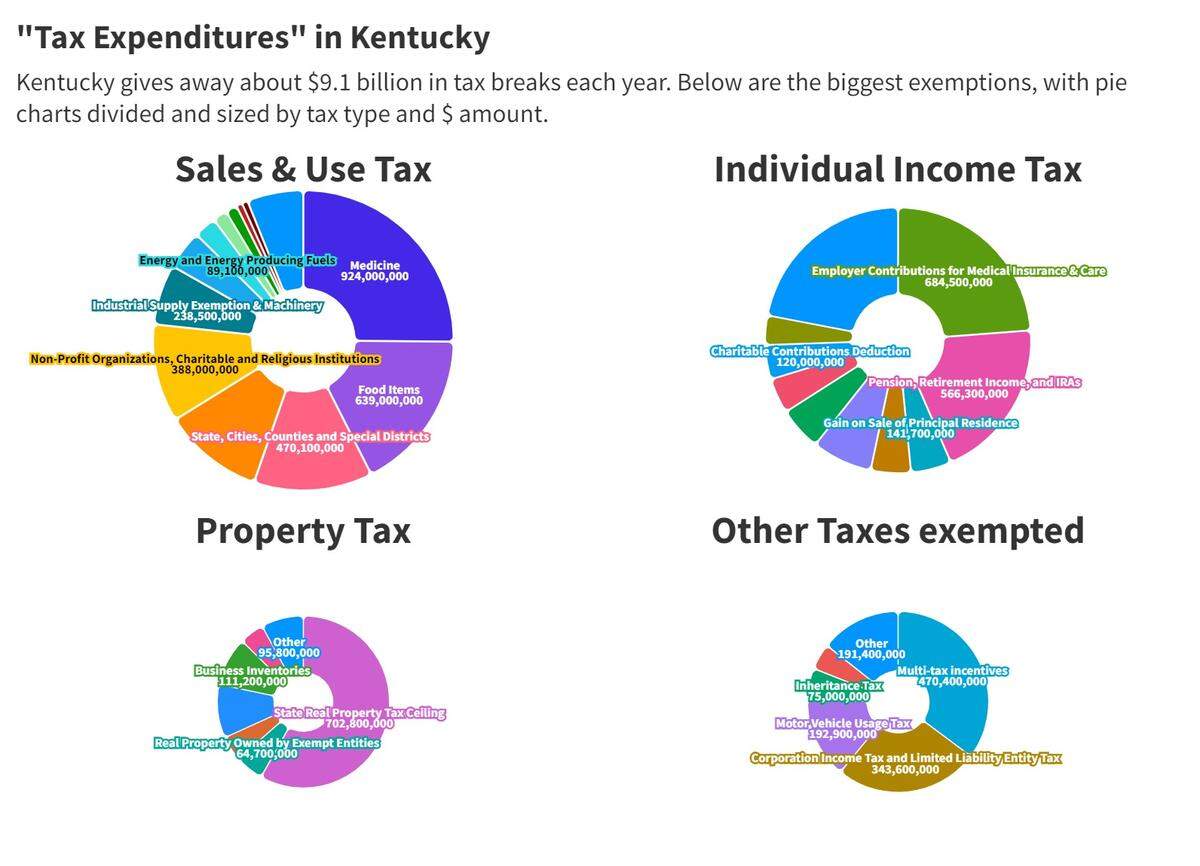
State-sponsored exemptions to various taxes in Kentucky cost taxpayers around $9.1 billion a year, according to a recent report from the Office of the State Budget Director.
The report, a tax expenditure analysis for Fiscal Years 2024, 2025 and 2026, presents an accounting of how much money the state is projected to lose out on because of exemptions and special tax rates provided to certain groups and goods.
Some of those tax breaks, like the sales tax exemption on groceries and medicine, are largely supported. Others, like the special rate allowing houseboat owners to be taxed at a fraction of their fishermen counterparts or the exemption of railroad companies from the gas tax, are more closely scrutinized.
When was the report done?
The report was completed on Oct. 16 of this year.
Who created the report?
The report was authored by the Office of State Budget Director John Hicks and
The report was delivered to the heads of all three branches of government.
In a memo attached to the report, Hicks stated that it was produced to satisfy state government’s “responsibility to be accountable to the public for the use of each and every tax dollar.”
What are the key takeaways?
- The total figure for tax expenditures, $9.1 billion, amounts to more than half of the state’s projected $15.4 billion in revenue to the General Fund this fiscal year.
- Tax expenditures still cost Kentucky taxpayers a large amount of money at a time when the GOP-led state legislature is seeking to cut the state’s personal income tax.
- Exemptions on the sales tax — with medicine, food items, transactions from government agencies and residential utilities leading the way — were the largest source of tax expenditure dollars.
- Kentucky utilizes a Family Size Tax Credit aimed at helping the poorest Kentuckians. It is expected to cost $152 million this fiscal year.
- Most expenditures documented in a 2018 Herald-Leader investigation — including houseboats, prized horse sales and tombstones — are still on the books.
- A ceiling placed on the state’s real property tax in 1979, during a time of record-high inflation, causes the state to lose out on about $703 million a year compared to if the tax rate had stayed the same.
- Tax incentive programs are set to cost the state more than $470 million.