Legislator pushing anti-vax bill admits cited source was retracted from scientific journal
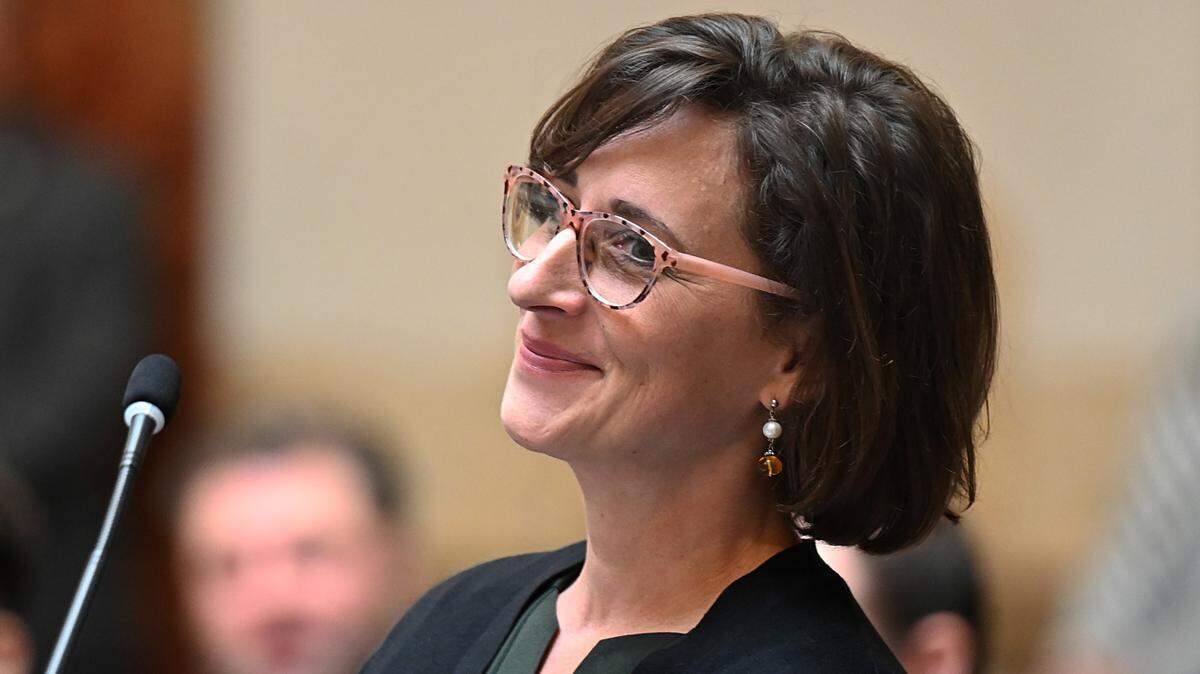
The Republican Senate Majority Wednesday withdrew parts of a news release bolstering an anti-vaccine mandate bill after admitting a cited source had been retracted by a scientific journal.
Under Senate Bill 295 from Sen. Lindsey Tichenor, no children or adults could be required to get a COVID-19 vaccine in order to attend school, get a job, acquire a professional license, or undergo any health care procedure.
In a news release Tuesday announcing her bill’s passage, Tichenor said the vaccine was “ineffective and dangerous” and linked to a research paper buttressing her point, saying, “reports supporting the need for this legislation may be found here.”
But that paper had been formally retracted on Feb. 26 for drawing “unreliable” conclusions, “concerns with the validity of some of the cited references,” as well as a “misrepresentation” of data.
Senate GOP staff later sent a statement from Tichenor calling it a “simple error.”
“Considering the amount of censorship imposed on those who questioned the narrative during the past four years, I am not surprised to see this study retracted. While the source data has been retracted, I believe it has been done so because the report may include evidence to support the concerns of countless people.”
The research paper, “COVID-19 mRNA Vaccines: Lessons Learned from the Registrational Trials and Global Vaccination Campaign,” was published in the Cureus Journal of Medical Science on Jan. 16.
“Given the extensive, well-documented serious adverse events and unacceptably high harm-to-reward ratio, we urge governments to endorse a global moratorium on the modified mRNA (vaccines)“ until more questions are answered, because of a “risk-benefit imbalance” around the vaccine’s efficacy and safety, authors of the paper wrote.
They also called for the mRNA COVID-19 vaccine to be “removed from the childhood immunization program until proper safety and toxicological studies are conducted.”
Why? In part because “these products never underwent adequate safety and toxicological testing in accordance with previously established scientific standards.”
A month later, on Feb. 26, the research paper was formally retracted by the publication’s editors.
“Following publication, concerns were raised regarding a number of claims made in this article,” they wrote.
“Upon further review, the Editors-in-Chief found that the conclusions of this narrative review are considered to be unreliable due to the concerns with the validity of some of the cited references,” as well as a “misrepresentation of the cited references and available data.”
Tichenor said in a statement that the authors are filing a lawsuit for “unethical retraction.”
In a brief interview with the Herald-Leader on Thursday, Tichenor said she was being “continually attacked by the media because I dare to raise my voice and question” the vaccine’s safety.
About the authors
Cureus is an open source, peer-reviewed medical journal. Recently, it retracted more than 50 studies from Saudi Arabia over fake authorship, according to retractionwatch.com.
The retracted study was authored by a range of independent researchers, and before it was retracted it was the subject of a factcheck.org story claiming it “misleads” on vaccines. Only one of the seven authors is currently employed at an academic institution — that author, Stephanie Seneff, has long been an anti-vaccine advocate.
She has made the false claim that the measles, mumps, and rubella (MMR) vaccine causes autism. She’s made similar claims about the popular herbicide Roundup.
The paper is co-authored by Peter McCullough and Steve Kirsch, two of the nation’s most popular anti-vaccination advocates. McCullough, a cardiologist by trade, has previously failed in his efforts to sue news outlets for reporting on criticisms of his statements about vaccines.
McCullough was recently a speaker at the national Conservative Political Action Conference (CPAC) and was previously the chief medical officer for the Truth for Health Foundation. That foundation repeats debunked claims about vaccines as well as purportedly harmful effects of 5G wireless networks on the human body.
Kirsch, a tech entrepreneur, once spread the falsehood that COVID-19 vaccines have killed, on average, around 1 person per 1,000 doses.
Other academics have questioned the sources cited by the group in their now-retracted study, many of them with conservative and anti-vaccine leanings.
“(It) references trialsitetnews, epoch times, brownstone, the spectator, children’s health defense, and conservative review as primary sources for some of their points, as well as 11 substack articles/blogs, a youtube/twitter video, and 2 explicit anti-vaccine books, plus a large number of self-citations from the review authors,” Jeffrey S. Morris, director of the Division of Biostatistics at the University of Pennsylvania’s Perelman School of Medicine, wrote on X.
The news release
Though the news release announcing the bill’s passage in the Senate was sent out Tuesday — and an initial release had been sent on Feb. 27, the day Tichenor filed the bill — both were preemptively drafted in early February, before the paper was retracted, Senate Majority Director of Communications Angela Billings said Wednesday.
Billings said it was an oversight the sources they linked to were not double-checked before they were cited by Tichenor.
Once the mistake was realized, Billings on Wednesday sent an email clarifying “the previous version of this press release cited studies that have since been redacted. This source should have been removed from this updated release.”
Though Billings said it was an honest mistake, the retraction, coupled with Tichenor’s continued spreading of falsehoods about the dangers of the vaccine, serves as a reminder that disinformation continues to flourish four years after the outbreak of COVID-19.
Some of that disinformation is perpetrated by sitting Kentucky lawmakers. On Tuesday, during the floor debate over Tichenor’s bill, some called the vaccine “experimental,” “not fully tested — we didn’t really know what was in it,” and something that could “easily cause you death.”
When introducing her bill, Tichenor said, “Tens of thousands of people in the United States have died from this vaccine.”
There is no evidence that the COVID-19 vaccination has caused “tens of thousands of deaths.” In fact, studies have shown the rate of death is lower for people who have received the vaccine than for those who did not.
The Centers for Disease Control and Prevention and the World Health Organization say vaccinations are a safe and effective way to prevent disease. Most side effects, like redness and soreness at the injection site, are mild, and serious adverse reactions are rare.
Tichenor insisted the “number of adverse events and deaths attributed to this vaccine are through the roof.”
She also assured those listening it was “OK to question the narrative. It’s OK to question if what’s being told is right, if you feel within yourself it might not be. Make those decisions for yourself based on what your conscience tells you.”
Herald-Leader reporter Tessa Duvall contributed to this story.
This story was originally published March 28, 2024 at 7:00 AM.