
Kentucky Gov. Andy Beshear asks DEA to ease federal restrictions on marijuana
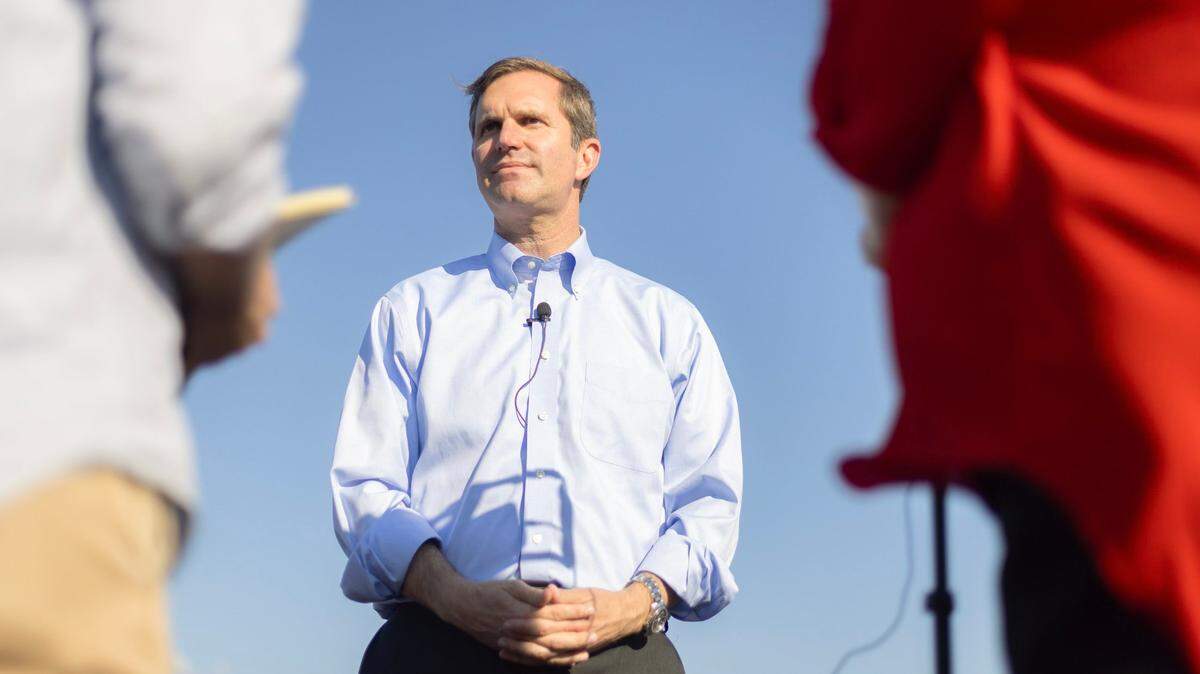
Gov. Andy Beshear has asked the federal government to relax its restrictions on marijuana.
In a Wednesday letter to Anne Milgram, administrator for the U.S. Drug Enforcement Administration, the governor expressed his support of the U.S. Department of Health and Human Services’ recommendation that the DEA move marijuana from a Schedule I classification to Schedule III.
Currently at Schedule I, marijuana is classified in the same schedule as heroin and LSD, having “no current accepted medical use.”
The Schedule I placement also ranks it as more dangerous than Schedule II drugs like fentanyl and methamphetamine. Beshear pointed to a report from 2022 that showed 80,000 Americans dying from opioid use while zero died from marijuana use in the same year.
“As Governor, my job is to move our state forward,” Beshear said in a press release. “Rescheduling marijuana to Schedule III is a significant, common-sense step forward for all Kentuckians, especially those with significant medical conditions.”
In his letter, he pointed to his support for, and eventual passage of, a bill in 2023 that legalized medical marijuana for Kentuckians. That bill takes effect in 2025.
“The jury is no longer out on marijuana: It has medical uses and is currently being used for medical purposes,” Beshear wrote in the letter. “The recognition is overwhelming – and bipartisan. For example, I signed a medical marijuana law that passed with support from Republican legislative supermajorities and a Democratic governor.”
This was not the first time that Beshear has touted the work in Kentucky on a national scale.
In March, he visited the White House to join a roundtable with Vice President Kamala Harris and rapper Fat Joe where Harris railed against the drug’s current schedule assignment.
“Far too many people have been sent to jail for simple marijuana possession,” Harris said at the roundtable. “Marijuana is considered as dangerous as heroin, and more dangerous than fentanyl, which is absurd, not to mention patently unfair.”
Coincidentally, Beshear’s name has been floated as a potential vice presidential pairing for Harris if she were to become the presidential nominee this year, replacing current President Joe Biden atop the ticket amid calls for the 81-year-old Biden to step aside.
With implementation for medical cannabis coming soon in Kentucky, many of the regulations dictating what it will look like are starting to take shape.
The state has split implementation into 11 regions with a maximum of four dispensaries in each region. No county can have more than one dispensary in the initial roll-out of licenses, except Jefferson and Fayette counties, which can have up to two each.
Kentucky residents are eligible to apply for a medical cannabis card if they have at least one of the following conditions:
- Any type or form of cancer, regardless of stage
- Chronic, severe, intractable or debilitating pain
- Epilepsy or any other intractable seizure disorder
- Multiple sclerosis, muscle spasms or spasticity
- Chronic nausea or cyclical vomiting syndrome resistant to other conventional treatment methods
- Post-traumatic stress disorder
Under Kentucky law, doctors and advanced practice registered nurses are allowed to issue written certifications verifying the patient has a qualifying condition for medical cannabis treatment.
This story was originally published July 17, 2024 at 10:02 AM.