
What if Grossberg doesn’t resign? Here’s what KY law says about expulsion, vacancies
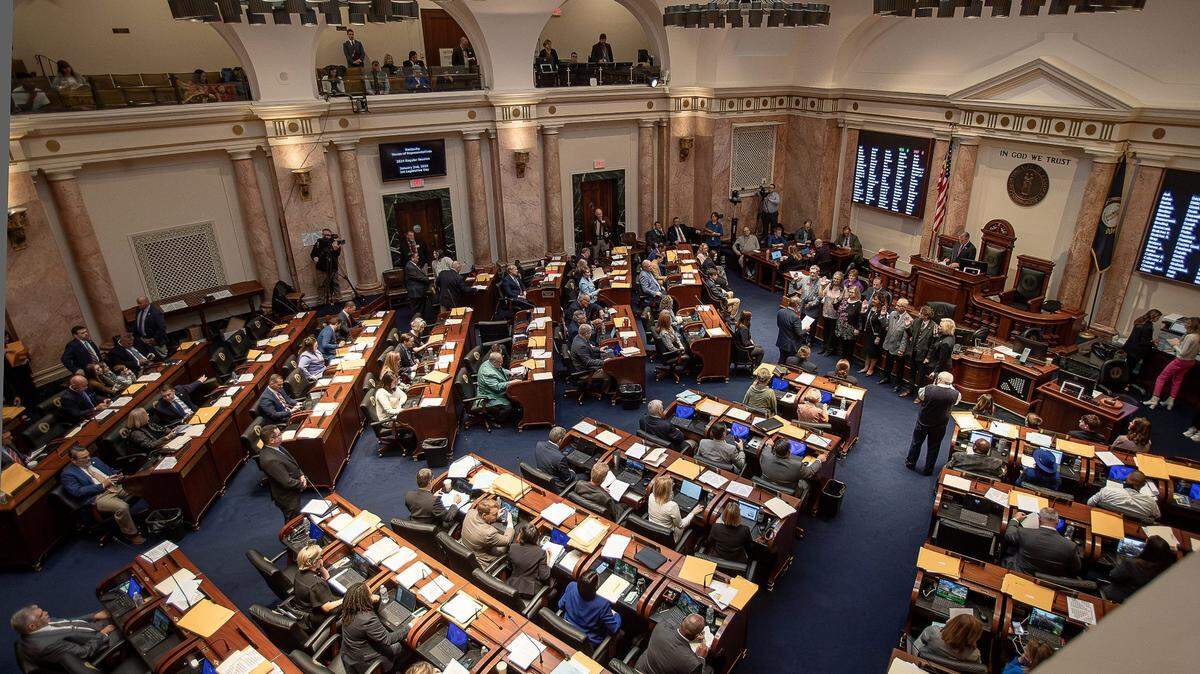
Kentucky State House Rep. Daniel Grossberg remains under growing pressure to resign his office following allegations of inappropriate conduct, but so far, he has made no indication he’ll vacate his position.
The Louisville Democrat has come under scrutiny in recent weeks for alleged “creepy” and “weird” behavior he directed toward women involved in Kentucky politics.
There’s been a steady drum beat of accusations about Grossberg’s behavior since the Herald-Leader’s initial July 30 investigation brought them to light.
The alleged behavior also extends beyond Frankfort. Last week, the Herald-Leader reported the lawmaker had been banned for life from a strip club for inappropriately touching a dancer on stage and for seeking prostitution. In response, Gov. Andy Beshear and Lt. Gov. Jacqueline Coleman called for Grossberg to step down, and a growing list of voices have joined them.
To date, the embattled lawmaker has been barred from Kentucky Democratic Party events and has been expelled from his party’s caucus in the Kentucky House.

Grossberg and his attorney have denied the allegations of inappropriate behavior, and he has refused to resign, telling a Louisville radio station Sept. 20 he’s seeking “treatment,” keeping his head down and will “continue working to serve my constituents.”
What is the process for a lawmaker resigning in Kentucky? Could a sitting lawmaker be removed from office or kicked off Nomember’s General Election ballot? Here’s what state law has to say about these and other questions.
What if Grossberg resigns? What happens next?
Let’s start at the top with what Kentucky’s Constitution has to say about filling vacancies in the state’s legislature, the General Assembly.
Section 152 of the state’s constitution provides as a general rule “no person shall ever be appointed a member of the General Assembly, but vacancies therein may be filled at a special election, in such manner as may be provided by law.”
Kentucky Revised Statutes Chapter 118, specifically KRS 118.730, is that law. The statute states when such a vacancy occurs, “the presiding officer of the house in which the vacancy exists shall issue a writ of election.”
The writ establishes what day the election will be held, is signed by the officer issuing it and is then sent to officials tasked with carrying the election out.
The law also provides that when the General Assembly is not in session, the writ shall be issued by the governor. Kentucky’s General Assembly is not expected to convene again for a regular session until early next year. So, should Grossberg resign before that time, it would fall to Gov. Beshear to get the special election process going.
Under KRS 6.145, which pertains to resignations for General Assembly members, Grossberg would need to send a letter of resignation to the presiding officer required to issue the special election writ, in this case, most likely Beshear.
KRS 118.740 requires a copy of the proclamation be mailed to the county election official where the special election is taking place “at least sixty-three (63) days before the election.” Candidate nominations are then handled by local political parties, as established by KRS 118.760. Nomination petitions and certificates must be turned over to the Kentucky secretary of state to be certified at least 56 days before the date of the election.
Successful candidates elected via a special election generally assume office once the election results have been certified and they’re sworn in. In the case of candidacy for General Assembly membership, the candidate must be recognized by the chamber they’re seeking to join.
What if Grossberg does not resign? Can he be forcibly removed?
Any member of the General Assembly can be expelled by their colleagues, but it’s a high bar to clear.
The Kentucky Constitution grants both houses of the General Assembly broad independence and latitude in determining their rules and proceedings.
Section 39 of the state’s constitution is explicit, however, in that it requires a two-thirds vote from the chamber’s membership to expel one of their members.
Kentucky’s Constitution does have an impeachment process, but section 68 states “the Governor and all civil officers shall be liable to impeachment for any misdemeanors in office.” It does not mention members of the General Assembly.
Can his name be taken off the ballot at this point?
Michon Lindstrom, director of communications for the Kentucky Secretary of State, told the Herald-Leader a candidate can be removed from the ballot if a bonafide challenge is filed against their candidacy. The process requires a legal challenge, Lindstrom explained.
“If a judge rules they are not qualified to be on the ballot they will no longer be on the ballot,” Lindstrom wrote.
Barring a legal challenge contesting the candidate’s qualifications, “no, someone cannot be forced off the ballot,” Lindstrom wrote.
Candidates for office are able to withdraw from a race at any time. That said, the deadline to do so and not appear on the ballot has come and gone. It was Sept. 6, Lindstrom confirmed.
“Anyone who withdraws at this point will still have their name on the ballot, but no votes for that candidate will be counted. At this point, if a judge were to disqualify a candidate their name would still appear on the ballot but votes wouldn’t count for the candidate,” Lindstrom wrote.
Do you have a question about Kentucky politics for our service journalism team? We’d like to hear from you. Fill out our Know Your Kentucky form or email ask@herald-leader.com.
This story was originally published September 27, 2024 at 8:35 AM.