
‘I don’t think he’s really hiding it.’ Andy Beshear PAC, chairmanship signal 2028 interest
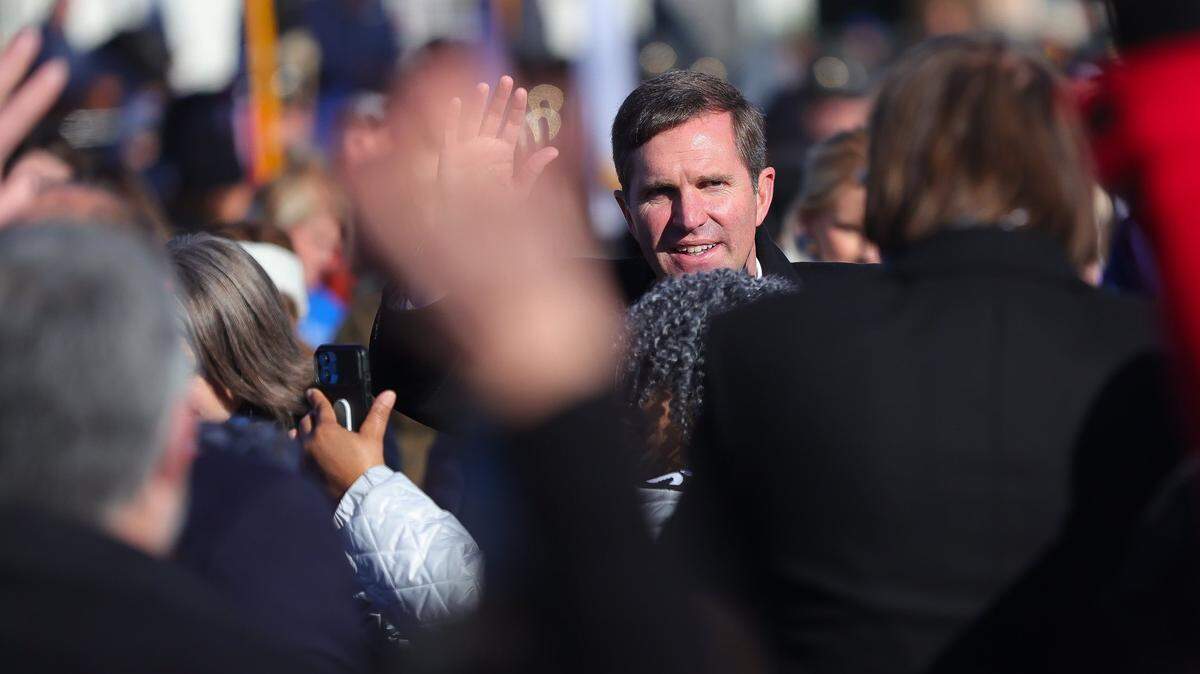
Gov. Andy Beshear is making moves in the wake of the 2024 elections, some of which are increasing speculation he could vie for the presidency in 2028.
The 47-year-old governor forming a political action committee in New Hampshire, getting the nod to become chair of a powerful political organization during the midterms, penning a New York Times oped offering “a way forward” for Democrats — it all adds up.
“I don’t think he’s really hiding it,” Jared Smith, a Kentucky Democratic political consultant and lobbyist said of Beshear’s maneuvering to set up a 2028 run.
The announcements come as Beshear and his team have reaffirmed their prior commitment to not run for the U.S. Senate seat currently held by 82-year-old Sen. Mitch McConnell, R-KY, who hasn’t announced if he’ll seek reelection. Eric Hyers, Beshear’s chief political strategist, confirmed to the Herald-Leader Monday that the governor is ruling out such a run.
One of the most consequential bits of news on Beshear’s future came over the weekend when Beshear was named vice chair and chair-elect of the Democratic Governors Association, the outside spending and fundraising arm for the party in gubernatorial elections. The group spent more than $20 million in 2023 to support Beshear’s successful reelection bid against former GOP attorney general Daniel Cameron.
The selection was made at a Beverly Hills meeting of governors on Friday and Saturday that POLITICO dubbed an unofficial preview of the 2028 presidential primary. It included big names in the party like governors Gretchen Whitmer of Michigan, Gavin Newsom of California, Tim Walz of Minnesota and JB Pritzker of Illinois.
Kansas Gov. Laura Kelly will lead the group in 2025, but the reins will be handed over to Beshear for 2026, a key cycle for determining the political fortunes of the country, and of the resilience of the GOP under president-elect Donald Trump.
In all, 36 governor’s chairs are up for election that year.
Those include virtually all the key battleground swing states that have tilted the presidential election in recent years. Democrats are playing defense in three former “blue wall” Midwestern states — which flipped from red to blue and back to red in 2016, 2020 and 2024’s presidential cycles — Michigan, Pennsylvania and Wisconsin. They’re in a similar position in Arizona, which had the same trajectory as the other states.
They also include states with large populations and donor bases like California, Illinois, Texas and New York.
Mark Riddle, a Kentucky native who leads the political group Future Majority and co-founded a pro-Biden super PAC that raised massive amounts of money in 2020, said that’s important for thinking about where the money for a presidential bid might come from.
“Presidential races can be expensive, and the ability to go and meet with potential donors and raise money for an organization like the DGA is so valuable as you’re building relationships and asking people to invest in what you’re doing,” Riddle said.
“You have to meet a lot of people, and you have a title that opens a lot more doors now.”
There are also a handful of flip opportunities on the board for the Democrats. The progressive bastion of Vermont is currently led by a Republican, and swing states Nevada and Georgia are now in GOP hands.
That provides an opportunity to shape the political narrative in the country depending on the outcomes of those swing states.
“Short of retaking the House in 2026, I think that governor’s races are the most critical in setting the stage for 2028,” Riddle said.
Another way in which Beshear has expanded his political profile is his operation in New Hampshire. According to Hyers, Beshear’s PAC In This Together gave $255,000 to an affiliate state PAC there to assist Democratic candidate Joyce Craig in her unsuccessful bid for governor this year.
New Hampshire has traditionally been a key state in Democratic primaries, though its stature is somewhat in question going forward. This year, it held an unsanctioned by the Democratic National Committee — but still widely covered — primary shortly before the first sanctioned primary in South Carolina. Riddle suggested that, with Beshear having pumped time and money into the race, Craig could provide a boost to potential future ambitions there.
“You’re helping the principal in those areas, who obviously has a network. They could then say ‘hey this person helped me, you might want to help them down the road,’” Riddle said.
All told, Beshear’s recent actions comprise a strong, more traditional route for a politician looking to gin up early interest as a presidential contender, Smith said.
“It’s a set of more traditional moves, but that’s kind of who he is. He’s gonna play the game, move the chess pieces across the board and see where he can get.”
Beshear’s argument published by the New York Times last month is largely that Democrats need to focus on material issues and letting voters know they care about them, as opposed to “the offense of the day in Washington, D.C.” or “the latest crazy thing a politician said.”
Embedded in that argument about the focus of the party is another: that Beshear knows how to win.
That’s a pitch Riddle said we’ll hear more of should Beshear decide to run.
“I think it’s pretty simple: ‘Hey Democrats, if you want to win in some of these tough places you’ve been losing, I’ve done so and could do so in other places around the country.’”