To protect kids, KY lawmakers will try again try to license stores that sell smoking products
Kentucky lawmakers say they will try again this winter to require all stores that carry tobacco and vape products to be licensed by the state, giving regulators their locations and something to take away from them if they get busted for illegally selling smoking products to minors.
State Sen. Jimmy Higdon, R-Lebanon, told the Herald-Leader he’ll file a tobacco and vape retail licensing bill once the Kentucky legislature begins its 2025 session on Jan. 7.
Higdon said he’s heard similar plans from state Rep. Jason Nemes, R-Middletown.

Penalties should be tougher for the stores that put smoking products in the hands of youths, Higdon said..
“We have some bad actors in Kentucky. The minors are buying this stuff somewhere.”
Unlike about three dozen other states and a number of cities around the country, including Louisville, Kentucky doesn’t make tobacco and vape retailers buy a license from the state agency that monitors them by sending in undercover teen agents to attempt to buy smoking products.
That watchdog agency is the Kentucky Department of Alcoholic Beverage Control, or the ABC.
Lack of state licensing is one reason why Kentucky suffers from weak enforcement of the federal and state laws against selling smoking products to people under age 21, health advocates say.
And the ABC agrees. It has urged lawmakers for several years to pass a retail licensing law.
“Lack of a state tobacco retail licensing laws has been the most significant and persistent challenge,” the ABC said in its most recent annual report on its efforts to keep smoking products away from minors.
The Herald-Leader reported in 2023 that over a recent two-year period, inspectors with the ABC cited at least 114 Kentucky retailers multiple times for selling tobacco and vape products to minors. They usually only issued warning letters or, in some cases, small fines that were a tiny fraction of the scofflaws’ annual revenue.
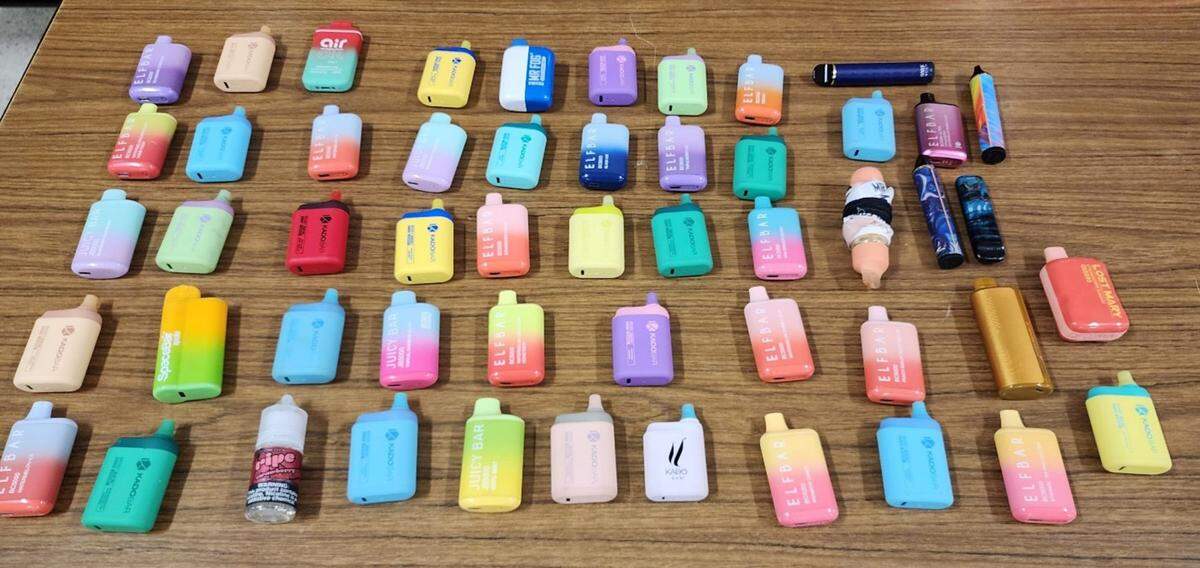
The ABC doesn’t even know the location of every store that sells smoking products in Kentucky, making it impossible for inspectors to check on all of them.
Kentucky alcohol retailers must buy a liquor license, putting their name and address on inspectors’ radar. If they are caught selling alcohol to minors, the ABC can suspend or revoke the license. Losing a liquor license slashes revenue at a convenience store and effectively closes a bar or liquor store.
No equivalent penalty looms over tobacco and vape retailers. But it should, health advocates say.
“As we understand more and more about the dangers of vaping and exposure to nicotine generally, I think it makes sense to people that we put teeth in the law and let retailers know that we’re serious about enforcing it,” said Kelly Taulbee, spokeswoman for the nonprofit Kentucky Voices For Health.
However, previous attempts to pass a retail licensing law for smoking products fell short in Frankfort.
Most recently, the legislature last year dropped licensing and tobacco language from House Bill 11, which ended up focusing on the removal of most flavored vape products from store shelves. That bill will take effect on Jan. 1 after a vape industry lawsuit challenging it was dismissed in July in Franklin Circuit Court.
Higdon said he’s not discouraged by past legislative setbacks.
“I deal in the art of the possible,” Higdon said. “I think it’s possible to get it passed.”
‘Lose their futures to nicotine’
At a Nov. 19 state legislative hearing, lawmakers were told that vaping continues to plague middle and high schools around Kentucky, harming students’ health and creating disciplinary headaches for school officials.
In a 2021 statewide health survey by the Kentucky Cabinet for Health and Family Services, 12% of high school seniors said they had smoked cigarettes in the past year, reflecting a steady improvement in teen smoking rates over the previous decade. About 10% of seniors said they had used smokeless tobacco.
But more than one in every four high school seniors said they had vaped in the past year. Twenty percent of 10th graders said they had vaped in the previous year, as did 13% of eighth graders.
Dr. Brit Anderson, a pediatric emergency medicine physician in Louisville, told lawmakers at the recent hearing about an underage patient so addicted to nicotine that even as she struggled to breathe in the exam room, she sneaked puffs on her vape pen when she didn’t think the doctor was looking.
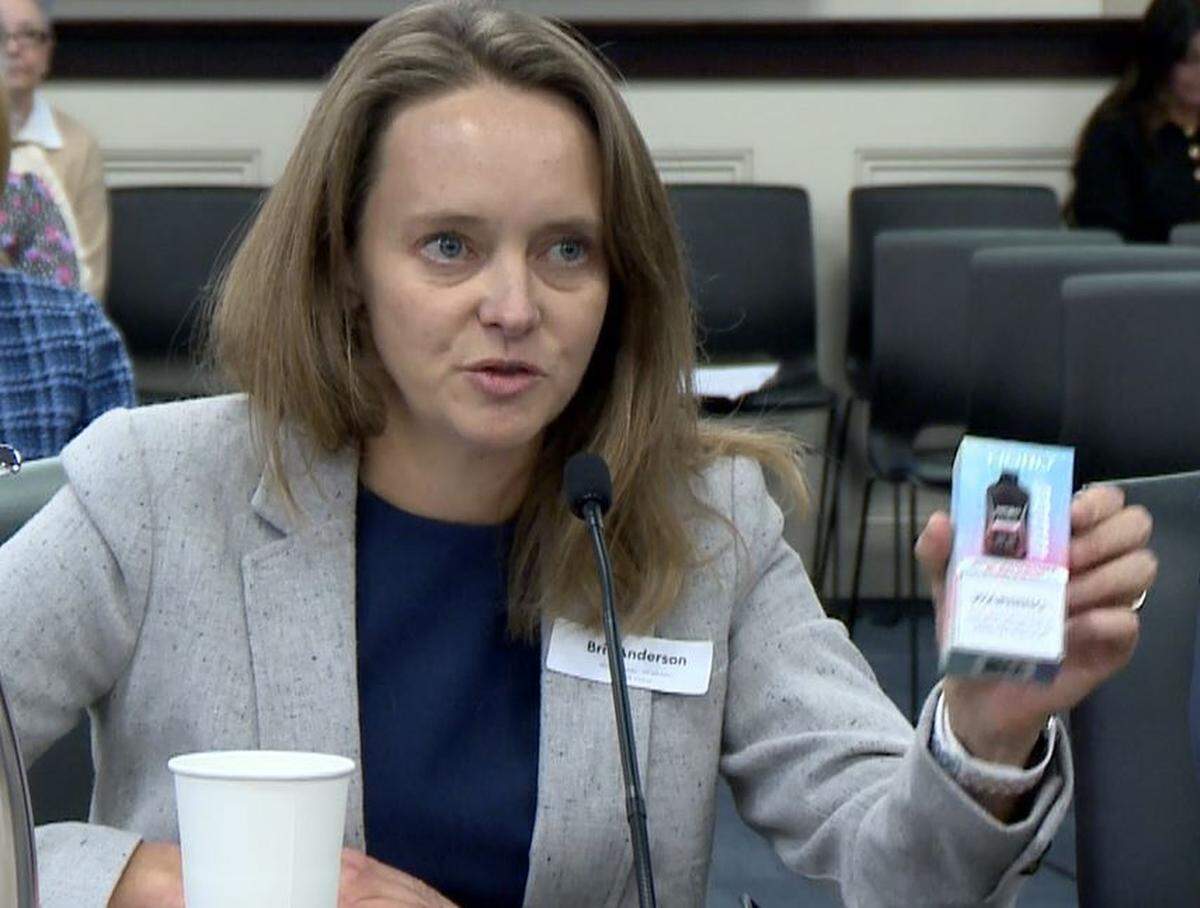
Apart from their lungs, the nicotine in vapes can hurt children’s developing brains in a variety of ways, including learning difficulties, diminished impulse control and mood swings, Anderson said.
“In my community, youth can go to any gas station or any convenience store and purchase a vape without using their ID. Right now it is too easy for kids to buy these products,” Bullitt Central High School senior Philena Ash told the Interim Joint Committee on Licensing and Occupations.
Ash, a student-athlete, said she’s seen classmates quit school sports because vaping damaged their health too badly for them to continue with strenuous activity.
“Nicotine is very dangerous,” Ash said. “It is disappointing to see my friends lose their future to nicotine dependence.”
Vape industry: Go slow
A lobbyist for Kentucky’s vape industry, Abbie Gilbert of The Denton Group, urged lawmakers to go slow with further restrictions on vape sales.
Gilbert asked that Kentucky’s impending ban on the sale of most flavored vape products, included in House Bill 11 last winter, be put on hold until Jan. 1, 2026. That would give the U.S. Supreme Court enough time to rule in a lawsuit the vape industry brought challenging the U.S. Food and Drug Administration’s regulatory rule-making over vape products, she said.
The Supreme Court heard arguments in the case on Dec. 2. A decision is expected sometime next year.
So far, the FDA has only authorized 34 e-cigarette products and not the popular flavored vape products that fill the shelves in Kentucky vape stores, Gilbert told the committee. If they’re denied the bulk of their products by the FDA’s current limits and House Bill 11, then 130 Kentucky vape stores will close, eliminating nearly 1,000 jobs, she said.
But lawmakers didn’t sound sympathetic to the lobbyist’s plea.
“I would just encourage you to take back to your clients, we probably wouldn’t have a problem if they’d quit selling to under-aged kids,” state Sen. Chris McDaniel, R-Ryland Heights, told Gilbert.
“They have absolutely no problem accessing these products in this commonwealth, and until they do, you will only find us being more and more and more stringent about this,” McDaniel said. “It’s ridiculous the ease with which kids can get hands on these. If adults want to do it, want to put stuff in their body, that’s up to them. But you want to keep selling to 18-year-olds, you can only expect us to get more harsh.”