Senate votes to slash Kentucky’s individual income tax from 4% to 3.5% in 2026
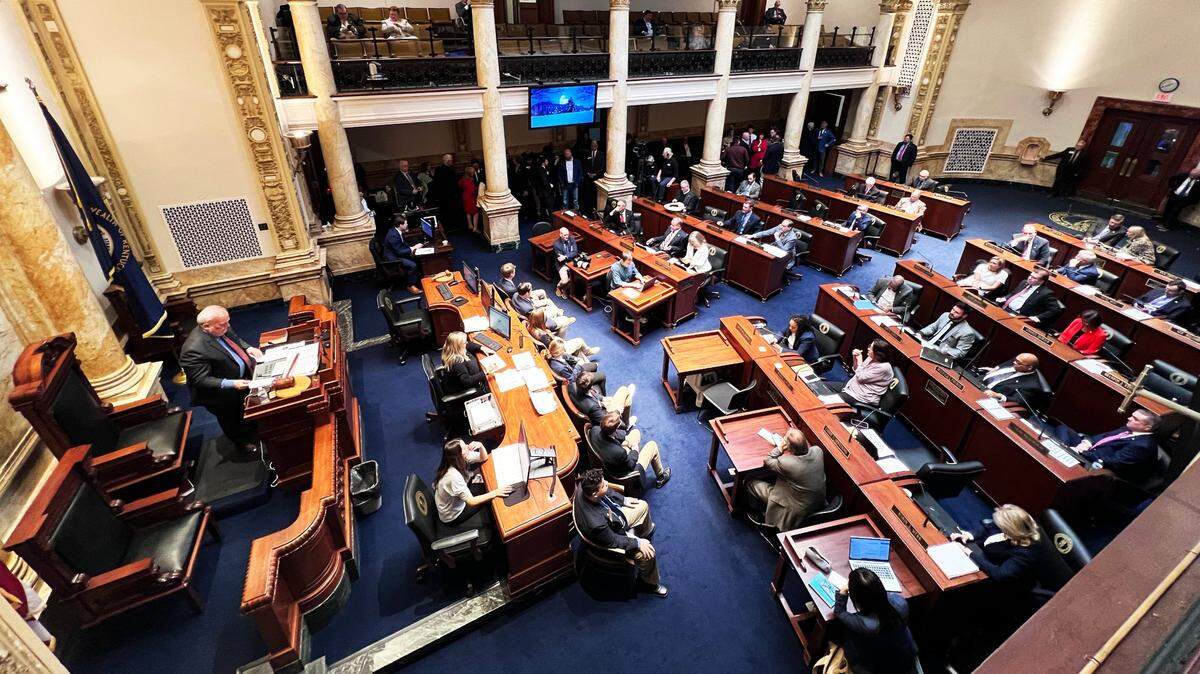
The Kentucky Senate voted Tuesday to cut Kentucky’s individual income tax rate from 4% to 3.5% beginning New Year’s Day 2026.
Members voted 34-3 to pass House Bill 1, which had full support from Republican senators, as well as several Democrats.
The House passed HB 1 on Jan. 10, ahead of the legislature’s month-long break. Tuesday was the first day lawmakers returned to Frankfort since that break.
HB 1 is the first bill to clear both chambers during the 2025 General Assembly.
Democratic Gov. Andy Beshear has signaled he will sign the bill once it reaches his desk.
“It’s been said that there are only two things in life that are certain: death and taxes,” Kenton County Republican Sen. Chris McDaniel said in the Senate.
“The thing I’m very proud of this body for is in the last seven years, we’ve added another thing that’s fairly certain, which is the General Assembly is going to do everything in its power — and frequently with success — to lower your taxes. And that’s what House Bill 1 is all about,” McDaniel added.
Republicans positioned HB 1 as a policy priority when the General Assembly gaveled in for its regular legislative session in early January.
HB 1 had true bipartisan support, including from some in Democratic leadership.
Senate Minority Whip Yates said he agreed with Beshear’s recent comments that cutting the individual tax rate by half-a-percent was “appropriate,” and said he feels “safe” with the amount the Legislature has proposed to cut, “but I do have fears” about future funding streams, Yates added.
Democrats in both chambers who voted against the measure cited its disproportionate benefit for wealthier Kentuckians over low- and middle-income residents.
Sen. Karen Berg, D-Louisville, said HB 1 contributed to a “regressive taxation system,” one that “hurts the people who have the least the most, and the people who have the most the least.”
Sen. Cassie Chambers Armstrong, D-Louisville, said she “truly” appreciated the intention of HB 1, “and I want my friends across the aisle to hear me when I say that.
“I, too, value putting money into the pockets of Kentuckians,” she continued. “The issue is whose pockets we’re putting money into and how much. What concerns me about this legislation is the people who are making the most money stand to receive the most benefits from it.”
Under HB 1, “the top 1% of income earners will receive a $5,500 per year tax cut under this legislation, whereas someone who is making $50,000 is only going to receive $139,” she said.
“I think we need to do more than what this legislation does to support our struggling community members,” she said.
But Sen. Mike Nemes, R-Shepherdsville, implied that was a mischaracterization of the bill.
“When you talk about putting money into whose pockets, that’s not what we’re doing,” Nemes said. “We’re stopping taking it from their pockets. They earned it; it’s their money, not ours.”
Sen. Gex Williams, R-Verona, said he looked forward to the day the General Assembly reduces the individual income tax rate to 0%. Williams filed a floor amendment to cut the rate by half a percent each year successively until the rate reaches 0% in 2030.
As it stands now, the state must meet certain fiscal triggers before a tax cut can be enacted.
Williams said he had “gotten a commitment from this body that they would consider” such steps in the future.
“Everybody wants to get to zero as fast as we can,” he added.
Sen. Gary Boswell, R-Owensboro, agreed with that sentiment: “I want to get to zero, and I think everybody in this body supportive of this bill wants to do that.”
“Part of the solution for us getting there in the future is government efficiency,” Boswell said. “I want to assure the public that we’re going to be looking at this strong and trying to find ways to make sure that this government is more efficient.”
Herald-Leader reporter Austin Horn contributed to this report.
This story was originally published February 4, 2025 at 3:53 PM.