KY schools could get anti-choking devices under new bill. Experts warn against them
A bill that would allow anti-choking devices in K-12 schools across Kentucky has traction in the General Assembly. But first-aid experts warn, and research shows, the devices are not reliably effective and could potentially cause more harm.
House Bill 44, or Landon’s Law, filed by Rep. Candy Massaroni, R-Bardstown, is named for 8-year-old Landon McCubbins, who, in 2022, choked to death on a bouncy ball in his Nelson County elementary school classroom.
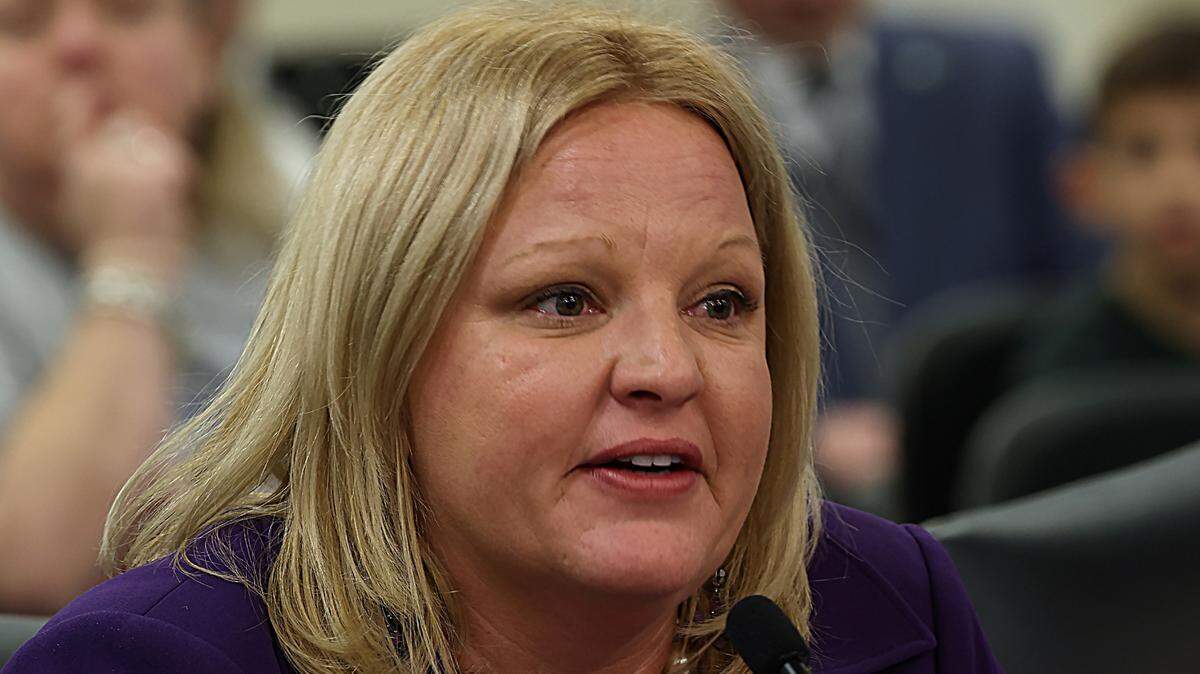
Landon’s mother, Lauren McCubbins-Bagshaw, told the House Standing Committee on Primary and Secondary Education through tears on Feb. 5 that, although nurses and firefighters were there the day her son died and used traditional methods, like the Heimlich maneuver, to try and save her son, “those emergency protocols failed my sweet boy.”
McCubbins-Bagshaw urged lawmakers to advance Massaroni’s bill, which would allow Kentucky school districts to put devices like LifeVacs — small, handheld plunger-like devices with fitted face masks — in classrooms and absolve the district of liability if a device is used in a life-saving situation.
On Wednesday, the House approved the bill 92-5. It now heads to the Senate.
In a news release touting the bill last week, the House Republican Caucus said: “The Centers for Disease Control and Prevention recommends that schools have anti-choking devices to improve student safety and comply with the American Disabilities Act.”
But the effectiveness of LifeVac and other similar anti-choking devices isn’t conclusive, and health agencies warn against widespread distribution of them, as their effectiveness “has not been established,” according to the U.S. Food and Drug Administration.
Hospitals, medical experts and first responders across the country, as well as the FDA and the American Red Cross, have outright warned against using them, especially in place of tried-and-true techniques like abdominal and chest thrusts and back blows.
“It’s not clear whether or not they do more harm, and that’s kind of the whole problem,” said David Fifer, an associate professor of Emergency Medical Services at Eastern Kentucky University.
Fifer, who has also worked as an emergency responder, said the research on devices like LifeVac has shown some effectiveness at removing specific food objects but not others, while also causing damage to tissues in the airway, like the tongue and throat. This could lead to swelling, making it even harder to retrieve whatever is obstructing someone’s airway.
“You really have this mixed bag of research where the devices might be causing damage to people’s airways without actually being effective overall,” Fifer said. “We just don’t have enough information yet to make a good recommendation for these devices to be used.”
The Herald-Leader couldn’t find the CDC’s recommendation for schools to stock anti-choking devices that the news release referenced. A House GOP caucus spokesperson did not respond to a Herald-Leader email asking for a link to that guidance.
Massaroni’s bill, which has bipartisan support, would allow but not require K-12 schools to stock an “anti-choking device” to be used in addition to, not in place of, the Heimlich maneuver. She made this clear to committee members, too.
“We recommend typical protocols prior to using the device, so the Heimlich maneuver is one of the first protocols,” Massaroni said. “This is just an alternative if the Heimlich maneuver does not work.”
It’s a good idea in theory, Fifer said: allow schools to purchase these devices and train staff in how to use them, while making clear traditional abdominal thrusts or back blows should be deployed, first.
But in the heat of the moment, the presence of LifeVacs in classrooms sends the message that “this might be a viable approach to a child who’s choking, and it’s not” — or, at least, “we’re not there yet,” Fifer said.
During the bill debate on the House floor Wednesday, Rep. Matt Lehman, D-Newport, echoed this point.
“The anti-choking devices referenced in this bill have shown some potential, but the efficacy and safety of these devices is limited,” and he worries the current wording of the bill “could be read as providing civil immunity to manufacturers” of these devices.
Though schools could stock a device of their choosing that’s registered with the FDA, LifeVac, a $70 over-the-counter device, was the only one mentioned when Massaroni presented her bill before a Senate committee this month.
In addition to McCubbins-Bagshaw, Laura Bonelli, president of LifeVac, and Toni L’Abbate, director of Equal First Aid, which advocates for people who are disabled or in wheelchairs during choking emergencies and endorses LifeVac, both testified in favor of the bill at that committee meeting.
LifeVac “offers one free unit to every school in America,” and so far there have been “47 saves” made with LifeVac devices in schools, Bonelli said.
What the FDA, American Red Cross say
An anti-choking device is defined in the bill as “a portable suction device used to remove an airway obstruction during a choking emergency that has been registered as a Class II medical device with the U.S. Food and Drug Administration.”
While LifeVac is registered with the U.S. Food and Drug Administration, the device has not been approved for use by the FDA, nor have the devices been endorsed by the American Red Cross.
Federal agencies have instead urged caution and issued warnings about them.
An April 2023 study published in the peer-reviewed Laryngoscope Investigative Otolaryngology journal looked at two anti-choking devices, LifeVac and DeChoker, and tested their effectiveness at suctioning saltines, grapes and cashews from the larynxes of cadavers.
The DeChoker “resulted in gross injury to the tongue and failed to remove the obstruction in all trials.”
LifeVac successfully removed moistened saltines, but it “failed to remove all other foreign bodies.”
Bonelli told committee members during the Feb. 5 meeting that the American Red Cross had “updated their guidelines to allow anti-choking devices as an option when standard protocol fails or is not feasible. That’s a major update.”
But there’s more to it.
Though the American Red Cross has said those devices may be used as an option, the national first aid organization has not endorsed such devices, instead noting “significant bias” in the published research that champions them.
In June 2023, the American Red Cross Advisory Council weighed the effectiveness of anti-choking devices, specifically LifeVac, at its annual meeting, including how they compared to traditional first-aid maneuvers for choking.
Board-certified council members examined thousands of pages of research that concluded LifeVac devices have high rates of effectiveness when used on a choking person, but council members determined that reviewers had “significant bias.”
The First Aid Sub-Council, a team of physicians and first aid experts, ultimately recommended that “back blows and abdominal thrusts should be used as standard treatment for airway obstruction.” If these actions aren’t working or aren’t possible, the council said, anti-choking devices may be used.
The council is charged by the Red Cross with identifying gaps in scientific evidence for first aid find research-based solutions. Those findings are published in the Journal of the American Red Cross Scientific Advisory Council.
“There have been studies on the use of negative pressure anti-choking devices in multiple age groups, including children, with no documented harm,” the council found. “However, these devices are new, there is considerable bias in the research, experts performed the foreign body removal in multiple cited studies, and only one anti-choking device has been studied thus far.”
Ultimately, the council said it would “follow the literature as the evidence evolves, but the preponderance of history and expert opinion is with traditional anti-choking treatments,” not anti-choking devices.
The Red Cross still does not advise the use of anti-choking devices in its official protocol for administering first aid to children or adults who are choking.
In April 2024, the FDA issued a safety communication urging people to “follow established choking rescue protocols” approved by the American Red Cross and the American Heart Association.
Those protocols include abdominal thrusts and “do not include anti-choking devices,” the federal agency said. “The safety and effectiveness of anti-choking devices that are being sold over-the-counter have not been established; they are not FDA approved or cleared.”
The FDA is “aware of reports describing problems with the use of anti-choking devices, including failure to resolve a choking incident due to lack of suction, bruising around the face, lips, and mouth, and scratches in the back of the throat.”
Though the federal agency is “working with manufacturers of anti-choking products to bring their products into compliance with the FDA’s medical device requirements,” relying on anti-choking devices as a first step is not advised. Doing so “could delay action, as consumers have to take them out of packaging, assemble them and follow device instructions, which may delay the use of established protocols. If you choose to use an anti-choking device, only use it after established choking rescue protocols have failed.”
That distinction, Fifer said, is partly why he doesn’t endorse putting anti-choking devices in classrooms yet.
“The harm can come in wasting time using devices that aren’t effective,” he said. “We shouldn’t be wasting time on unproven devices; we should be going straight to the techniques that are proven to work.”
This story was originally published February 13, 2025 at 5:00 AM.