Coal industry backs a Senate bill that would allow pollution in more of Kentucky’s waters
.jpg "Senate Bill 89, requested by the Kentucky Coal Association, would weaken the state’s water pollution laws.")
A bill sought by Kentucky’s coal industry that would allow more water pollution is headed to the Kentucky Senate after a committee approved it Wednesday, cutting off the testimony of opponents.
Senate Bill 89 would narrow the definition of protected “waters of the commonwealth” used by the Kentucky Division of Water so it mirrors a 2023 U.S. Supreme Court decision that weakened the Environmental Protection Agency’s ability to enforce the federal Clean Water Act.
Currently, state environmental regulators are responsible for protecting “any and all rivers, streams, creeks, lakes, ponds, impounding reservoirs, springs, wells, marshes, and all other bodies of surface or underground water, natural or artificial.”
But the Supreme Court limited the definition of protected “navigable waters” to oceans, lakes, rivers, streams and wetlands that have a “continuous surface connection to those bodies.” Other wetlands or groundwater that don’t have surface connections and temporary seasonal waterways from snow melt or rains no longer are covered by the Clean Water Act.
Under state law, Kentucky environmental regulation can’t be stronger than federal environmental regulation, said the bill’s sponsor, state Sen. Scott Madon, R-Pineville, testifying Wednesday to the Senate Committee on Natural Resources and Energy.
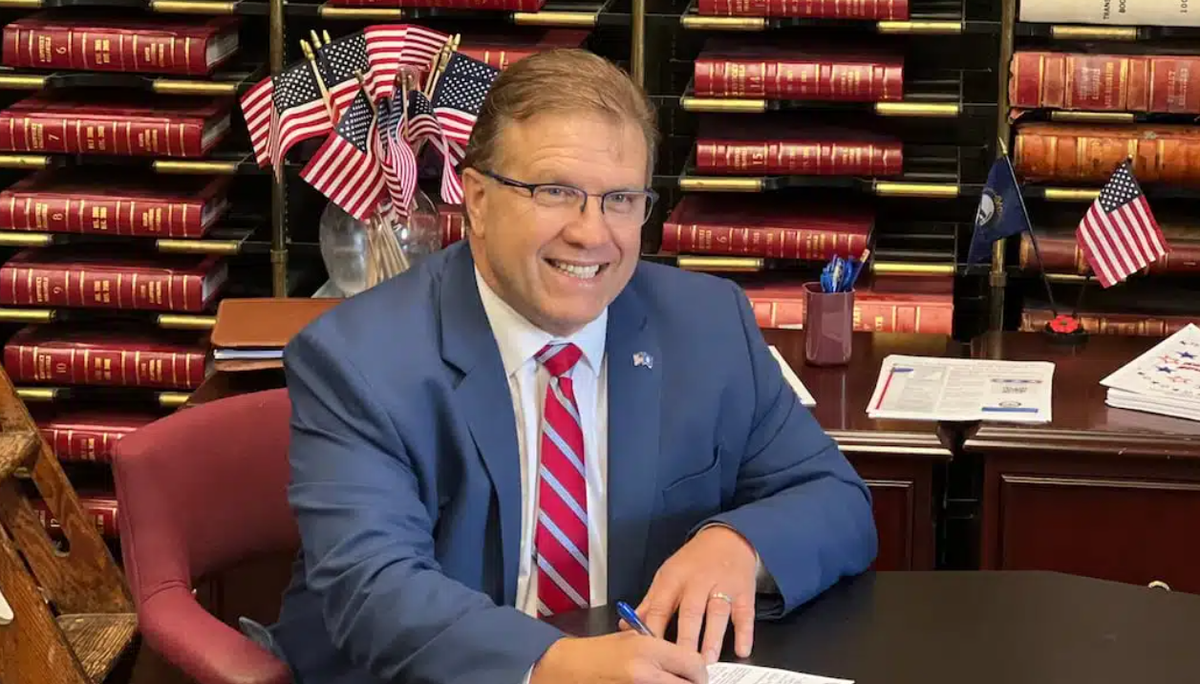
Madon was joined at the witness table by Tucker Davis and Clay Larkin of the Kentucky Coal Association, which supports his bill. But real-estate developers and others also want to see the Supreme Court decision reflected in Kentucky water pollution law, Madon said.
“This decision was a huge win for industries and the private land owners,” Madon said.
“Unfortunately, the (Energy and Environmental) Cabinet has taken the position that it has the authority to regulate streams and wetlands that are no longer subject to federal regulation, causing delays and unnecessary red tape for the coal industry,” Madon said.
In a prepared statement, the state Division of Water later said it was not consulted on Madon’s bill.
“We are in the process of reviewing it and the many impacts it will have on the quality of Kentucky’s drinking water, the costs to individual communities and public water departments and the possible effects to public health and the environment,” said agency spokeswoman Robin Hartman.
Several people came forward to testify against Madon’s bill, citing concerns for both the environment and the drinking water supply of Kentuckians who rely on groundwater wells or downstream river water.
Once dumped, pollution seldom stays in place, the critics warned.
“We all live downstream of something, and all rivers start somewhere,” said Audrey Ernstberger, associate attorney fellow with the Kentucky Resources Council.
“The move by SB 89 to narrow the definition to meet the federal standards does not fully safeguard Kentucky’s vital water sources for drinking, agriculture, recreation and wildlife,” Ernstberger said. “It would strip protections from all groundwaters and many headwaters of our streams, leaving them vulnerable to pollution.”
The majority of Kentucky’s 90,000 miles of streams and rivers already are considered impaired for the purposes of swimming and fish consumption because of pollution, said Nick Carter, water policy director for the Kentucky Waterways Alliance.
But the committee members became impatient and, with a procedural motion, cut off the bill’s opponents while they were still testifying. The members cast their votes 11-to-1 in favor of Madon’s bill, sending it to the full Senate for further action.
Retired state environmental lawyer Kathryn Hargraves attempted to speak about her concerns, anyway.
“I spent my career doing this work,” said Hargraves, who drafted bills and regulations as an attorney for Kentucky’s environmental agencies for decades. “So I do have some practical perspective that I think would benefit the committee. I will be very brief, I’m not going to read anything.”
There just isn’t enough time, said the committee chairman, state Sen. Brandon Smith, R-Hazard.
“Listen, I truly apologize to you, but I’m gonna lose my members, they’ve got other committees they’ve gotta go to,” Smith told Hargraves as the hearing ended.
This story was originally published February 13, 2025 at 5:00 AM.