As some KY Republicans see the need for abortion ban exceptions, others hold the line
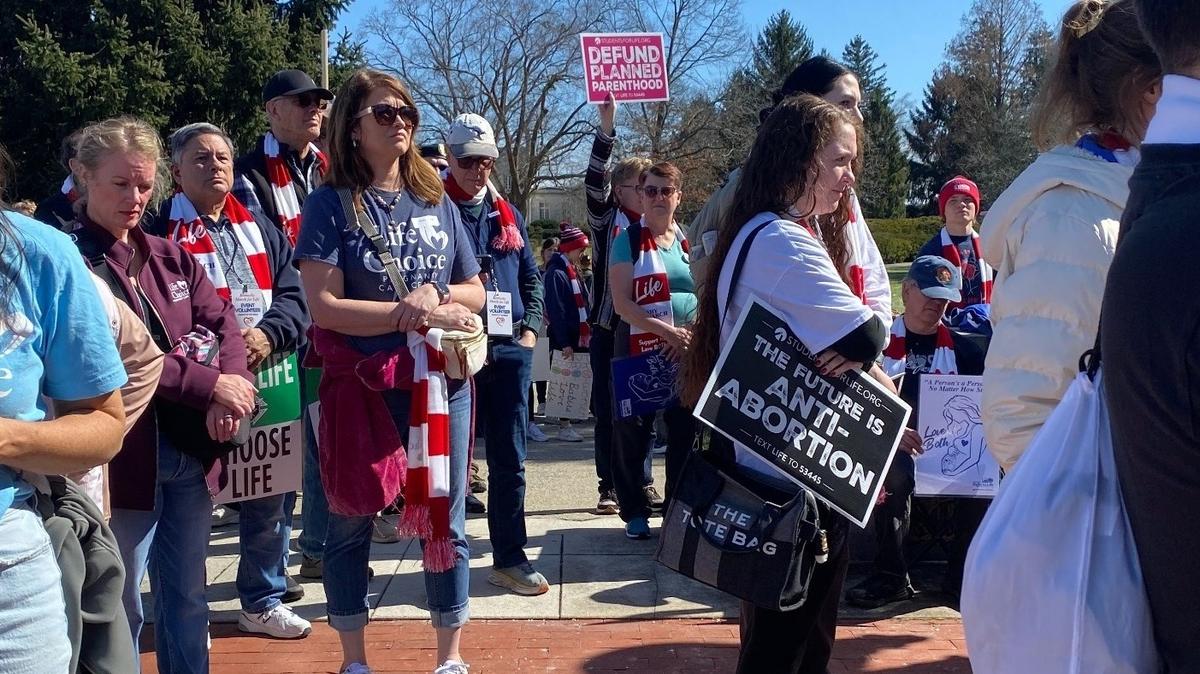
A faction of the Republican party, and fellow “followers of Jesus,” continue to celebrate Kentucky’s strict abortion bans and emphasize a need to hold the line against pressure, including from some within the GOP, to add any exceptions.
Instead, they’re fighting to “make abortion unthinkable.”
That message was declared by Kentucky Right to Life Executive Director Addia Wuchner at the annual March for Life rally on the steps of the Kentucky Capitol Wednesday before a crowd of a few hundred people. And it was echoed by Rep. Nancy Tate, R-Brandenburg, before a House Health and Family Services committee Thursday.
Tate was presenting House Bill 414, which would require all hospitals and alternative birthing centers to provide or refer women whose pregnancies are nonviable to “perinatal palliative care programs.”
Though participation would be optional, Tate told the committee, the stated goal would be to encourage a woman in that position to carry her pregnancy to term rather than get an abortion, according to the bill.
The bill’s language defines these programs as “multidisciplinary medical, emotional and spiritual supports” intended to be “alternatives to pregnancy termination.” Such programs help women “consider the psychological and faith challenges associated with post-termination.”
Tate filed the same bill last year, though it didn’t ultimately pass. When Tate presented it in committee, Democrats walked out in protest because they said the intention was pressure women with doomed pregnancies into carrying those pregnancies to term.
Wuchner, who presented the bill alongside Tate on Thursday, said it’s “not about enforcement,” or cracking down on hospitals who don’t make that option available, even though most already do.
“This is asking our providers to provide a service, and asking the Cabinet for Health and Family Services to keep a list of those services across the state,” she said.
Still, the stated intention behind the bill, as was illustrated by supportive Republicans at the March for Life rally on Wednesday, is to create and maintain a patchwork of anti-abortion laws in Kentucky that support sustaining “life from conception to natural death,” as Tate has said, even when pregnancy results from rape, if remaining pregnant poses a threat to a woman’s health, or if a pregnancy is nonviable.
This contingency of the political party in power remains louder than the faction interested in broadening the state’s strict ban.
With roughly three weeks left in the 2025 legislative session, the GOP still hasn’t decided on a course of action: whether it’s going to roll back aspects of the trigger law, heeding calls from doctors who say their ability to provide the standard of care to patients with pregnancy complications has been compromised by the strict law, or crack down further on limiting abortion access in Kentucky.
‘God is behind what we’re doing’
Abortion has been illegal in Kentucky since July 2022 under a trigger law and six-week ban, which prohibit any pregnancy from being terminated if there is still detectable fetal cardiac activity, except in cases where the life of the pregnant person is at immediate risk.
Though a lawsuit filed by a Jefferson County woman contests the constitutionality of those laws, the bans have remained in tact, despite willingness from some Republicans to adjust the law, by allowing women with nonviable pregnancies or who are impregnated by rape to also get abortions.
But for other Republicans, the parameters of the strict ban are fine as-is.
Wuchner told the crowd Wednesday their goal was to “make abortion unthinkable,” no matter the circumstance.
“We know the enemy is attacking us and doing everything they can to overturn the great things we’ve done in this state,” Rep. David Hale, R-Wellington, said during an opening prayer. “I’m thankful we can be recognized as a state that supports life.”
Rally attendees listened to testimony from several women who said they chose to remain pregnant — or whose mothers who were raped chose to remain pregnant — in the face of difficult medical diagnoses or unplanned pregnancies.
Kentuckian Kendall Bailey, a conservative Christian with a widespread social media following, said when she was diagnosed with thyroid cancer shortly before she found out she was pregnant with her second child, she put her faith in God and he rewarded her for it.
“I was faced with a choice: I could either abort my baby and focus on my health, or I could wait and risk the cancer spreading,” Bailey said. “Was I really willing to wait and put my life on the line? Risk my husband becoming a widower and a single father for a baby I didn’t know? Absolutely.”
Bailey gave birth to a healthy daughter, and her cancer is now in remission — a reality she called a “testimony of God’s ability.”
“Because God says that every life is precious. God made that choice for me when he told me my daughter was fearfully and wonderfully made,” she said.
Kentucky Auditor Allison Ball, a Republican, told attendees “there are no small victories when it comes to the pro-life mission.”
“As followers of Jesus, we take our Christian faith seriously,” Ball added. “God is behind what we’re doing. We’re a prayerful people, we’re a resurrection people, and God doesn’t lose.”
But God isn’t behind instituting punitive measures against women who get abortions, at least not according to Wuchner.
Even though Tate and Kentucky Right to Life don’t support adding exceptions to Kentucky’s abortion bans, they also don’t support charging them with homicide, as one GOP-backed bill this session seeks to do.
Instead, they should be approached with “love and compassion,” Wuchner told the crowd.
Like a bill from 2023 that was quickly rebuked by GOP House leadership, House Bill 523 from GOP Rep. Richard White of Morehead — also known as the Prenatal Equal Protection Act — proposes charging women who get abortions with “intentional homicide.”
At the Wednesday rally, proponents of White’s bill handed out signs and print-outs explaining “why Kentucky needs HB 523.”
“In Kentucky, when a mother kills her born child, she is rightly charged with murder. But if she kills that same child just weeks earlier in the womb, the law shields her from prosecution. HB 523 seeks to end this double standard by ensuring that all human life — inside and outside the womb — is equally protected under the law,” their fliers said.
Wuchner encouraged attendees not to accept the hand-outs.
That bill “is not supported by us at this time. We agree to equal protection, but we are not for capital punishment for vulnerable women,” she said. “We believe women who are confused, who are vulnerable, who have been coerced by this abortion industry, they need love and compassion and truth.”
Fight ‘long from over’
A few Republicans and Democrats have, each legislative session since Roe was overturned, filed bills to broaden the state’s narrow ban — to add exceptions for pregnancy resulting from rape, incest or when a fetus is diagnosed with any condition or complication that’s incompatible with life.
But those bills have not progressed.
Louisville Republican Rep. Ken Fleming’s bill to this end, House Bill 203, is assigned to be heard by a Judiciary committee this session, but if or when that happens isn’t clear. The session ends March 28.
Meanwhile, other Republicans have continued filing bills that would further restrict access to abortion or institute punitive actions for women who get abortions or people who aid and abet them.
Bills in the House and Senate would make it a Class C felony to “intentionally” mail “abortifacent drugs,” including common abortion medications such as mifopristone and misoprostol, to a Kentucky woman who wants an abortion.
Still, there remains a stated interest among some Republicans to clarify and broaden the current ban.
But momentum for that shift isn’t happening, at least publicly; Fleming’s bill has not amassed co-sponsors. When asked whether he thinks the exceptions bill will make it to the House floor this session, or at the least get a committee hearing, House Speaker David Osborne said he wasn’t sure.
“The Judiciary chair is continuing to work with his committee to see if he can find any type of consensus on it,” Osborne said Thursday. “It continues to be part of the conversation but just no resolution at this point in time.”
The lawsuit from Mary Poe “does complicate the conversation,” Osborne added.
Doctors treating patients with nonviable pregnancies or who are at high-risk for developing complications have told the Herald-Leader that their ability to provide the standard of care to these patients, which often involves terminating a pregnancy, is wholly compromised under the law, because of the law’s vague wording.
The threat of felony for providing an abortion in violation of the law compounds it, and has forced doctors to refer women with nonviable pregnancies to other states where abortion is less restricted.
“I think we could get some bipartisan support around clarifying some of the medical exceptions. I think there are some areas we can agree are not exactly clear,” Rep. Kim Moser, R-Taylor Mill, told KET’s Renee Shaw on a Jan. 22 episode of Kentucky Tonight.
“I know there are health care providers who are just uncertain about what they can do. They’re almost afraid to use their best medical judgment, because it’s a felony right now if it doesn’t pass muster somehow,” she said.
As a result, “sometimes the health care providers are waiting too long and some of these moms are having to go out of state. We don’t want that,” Moser added. “We want our patients to be able to get care in Kentucky if they have a crisis pregnancy.”
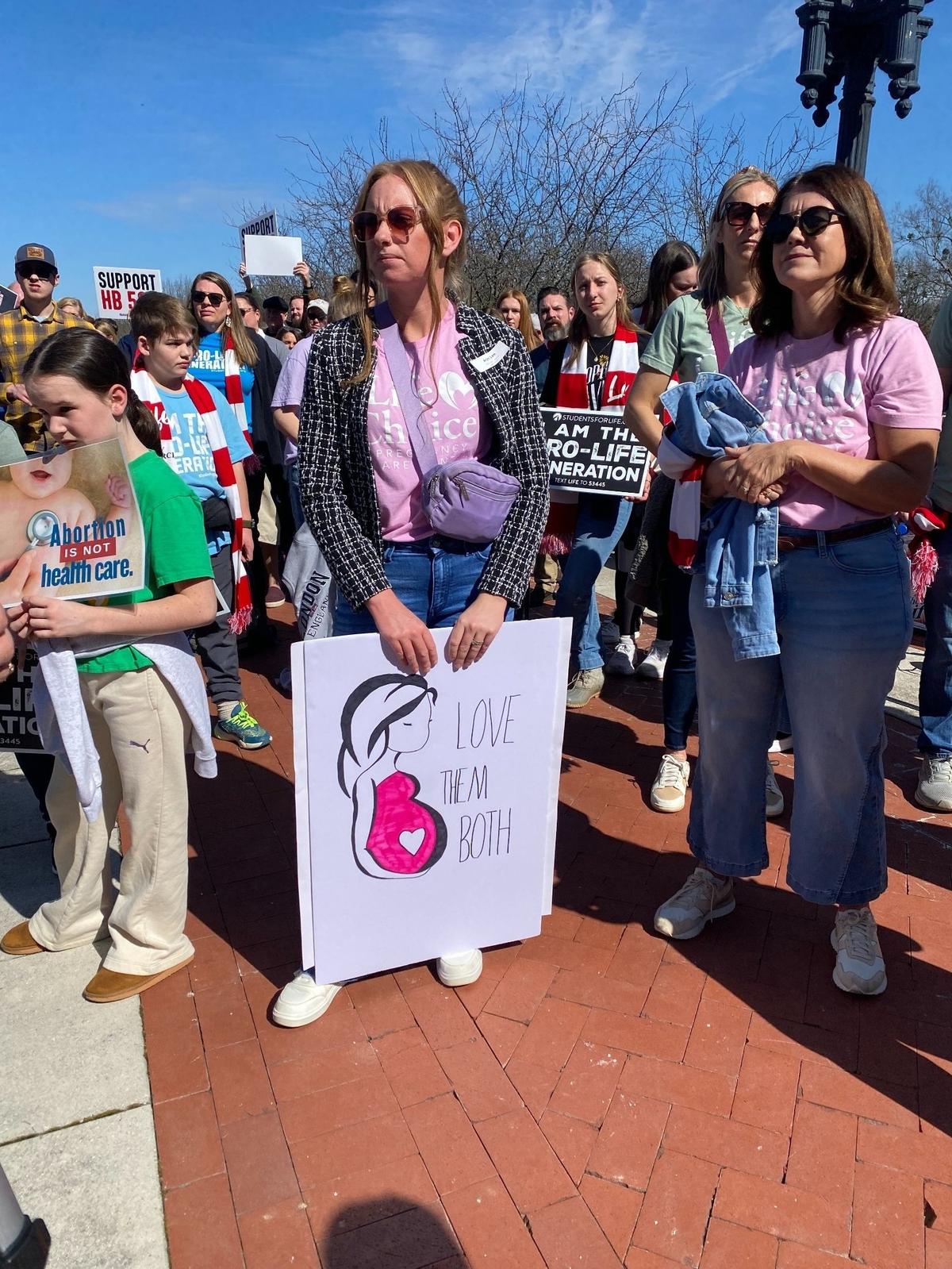
The message is slightly different for Tate, who told rally-goers Wednesday their shared goal was to “love them both: mother and child,” to hold the line with keeping the statewide bans as-is and to “make sure we realize there are people out there adamantly determined to destroy all the work that we’ve done.”
On Kentucky Tonight, Moser said Kentucky’s abortion bans are also foiling hospitals’ efforts to recruit new OB-GYNs to the state, which already faces a health care provider shortage.
Dr. Jeffrey Goldberg, legislative advocacy chair for the Kentucky Chapter of the American College of Obstetricians and Gynecologists, told the Herald-Leader the same thing in December.
“We are having trouble recruiting new medical school graduates to train in Kentucky,” because of the “legal environment” created by the state’s restrictive abortion bans, said Goldberg, who also works as a gynecologic oncologist in Louisville.
“This is really becoming a labor workforce issue,” he added.
To Moser’s “excellent point” raised on Kentucky Tonight, Louisville Republican Sen. Julie Raque Adams said she would be “comfortable” having a conversation within her caucus about adding exceptions to the bans. “But the majority of the caucus isn’t ready to go there, yet.”
The work force shortage, exacerbated by the strict abortion bans, is a real concern, Raque Adams said.
“We have a provider shortage when it comes to OB-GYNs, and when people get out of medical school, we’re finding they don’t want to come to a state like Kentucky, because there are these issues that haven’t been solved yet around what their scope of practice is,” Raque Adams said. “If we’re really going to get to the root of how do we provide good health care for women in Kentucky, we’ve got to wrap our arms around what the OB-GYNs are telling us they need in order to do be able to do their job to treat women in a holistic way.”
But the focus at the Right to Life Rally didn’t touch on the provider shortage, or the pregnant women who need medical care their doctors are fearful to provide.
Instead, the focus was on holding the line.
“Because of your prayers, today is 939 days since the last legal abortion in the Commonwealth of Kentucky,” Wuchner said to applause. “But our fight is long from over.”
This story was originally published February 28, 2025 at 5:00 AM.