Teen in KY foster care office causes $27K in damage. Auditor says it’s a ‘systemic failure’
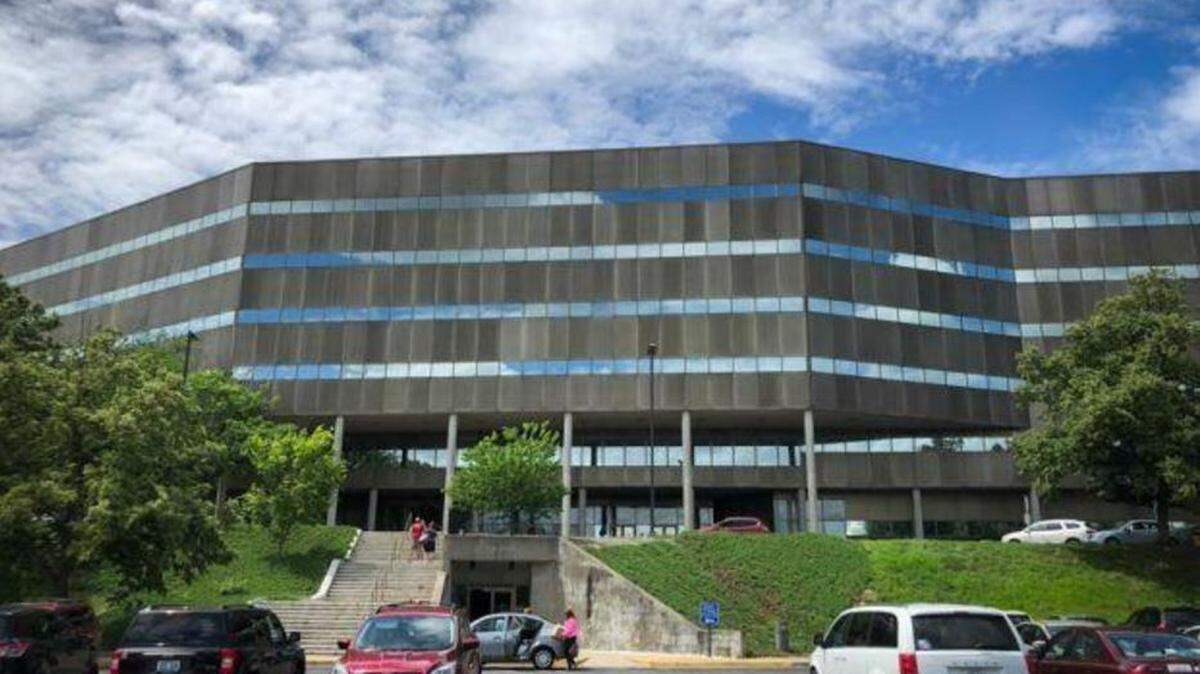
A teenager temporarily housed in a Kentucky social services office after being refused by other foster care placements caused nearly $27,500 in damage to the interior of the building during a fit of anger last month.
An “out of control” 17-year-old boy in the care of the Department for Community Based Services destroyed thousands of dollars worth of office equipment inside the regional office in Rowan County, according to a Morehead Police Department report.
The incident comes as public officials are increasingly scrutinizing Kentucky’s social services agency for temporarily housing children in government office buildings.
In January, the Commonwealth Office of the Ombudsman released a report that showed dozens of children in the foster care system, ages 1 to 20, had slept in social service offices during a three-month period in 2024 when traditional placements weren’t available — a reality Republican Auditor of Public Accounts Allison Ball, who commissioned the report, called “deeply concerning.”
Department for Community Based Services staff called Morehead police at 1:45 p.m. on Sunday, Feb. 2 to report an “out of control 17-year-old juvenile” inside the regional office.
Officer Jody Grigsby arrived to find several employees in the parking lot who told the officer that C, the young man whose identity is confidential because he’s a minor, was “inside destroying property,” Grigsby wrote in his report, obtained by the Herald-Leader.
“I walked in and found the office to be completely destroyed. I looked down the hallway and there were broken pictures in the door and glass everywhere,” Grigsby wrote. “I heard continued property damage at that moment down the hallway and found C smashing furniture in offices and off the walls.
“Most items were government-issued computers, TVs and monitors,” Grigsby wrote, as well as other office items, including conference tables, video-conferencing technology, picture frames and desk chairs, the police report shows.
Morehead police, with help from DCBS, later reported damages totaling $27,497.69.
After Grigsby and another officer got C to calm down, they learned he “was in the care of the Cabinet (for Health and Family Services), and they have attempted other less restrictive placements, however all have been denied due to his violent tendencies.”
This incident occurred a little more than a week before Kentucky lawmakers heard testimony from leaders of the state’s largest social services agency that youth sleeping in state office buildings for lack of more conventional placements was the new normal, and that such placements, while not ideal, were safe and the buildings they slept in secure.
That Feb. 11 Senate Families and Children Committee meeting was on the coattails of the ombudsman’s report released Jan. 28 that showed 49 children slept in state offices between June and October 2024 — a “small sample” of a broader problem.
“The preliminary assessment confirmed, yes, it’s still a problem. Now, it’s time to do a much deeper dive,” Ball told lawmakers.
So far this year, 16 children have been temporarily placed in state office buildings, according to information reported by the Cabinet, Ball’s office told the Herald-Leader.
“As reports of foster children housed in office buildings across Kentucky persist, it is clear that the systemic failures within our foster care system require immediate attention,” Ball said Monday of the Rowan County incident.
Making offices ‘accommodating to children’
Children in states with beleaguered child welfare systems sleeping in “non-traditional placements” is not unique to Kentucky.
Just last month in neighboring West Virginia, where the state’s overburdened child protection system has forced the temporary placement of children in unlicensed hotels and 4H camps, a 12-year-old boy in one of those settings last month attempted suicide.
A Kanawha County Circuit Court Judge ordered state officials to explain how housing children in hotels was “safe and appropriate.”
In a hearing in that case Friday, the judge ordered the department be placed under an “improvement period” for a year, during which it will be monitored by the state’s children’s services division director.
After the Kentucky ombudsman’s report was released in January showing 49 children slept in non-traditional placements during a three-month period last year, Kentucky Youth Advocates Executive Director Terry Brooks said it necessitated “more complete data.”
“We are also left with many more questions than answers,” Brooks said at the time. “Our main outstanding question: what barriers are keeping foster parents and agencies, or family members, from opening their doors to these children — and how can the Cabinet for Health and Family Services best support them?”
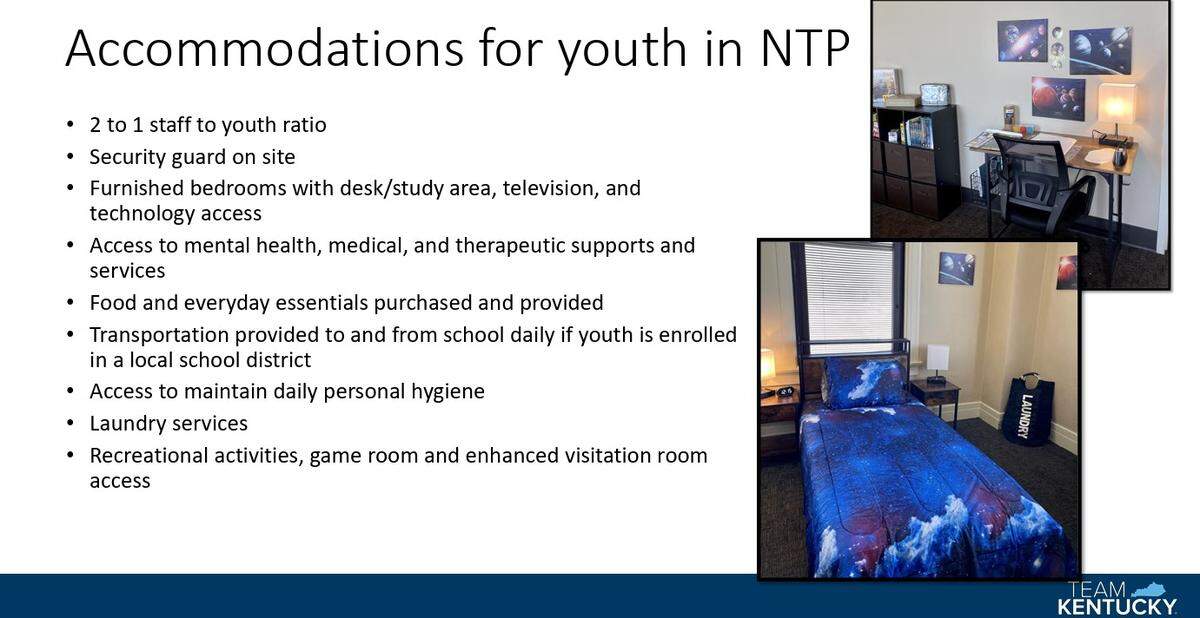
Cabinet Secretary Eric Friedlander, confirming to lawmakers at the Feb. 11 meeting that children sleeping in state offices was an ongoing issue without an immediate solution, said his agency had dispatched the Inspector General to each of the office buildings where youth were sleeping, “to make sure they were reasonable and accommodating to children.”
As part of his presentation, he included pictures of living quarters staff had created in an office building. The set-up resembles a dorm room, complete with a bed, nightstands, a desk and wall art.
A reality since at least 2022 when media outlets began reporting foster children were sleeping in social service buildings, Department for Community Based Services Commissioner Lisa Dennis told lawmakers that day the state had since deployed initiatives to try and mitigate the need to house adolescents in office buildings, like hiring high-acuity specialist in each service region and offering “intensive therapeutic support programs” to meet the complex needs of this population.
Friedlander said the cabinet has been “spending what ever it takes, but even what ever it takes — some of these beds we probably pay close to a million dollars a year — and still have facilities that will refuse to take the child.”
Paducah Republican Sen. Danny Carroll, committee chairman, said he believed the “cabinet is doing everything they can,” to find a more accommodating long-term solution.
Carroll suggested perhaps part of the solution could be setting up longer-term ad hoc sleeping quarters in some of these office buildings, like the one Friedlander showed, especially since most kids are only sleeping in these facilities for only a few days, he said.
“Can we look, with some of these offices, making them shelter facilities, is that a temporary solution?” Carroll asked, advising that people not “get so wrapped up” in the fact that children under care of the state are sleeping in office buildings, which the “media blows out of proportion.”
“The media plays up that they’re in an office, but it’s not that simple,” Carroll said. “I’m not as concerned about them being in an office, I’m concerned about what happens in that office. I think that’s where the issue is: how secure is it? I’m not aware of any major incidents that have taken place in any of these offices.”
‘Difficulties in accepting these children’
That Sunday in Morehead, C told police he’d gotten upset that morning because adults in his foster home said he needed to go to church, but he didn’t want to.
Instead, he’d been brought to the DCBS regional office, where he erupted in anger. There was no record of this temporary foster placement in the Cabinet’s iTWIST database, the Auditor’s office told the Herald-Leader. The newspaper could not confirm how long the teen had been in the office before police were called.
“If C was not arrested, I believed he posed a danger to himself or the social workers responsible for caring for him,” Grigsby wrote in his report. “He showed no remorse for his actions and the damage he caused and told me he was happy he was getting locked up.”
From the office, C was taken to the Breathitt County Juvenile Detention Center and charged with 3rd-degree terroristic threatening and 1st-degree criminal mischief.
Placing a child in an office building typically only happens after all other placement options have been exhausted, Friedlander told lawmakers last month. He said many facilities have “tremendous difficulties in accepting some of these children.”
Many of the children and teens who find themselves bunked in social services office buildings are high-acuity, meaning they need specialized, tailored supports for histories of acute trauma, a range of mental health diagnoses and, for some, histories of violence.
Others pinball between juvenile detention facilities and foster care placements, James Sherry, CEO of Holly Hill Child and Family Solutions told lawmakers in that meeting. Holly Hill serves teens ages 11-17 in the Kentucky foster care system.
C’s social worker told officers who responded to the scene that day that “this was not the first time he had damaged property,” the police report notes.
“He was pending charges pending in Clark County for property damage at the school,” the report says. “She also stated he ran away and made it to New York recently.”
The cabinet said Monday it was “aware of the recent incident involving a youth at one of our facilities.”
“We are actively working with relevant officials to address the situation and ensure the safety and well-being of all individuals involved,” spokesperson Kendra Steele said in a statement.
“DCBS remains committed to supporting youth with complex needs, especially in instances where suitable placements cannot be secured immediately,” she added.
This story was originally published March 5, 2025 at 5:00 AM.