KY Rep. Andy Barr says adults on Medicaid need to get a job. Many already have one

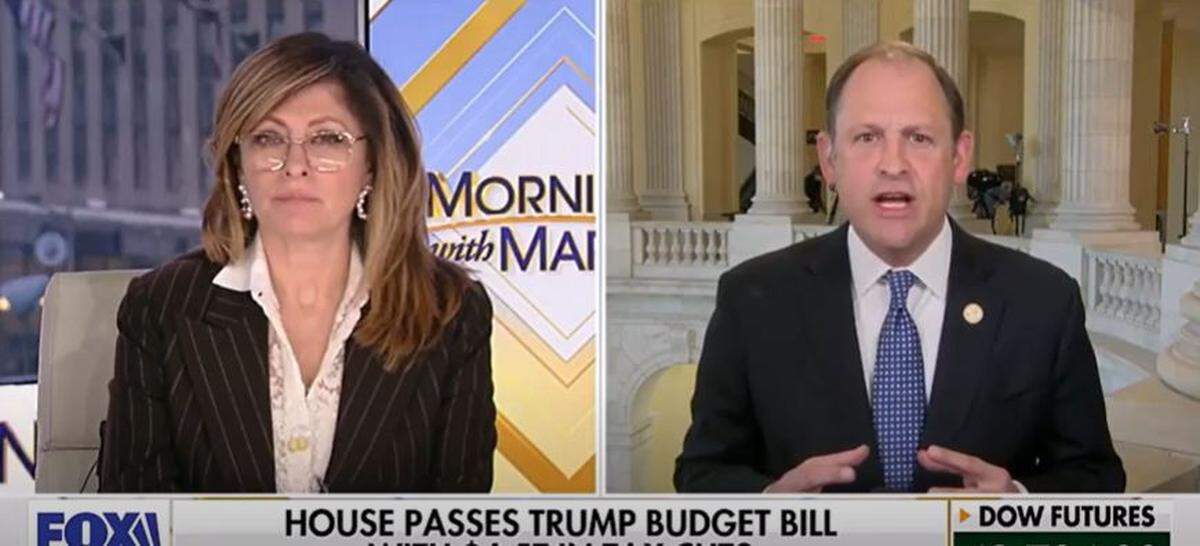
After the U.S. House passed a Republican-backed budget resolution Feb. 25 with $880 billion in cuts proposed for the agency overseeing Medicaid, U.S. Rep. Andy Barr went on television with advice for low-income people whose health coverage may be on the line.
They need to get jobs, the Lexington Republican said.
“No, look, Medicaid is a big mandatory spending program. But what we need in this country is for the American people to get back to work,” the six-term congressman told host Maria Bartiromo on Fox Business.
“Yeah,” Batiromo replied, nodding her head.
“Work-capable adults need to get off the taxpayer rolls and then they need to get into private health insurance and private employment,” Barr said. “This is what (Treasury) Secretary (Scott) Bessent and President Trump are talking about when they say ‘Reprivatize the economy.’ This is good for people who are currently on Medicaid.”
Should people on Medicaid get a job?
Actually, many Medicaid recipients already have jobs. But they are poorly paid, and their employers either don’t provide them with health insurance or don’t give them the full-time hours necessary to require workplace-based insurance coverage.
A 2020 congressional report on the 12 million wage earners enrolled in Medicaid counted among them many thousands of workers for the nation’s major employers, including Walmart, Amazon, McDonald’s, Publix, Waffle House, Kroger, Dollar General, Home Depot and Wendy’s. More than two-thirds of those people worked full-time, according to the report.
Others in Medicaid don’t work because they are full-time caretakers for loved ones. Or they are disabled. Or they are children.
Let’s look at some facts and figures.
One in three Kentuckians on Medicaid
Medicaid was established in 1965 by Democratic President Lyndon Johnson as a joint federal and state health insurance program for the poor and disabled. Its twin, the federal Medicare program, covers senior citizens.
In 2010, Democratic President Barack Obama’s Affordable Care Act gave states the right to expand their Medicaid programs to include the “working poor” — able-bodied adults who earned up to 138% of the federal poverty line. In Kentucky, that means up to $20,784 a year for an individual or $43,056 for a household of four.
Democratic Kentucky Gov. Steve Beshear signed on. In 2014, Kentucky expanded its Medicaid program, adding about 400,000 adults. The state’s uninsured rate plunged from 35% to under 11% in just a few months.
Medicaid now covers 1.4 million Kentuckians, or one in every three people in the state. Nearly half of all childbirths and nearly half of all children in Kentucky are covered by Medicaid.
The state spends about $17 billion a year on the program’s benefit payments and administrative costs, but most of that comes from the federal government and much of it goes to Kentucky hospitals, nursing homes, pharmacies and medical practices.
Working but still no insurance
Dustin Pugel, policy director at the Kentucky Center for Economic Policy in Berea, recently studied a three-year sample of federal data on working-age adult Kentucky Medicaid recipients to see what they did with their days from 2022 to 2024.
The largest group, 39%, worked full-time. A smaller group, 12%, worked part-time.
Taken together, that means a little over half of the adults in Kentucky’s Medicaid program — more than 570,000 people — held jobs during this period. But they didn’t have employer-provided health insurance, Pugel said.
Of the remaining groups, 26% were disabled, 10% cared for family members, 5% attended school, 4% were retired, 2% could not find work and 2% were classified as “other,” Pugel said.
Middle-class Americans might assume that everyone who has a job can count on health insurance and job security, Pugel said. But that’s not the reality for millions of people who labor in food service, retail, tourism, construction and other poorly paid industries, he said.
“There’s instability, especially with low-wage work,” Pugel said. “People are in and out of jobs. Their hours fluctuate dramatically. So you may be full-time for a while and then you may be bumped down to part-time, just depending on what your boss is willing to provide for you.”
“That’s another reason why Medicaid is such an important coverage tool for working adults: having one form of insurance coverage that can stay with them and continue to provide for them that whole time,” Pugel said.
In the House, Barr represents Central Kentucky’s 6th Congressional District, which includes rural Wolfe County.
Wolfe County has one of the highest rates of Medicaid dependence in the country. Sixty-two percent of the county’s 6,286 people are enrolled in Medicaid, according to federal and state data. Nearly one in three residents lives in poverty.
That doesn’t mean nobody wants to work.
More than 2,200 people in Wolfe County were in the civilian workforce as of December, which means they were either employed or actively looking for a job, according to the U.S. Bureau of Labor Statistics.
But the available jobs are typically low-wage and often part-time. A review of online help wanted ads from around the community showed job postings for gas station and supermarket clerks, warehouse workers, and janitorial and maintenance staff for tourism businesses around the popular Red River Gorge.
Employers who included wages in their help wanted ads listed them as $13 to $16 an hour.
Telling people in Wolfe County to get a job misses the point, Pugel said.
“These people have jobs,” he said. “It’s just that they’re working in jobs that pay so little or have so few benefits they can’t get insurance there, and so they qualify for Medicaid.”
This story was originally published March 4, 2025 at 9:46 AM.