
What has KY Gov. Beshear vetoed? See the full list of 20-plus bills and what they mean for KY
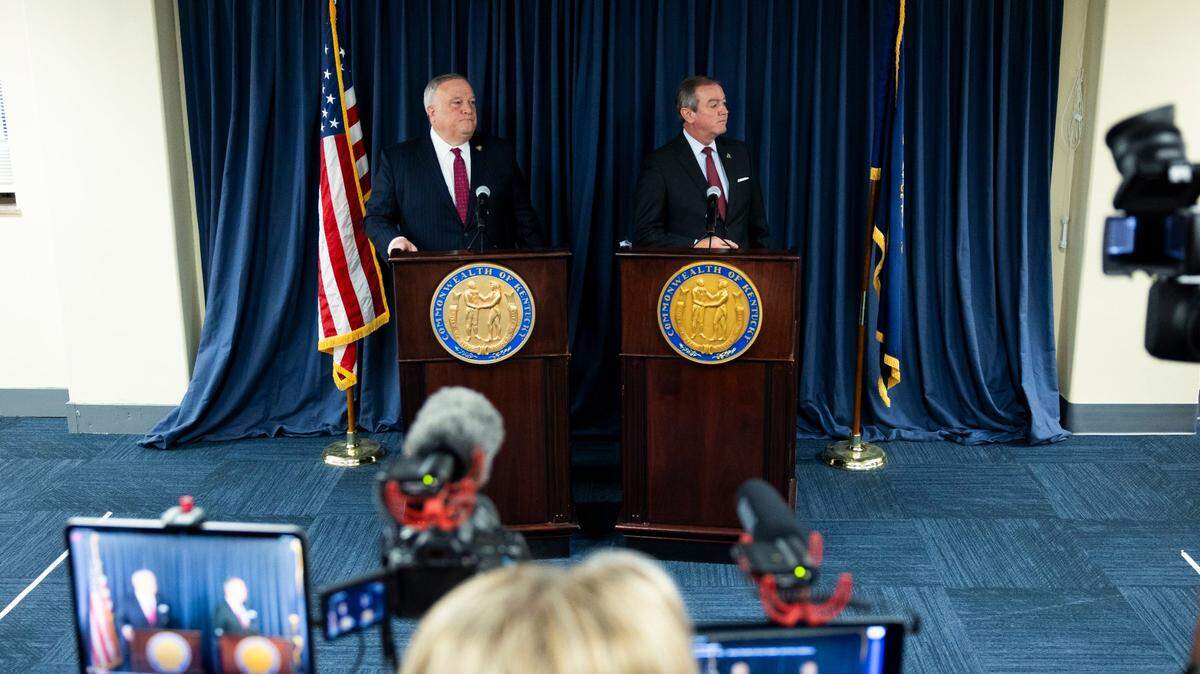
Gov. Andy Beshear has gotten used to issuing vetoes on the high-priority bills passed by the Republican-led Kentucky legislature.
The legislature, likewise, has gotten used to overriding the Democratic governor’s vetoes during the past five-plus years of divided government.
With an 88% override rate — the number is even higher for bills vetoed at this point in the legislative session — it’s safe to assume that the legislature will look to do what they’ve always tended to do.
So, what all has Beshear given a thumbs down so far this session? He’s racked up a list of more than 20 bills vetoed during the 10-day period designated for him to veto bills.
Here is the full list of bills of vetoed bills. All of them are subject to a legislative override with a simple majority vote of both chambers because they were passed before the veto period.
- House Bill 546 was line-item vetoed to exclude language requiring the setup of a tolling system to help fund the I-69 bridge project to cross the Ohio River near Henderson. The project is one of the most-touted and priciest in the state.
- House Bill 6 would bar any cabinet from making a regulation beyond a certain dollar threshold without explicit permission in statute from the legislature. Several cabinets under Beshear have opposed the bill, saying it will stymie their work. Republicans have touted it as a move to do away with unnecessary regulation.
- House Bill 90 was an effort by Republicans to clarify language about when doctors can legally intervene with a “medically necessary” abortion to save a pregnant woman’s life. The bill does not expand exceptions to Kentucky’s near-total abortion ban, which has been in place since 2022. Beshear wrote in his veto message that it “restricts access to medical care, places barriers on doctors and undermines their clinical judgment.”
- House Bill 136 is largely an attempt to get the Department of Corrections to collect more data on time served and other factors related to people in prison. Beshear vetoed it because he claims it will force the department to cancel an existing contract with a vendor for inmate communication services.
- House Bill 216 allows employees at the Department of Agriculture to seek out and accept grants from the department they work for. It got unanimous passage from Democrats and Republicans alike. Beshear wrote in his veto message that he believes that is unethical.
- Parts of House Bill 566 related to Executive power and Executive Branch Ethics were line-item vetoed. The bill made changes to the Kentucky Horse Racing and Gaming Corporation, which was founded last year in a bill Beshear fiercely opposed.
- Beshear line-item vetoed sections of House Joint Resolution 30, which authorized the release of funds for certain wastewater improvement projects.
- Senate Bill 28, a bill focusing on agricultural economic development, received a veto from Beshear because it creates a board with no gubernatorial appointments and requires a cabinet secretary to consult with the Commissioner of Agriculture on certain projects.
- Senate Bill 65 nullifies two regulations promulgated and now withdrawn by the Beshear administration. The governor vetoed it, citing a perceived legislative overreach.
- Senate Bill 84 would more explicitly align state courts with the Supreme Court of the United States’ recent overruling of “Chevron Deference,” which previously encouraged courts to defer to an agency’s interpretation of an ambiguous statute it administers. Beshear vetoed the bill because he said it unconstitutionally prohibits courts from deferring to state agencies on these matters.
- Senate Bill 89 reduces the regulatory power of the Kentucky Division of Water by narrowing the definition of the waters it protects to mirror a 2023 U.S. Supreme Court decision that weakened the U.S. Environmental Protection Agency’s ability to enforce the federal Clean Water Act. The move would benefit coal companies and other polluting industries by making it easier for them to contaminate water sources without repercussions from state environmental officials.
- Senate Bill 245 was vetoed by Beshear for preventing reappointed Kentucky Fish & Wildlife Commission members from serving if they’re not confirmed by the Senate. It’s the latest in a long battle over the commission and its corresponding department between Beshear and the commissioner, whom the Senate largely supports.
- House Bill 2 would allow Kentuckians to sue Beshear over the collection of a sales tax on gold. Beshear called the bill unconstitutional and a distraction when prices for more basic needs remain high.
- House Bill 4 would limit diversity, equity and inclusion practices at public higher education institutions in the state. A similar bill nearly passed last year but failed at the last minute. Beshear wrote that history may judge the movement behind the bill as “pro-discrimination” in his veto message.
- House Bill 346 changes certain air quality regulations, specifically around what’s defined as an “emergency stationary internal combustion engine.” The bill would refund any emissions fees paid for calendar year 2023 around that issue. Beshear vetoed the bill, calling it “at least one entity’s attempt through legislation to receive a refund” for fees it should have been paying for a decade.
House Bill 398 would shrink the regulatory authority of the Kentucky Department of Workplace Standards, which monitors most private employers, so it mirrors the U.S. Occupational Safety and Health Administration. Supported by the Kentucky Chamber of Commerce, Republicans have framed it as a pro-business bill while Beshear bashed it as potentially “leading to more workplace injuries, with Kentucky workers paying the price.”
House Bill 399 would give Kentucky’s legislative leaders the power to order police to arrest protesters who they believe are disrupting their work. It’s largely seen as a response to raucous protests in 2023 from the House visitor’s gallery; those ended in protesters being removed and restrained with zip ties. Many of the protesters were later charged with crimes. Beshear vetoed the bill “because the conduct it makes criminal is already covered,” and he expressed fear it would “silence lawful First Amendment conduct.”
House Bill 424 would require universities to implement a performance evaluation system, which critics have worried could threaten the role of tenure and professors in Kentucky. While the bill’s proponents said it’s needed for universities to have more flexibility in addressing under-performing employees, Beshear wrote that “in a time of increased federal encroachment into the public education,” it would limit employment protections and academic freedom.
House Bill 495 would ban transgender Kentuckians from getting gender-affirming care — particularly hormone treatment and surgeries — paid for through the state’s Medicaid program. The bill also nullifies Beshear’s executive order cracking down on funding for conversion therapy, a discredited practice meant to “convert” someone out of their sexual orientation or gender identity. The governor wrote that it would “jeopardize” LGBTQ+ Kentuckians’ health.
House Bill 684 was an omnibus elections bill that made several changes. One of those changes — barring voters from using a credit or debit card as a valid form of voter ID on election day — led to Beshear’s veto.
House Bill 694 makes several changes to the Teachers Retirement System (TRS). It requires employer funding for retiree health to be used to pay down the unfunded liability of the Teachers Retirement System once the retiree health fund is 100% funded, among other things. Beshear wrote in his veto that teachers will continue to pay a higher match rate — their share of the retirement contribution — longer than they would have otherwise.
Senate Bill 25 is a multi-faceted bill changing planning & zoning processes, the Commonwealth Office of the Ombudsman and more. Beshear line-item vetoed parts of the bill that move the office under the state auditor’s purview, a section on clawing back funds from the Center for Rural Development and another part funding an audit on the Kentucky Communications Network Authority, which manages the controversial KentuckyWired network.
Beshear line-item vetoed sections of House Joint Resolution 46 because the names of certain roads were slightly incorrect.
Senate Bill 19 would require Kentucky K-12 schools to implement a minute-long seated moment of silence to start the day. Beshear, in his veto, implied the bill was unrealistic because it means “the law will be violated when kindergartners cannot stay silent in their seats.” He also expressed disapproval with a part of the bill that allowed students to leave school for up to an hour per week for “moral instruction.”
Senate Bill 183 makes changes to how state boards govern state-administered retirement systems. Beshear wrote in his veto message that it prevents board members from adequately carrying out their fiduciary duties.
House Bill 695 changes various aspects of the state’s Medicaid program, including the addition of a mandatory work requirement for able-bodied adults with no dependents as well as increased alignment with the federal government and stronger legislative oversight. Beshear wrote that the bill would hamstring the department from making needed changes when the legislature is not in session and that the work requirement was a bad idea. He said it will “undoubtedly result in the loss of health care coverage” and will result in “costly litigation.”
Unlike bills passed before the 10-day veto period, any bill passed for the first time out of the legislature during the final two days of the session could be vetoed without any opportunity for an override.
This story was originally published March 27, 2025 at 10:01 AM.