
Price of Partying: How Kentucky’s legislature runs on free lunches & receptions
AI-generated summary reviewed by our newsroom.
- Lobbying events for KY lawmakers cost $484K in 2024, up 160% from pre-pandemic norm.
- Free meals covered many session days, allowing lawmakers to keep more per diem funds.
- Increase tied to post-pandemic prices, GOP control and expanded lobby interest.
State ethics laws forbid lobbyists from buying a Kentucky legislator anything — even a simple cup of coffee.
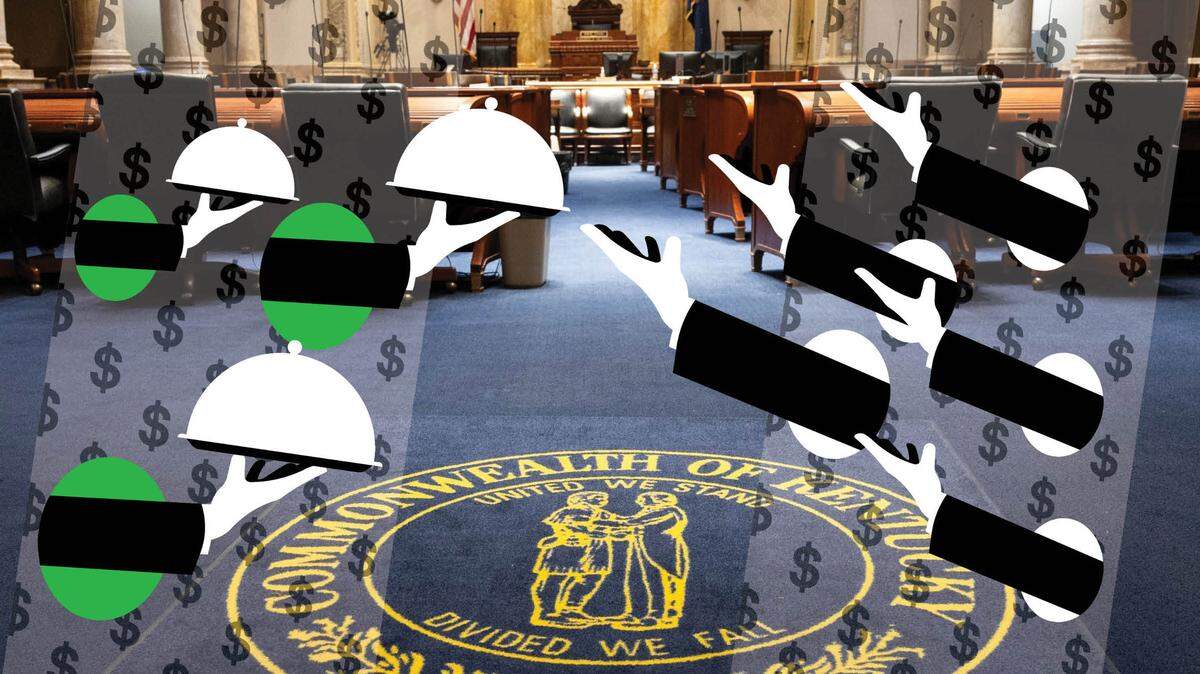
But there’s a workaround: Invite the entire legislature, or one of its many groups, and they’re free to wine and dine members with the hope of influencing the policies they pursue.
There’s no limit to what companies and advocacy groups can spend on these events in their efforts to sway lawmakers.
And spend they do.
Elaborate receptions, quick sandwich get-togethers for lunch, Chik-Fil-A breakfast biscuit buffets or even a few rounds of booze — these events help define the rhythms of Frankfort before, during and after legislators deliberate on bills that could affect Kentucky’s 4.5 million residents.
These events had a total reported pricetag of $484,000 throughout 2024, according to records obtained by the Herald-Leader from the Kentucky Legislative Ethics Commission.
That marked a 160% increase from the pre-pandemic norm.
Their prevalence is raising alarm among some political observers and Democrats who see a legislature more oriented toward the interests of who can pay a top lobbyist or host an expensive reception.
“It’s obscene. It buys access to legislators, basically,” said Rep. Mary Lou Marzian. “Regular people can’t come to a Frankfort party, or invite you to dinner, or get you a snack, or drink and talk to you about their bill.”
The Louisville Democrat took office in 1992, retired in 2022 before returning this year after being reelected in 2024. She said she’s seen Frankfort’s culture and its legislative output grow more dominated by special interests over that time.
While many Republicans would disagree, the numbers show a significant spike in spending by special interest groups.
From 2008 to 2019, the annual reporting on lobbying events hovered around $186,000. The 2024 total of $484,000 is 2.6 times that previous amount.
This comes as the overall lobbying spend hit a historic high in 2024 at nearly $28.2 million, a figure that includes events. The balance mostly pays for salaries of lobbyists currying favor in Frankfort.
That’s also up from the pre-pandemic average, though the recent jump in events spending is bigger.
Annual numbers for 2025 won’t be available until next year.
The Herald-Leader’s review of the trend includes on-the-ground reporting from events, data analysis dating back almost 20 years and interviews with legislators, lobbyists and observers alike.
The reasons given for the increase vary.
Lobbyists point to inflated hospitality service prices, as those companies try to regain profits lost from the COVID-19 pandemic. Senate President Robert Stivers, R-Manchester, and others say a growing recognition of the Republican-dominated legislature’s power is attracting more investment in building those relationships.
Whitney Westerfield, a former state senator who left office in 2024 and chaired the Senate Judiciary Committee, doesn’t think the events are particularly influential — or even a good use of lobbyist money.
“I found them to be, with respect to the people putting them on, a waste of my time,” Westerfield said. “They were social events. There was not a lot of substance.
“If they thought it was helping with this issue or their cause, it sure didn’t with this legislator.”
But the ledger still shows that groups looking to influence the legislature see a use for these events.
“It is very concerning when so much money is spent on lobbying events, wining and dining,” Rep. Tina Bojanowski, D-Louisville, said. “Whoever has the most money usually tends to get what they want, and they’re smart people.
“If it wasn’t working they wouldn’t do it.”
The total amount of money spent on the events is likely higher.
The Legislative Ethics Commission asks lobbying groups to only report what they spend specifically on legislators or staff — not other lobbyists or unaffiliated persons like their significant others. Sometimes those groups report the whole cost of events anyway and sometimes they don’t, commission staff told the Herald-Leader. That opens up the possibility of reporting a much lower figure than what was spent on the event as a whole.
Why the increase in lobbyist events?
When the COVID-19 pandemic hit, the inflated prices for goods were felt around the world.
Costs related to hosting legislative events were no exception, according to longtime lobbyist Tom Underwood. The hospitality industry, he said, has tried to make up for lost time and money due to the dearth of such events for a couple years.
“Post-COVID, meeting facilities and catering went through the roof. You’re paying a ton for just a Coke for an attendee. It cost them a fortune and they’re trying to make it up now,” Underwood, who works for The Rotunda Group representing various industry associations, said.
Beyond inflation, the chart of spending from 2008 to 2019 also tracks generally with America’s trajectory of slow but steady recovery from the Great Recession.
The number of groups — companies and nonprofits alike — interested in lobbying the legislature has also increased over time, though not as quickly as the overall spend.
Lobbying groups hosting or contributing to events for legislators rose steadily over that time period, from 211 in 2008 to 338 last year.
This could be due to a growing realization among Kentucky’s powerbrokers that the state legislature’s GOP caucuses are actively reshaping the state, whether that’s through the activation of its near-complete ban on abortion, its work reducing the state’s income tax rate or any number of important issues.
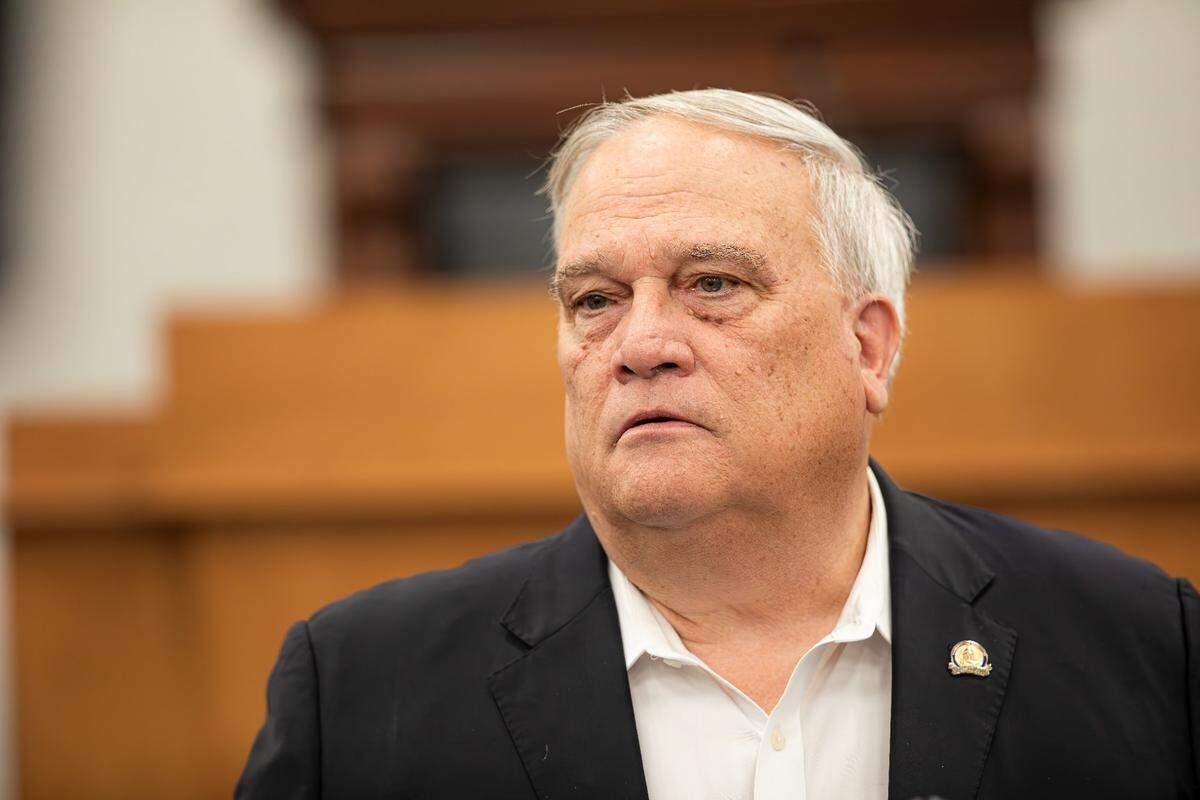
That’s the reason Stivers, one of the most powerful men in Frankfort, first cited when asked about the rising cost of these events.
Stivers contrasted legislative power to that of Gov. Andy Beshear, whose powers the legislature has continually targeted in the Democrat’s five-plus years in office.
“It’s because individuals who are interested in policy see the (reality) that the legislature is key to getting policies that they are philosophically aligned with… The governor can’t pass a law,” Stivers said. “In fact, he probably has an adverse impact. So they don’t go to the governor; they go to the legislature.”
This isn’t just chest-thumping on Stivers’ part. It’s a widely recognized truth, said former Secretary of State Trey Grayson, a Republican and lobbyist for the firm Frost Brown Todd.
“The General Assembly is taking the lead in public policy development,” Grayson said. “They’re taking the lead in drafting the budget, so engaging — whether that’s hiring contract lobbyists, inside lobbyists or hosting receptions — it doesn’t surprise me that it’s gone up.”
With the acknowledgment that the Republican caucus is the one driving nearly all policy decisions, another aspect of the increase in spending could be how big those caucuses are. Republicans claim 32 of the 38 members of the Senate and 80 of the 100 seats in the House of Representatives.
That’s a greater number than the Democrats ever hit in their 75-year run holding both the House and Senate.
So from an events standpoint, there are more mouths to feed — literally.
Another change when comparing the previous two years with the 2008-2019 range is the emergence of a few high-dollar spenders.
In 2019, only two groups spent more than $8,000 on events for legislators. But in 2024, 13 organizations spent at least that much, and some of them were relatively new to the Frankfort scene.
One of them is Danny Wimmer Presents, the events company behind Louisville’s massive Bourbon & Beyond and Louder Than Life music festivals. Louisville Tourism said the September festivals drew nearly 400,000 people and generated $33 million in economic impact in 2024.
The group makes two tickets to both events available to all of Kentucky’s 138 legislators. It reports the face value of those redeemed tickets to the Kentucky Legislative Ethics Commission, a spokesperson told the Herald-Leader.
Those redemptions totaled $3,650 in 2022 when the company started offering them. In 2023, legislators redeemed $5,625 in tickets. In 2024, that number hit $9,150. Organizations do not have to report which legislators took take them up on the free perks, only the total value.
General admission tickets to the entire slate of performances over four days cost around $500 at each festival.
During the 2025 session, lawmakers passed a bill offering a 50% state sales tax break to festivals meeting a certain attendance and length threshold; Louder Than Life and Bourbon & Beyond, along with Lexington’s Railbird music festival, were the only three to meet those requirements.
Louisville Mayor Craig Greenberg said that the bill was passed in part because Danny Wimmer Presents “had questions” about the festivals’ “long-term future in our state.”
The top events spender in 2024 was the Kentucky Justice Association, a plaintiff’s attorneys trade group. Just over half of their reported $10,610 in spending was for a Tuesday evening event titled “Orders of the Day: Cigar Rolling & Bourbon Pouring — Celebrating National Cigar Day.”
The Kentucky Distillers Association also co-hosted and chipped in for that event, held at the Kentucky Justice Association’s headquarters next to the Capitol.
In 2023, the biggest events spender by a wide margin was the Cincinnati/Northern Kentucky International Airport, also known as CVG. The vast majority of its $19,584 in event expenses was put toward a Kentucky Chamber of Commerce dinner in February and a women’s summit in July, after the session that year had already ended.
During the next session, a budget year, CVG was awarded $20 million for economic development, the most of any airport in the state by far.
Lobbying beyond the legislative session
Many lobbying events for legislators take place beyond Frankfort and outside the three-month time frame in which most legislative sessions take place.
Lobbyist groups follow legislators all across the country to host dinners and offer drinks at conferences, partisan and nonpartisan alike.
In 2024, that included:
- A sponsored “Kentucky Night” at a Denver, Colorado, meeting of the American Legislative Exchange Council, the premiere conservative state legislative group
- Three events at the National Conference of State Legislators gathering, which was held in Louisville that year
- Two sponsored events at the Southern Legislative Conference, which was held at the luxurious Greenbrier Resort in West Virginia
- Two “Kentucky Nights” at National Conference of Insurance Legislators events in Costa Mesa, California, and San Antonio, Texas.
In 2022, four lobbying groups reported around $12,000 on a reception and a “Kentucky happy hour” for legislators at the Council of State Governments conference in Honolulu, Hawaii. In 2023, Sazerac, the parent company of Frankfort distiller Buffalo Trace, sponsored an “after party” in Charleston, South Carolina, where the Southern Legislative Conference was held.
Bojanowski said the “Kentucky Night” events at the major conferences are basically “big parties” and feature an open bar.
“It’s just like walking in to a bar on a crowded night: Lots of cocktail tables and there’s food, and you just mingle like you would in a bar setting,” Bojanowski said. “But you do have a chance to get to know colleagues who you don’t know very well, which can be a good thing because you need to get to know each member as a person.”
She guessed that the crowd on such nights is “several hundred,” about one-quarter of whom are Kentucky legislators. According to the Legislative Ethics Commission, 187 different organizations reported spending a total of $28,862 on the “Kentucky Night” event held at the National Conference of State Legislators in Louisville.
Events leading up to the legislative session are common, too.
Records show that during late 2024, a month before they gaveled in for 2025, lobbying groups reported spending around $2,600 on the Senate GOP caucus retreat and $10,900 on the House’s Republican retreat held in advance of the session.
For the House GOP retreats in 2023 and 2024, one night ended with drinks and a round of karaoke featuring lobbyists and legislators alike, according to multiple lawmakers in attendance.
“The singing was so bad that I felt the need to leave,” Rep. Josh Calloway, R-Irvington, said.
Food, drink and per diems
Underwood, the veteran lobbyist, started a new tradition this legislative session: the “Chik-Fil-A scoreboard.”
He and friends kept a running list of how many lobbying events were catered by the famous Christian, peanut-oil-fried chicken eatery. They set a betting line to start the year at 26.
“I bet the under, and I lost,” Underwood said. The final figure ended up being in the high 20s.
That’s about one-quarter of the 104 events serving some amount of food that took place on lobbying interests’ dime this past 30-day legislative session, according to several copies of the legislature’s social calendar.
In most legislative sessions, much of the hard work takes place Tuesday through Thursday when the General Assembly tackles full days of committee meetings and constituent services in the annex as well as votes and debates on the legislative floor in the Capitol.
If a legislator took advantage of every free food opportunity during Tuesdays, Wednesdays and Thursdays in the 2025 session, they would have only had to pay for 15 meals. Free food was available at 80% — or 61 meals — of the breakfasts, lunches and dinners during those days.
In the 2024 session, where there were 60 legislative days as opposed to 30, that figure was 55% of all mealtimes.
Open meal slots are so scarce that groups looking to get legislators to attend their events hawkishly watch the calendar updates, distributed routinely on a Frankfort email list, for an open spot.
Al Cross, a longtime Kentucky political journalist who hosted an event for the Bluegrass region chapter of the Society of Professional Journalists late in the session this year, told the Herald-Leader he moved quickly to fill up a rare free dinner spot that opened up in March.
The free meals offer a pretty good deal for the legislators. They bring in about $74,000 in total compensation per year for their part-time work, which includes mileage reimbursement for commutes, according to records obtained through the Legislative Research Commission.
If they take advantage of those meals, they’re able to pocket more of their per diem expenses designated for legislative sessions — paid without lawmakers having to submit receipts or expense reports — which stood at $19,173 per legislator last year.
More often than not, they don’t have to go far and they don’t have to pay anything to catch a lunch in between meetings or a relaxed dinner after a long day in the Capitol.
Legislators clearly appreciate these meals.
But the jury is out on if they work to sway opinions, according to Westerfield, the former senator.
He added that he rarely retained any information on who was sponsoring the event he grabbed a sandwich from.
“I appreciated it because it saved me money,” Westerfield said. “There’s no value to that other than me getting a lunch to feed my hungry stomach.”
Better than before?
Though the money spent on feeding and entertaining the crop of legislators is abnormally high, veterans of the Frankfort scene still conclude that this system is better than before.
BOPTROT, a FBI inquiry into bribery and corruption among state legislators and the lobbying corps led to convictions for more than a dozen legislators between 1992 and 1995.
It was also a turning point for ethics in Kentucky. The scandal led to the creation of the Legislative Ethics Commission and a strict ethics code.
John Schaaf, former executive director of the commission, literally wrote the book on BOPTROT and various other Kentucky political scandals.
“Before the ethics law, there were really not many rules,” Schaaf said. “Lobbyists were able to, for example, take legislators on out-of-state trips and pay for everything on that trip, and that was one of the ways they built relationships.
“But when the ethics law was adopted after BOPTROT, it prohibited those trips, made them report everything and it required that to hold one of an event, lobbyists had to invite large groups of legislators.”
Cross, who began covering legislative sessions in 1980, sees the improvements from yesteryear.
But he’s not so sure it’s improved drastically given the events exception and the vast amount of money in political campaigns.
“Before BOPTROT, it was fairly typical for legislators to go to (the Frankfort bar) Flynn’s and have lobbyists pick up their tab. Now, the events exception is probably the broadest exception that you have because legislators are once again able to get free food and alcohol,” Cross said.
“You can’t legislate human nature and you can’t legislate morality. The current system is better than the old system, but not by that much.”
Marzian, who began her legislative career just as the BOPTROT scandal broke, said the legislator gatherings used to be “so strict” and pared down.
“As the years went by, things got looser and looser and looser. Instead of hot dog weenies on a bun, you’d see shrimp,” Marzian said. “I don’t want to stand there for two hours for a drink, but that’s how they get access to you.
“There’s a reason that goes on in Washington and here in Frankfort.”