KY judge says Bevins’ appeal of adopted son’s intervention is premature
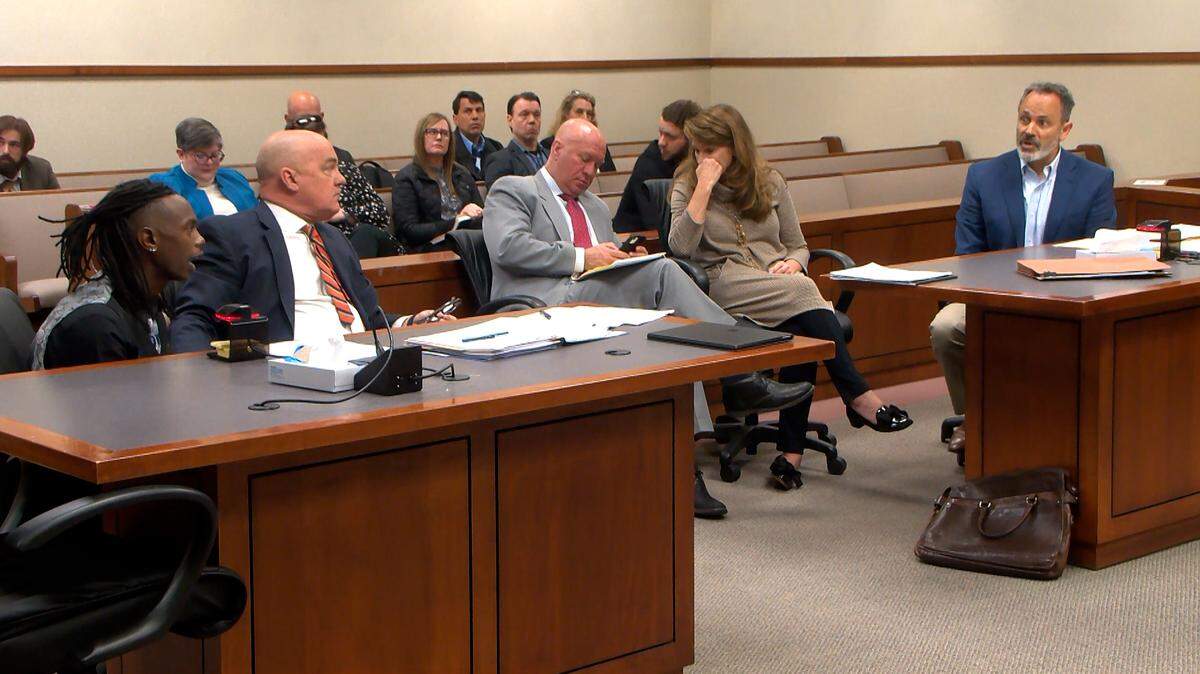
Former Kentucky Gov. Matt Bevin and former First Lady Glenna Bevin have appealed a Louisville judge’s ruling that allows their adopted son Jonah to intervene in their divorce case and potentially get retroactive financial support, Jonah’s lawyers said.
But an appeals court said this week the effort is premature.
Louisville Family Court Judge Angela Johnson ruled in Jonah Bevin’s favor May 16, allowing him to be an intervenor in his adoptive parents’ divorce case and opening the door for Jonah to petition to get retroactive financial support from his now-divorced parents until he gets his high school diploma.
The ruling also denied Matt and Glenna’s request that their divorce settlement remain under seal.
Glenna appealed Johnson’s ruling June 13, and in a brief opinion June 18, appellate judge said it was too early in the process to appeal.
The case began in March, when Johnson granted Jonah an emergency protective order against Matt and a restraining order against Glenna, blocking his adoptive parents from contacting him.
The Bevins adopted Jonah from Ethiopia when he was 5.
Jonah, now 18, had petitioned for the court’s protection after he said his parents, at the last minute, tried to coerce him to fly home to Ethiopia earlier this year to see his birth mother, who Jonah says he had been told most of his life was dead. Jonah said he was afraid of being lured to another country and left there.
Jonah told the court he has long distrusted his adoptive parents — he described his adoptive father as “threatening,” “intimidating” and “manipulative” — in part because he has said they abandoned him at Atlantis Leadership Academy in Jamaica, a faith-based behavioral health facility where staff were physically and emotionally abusive.
When the facility was shut down by Jamaican authorities in March 2024, Jonah was placed in the Jamaican foster care system. Even after his removal from the abusive facility, “my parents did not come to support me,” Jonah told a court in March.
After the no-contact orders were issued against Matt and Glenna, to get the financial support Jonah says he was denied when he was living in Jamaica and still a minor, Jonah filed to intervene in his adoptive parents’ divorce case. Johnson allowed it, which opened an avenue for Jonah to make a case for why he’s entitled to that retroactive support, at least until he earns his high school diploma from an accredited school.
After Jamaica, the Bevins paid for Jonah to attend Veritas Mission Academy in Florida, a private Christian school. Jonah received a high school diploma from Veritas, but he has called the institution a “sham,” in part because it’s not accredited by the Florida Department of Education or the National Council on Private School Accreditation.
The next step in the process is to schedule an evidentiary hearing, where lawyers for all three parties will present evidence and make their cases.
That hearing hasn’t yet been scheduled, which means no final order has been handed down determining if Jonah should be given retroactive child support by the Bevins, making their appeal earlier this month premature, an appellate judge said.
“It does not appear the circuit court has finally resolved (the) issue, including child support,” Kentucky Court of Appeals Chief Judge Larry Johnson wrote in his June 18 response. “Therefore, the order appealed from appears to be inherently interlocutory,” which means the current status of the case is temporary with no final determination, yet.
Matt and Glenna have 20 days to reply, which could include voluntarily dismissing the appeal.
Jonah’s attorneys, eager to schedule the evidentiary hearing, said they’re frustrated at its delay.
“It’s frustrating that they would seek to drag this out, but not unexpected,” Jonah’s attorney John Helmers said of the Bevins’ appeal.
Dawn Post, a lawyer and child advocate who has worked with Jonah since he was in Jamaica, said, “This action not only sidelines Jonah’s voice once again, but it also delays the very process meant to determine what’s in his best interest.”
Order mentions possible neglect by Bevins
In her May 16 order, Johnson called the case “profoundly unique” and “unlike any divorce proceedings heard in this commonwealth.”
Kentucky parents, by law, are “expected to provide adequate support and care according to the means available to each family,” Johnson wrote. Jonah isn’t seeking an equitable share of his parents’ assets, she added, but rather, “child support from the ongoing income of his parents.
“Kentucky parents are expected to provide adequate support and care, according to the means available to each family.”
And the Bevins have financial means, Johnson said.
“This is not akin to a child of divorce demanding their parents buy them a new car. Here, a family with ample financial means chose to send their child to an out-of-state private school with what appears to be no reliable accreditation instead of a public school or a private school with academic standards for which a qualified agency has vouched,” Johnson wrote.
The potentially non-accredited private school she references, Veritas Mission Academy, is “not accredited by any entity the Florida Department of Education deems qualified to accredit private schools,” nor is it accredited by the Florida Department of Education.
In deciding whether Jonah should retroactively get support from his parents until he can earn a high school diploma from an accredited school, it’s relevant to take into account the quality of the educational support Matt and Glenna gave Jonah, Johnson said.
The “central issue” of the future evidentiary hearing is to determine whether “Jonah received an adequate education from the institution he alleges to be a sham,” she said.
If the school is not accredited, Johnson said, a case could be made for neglect.
“The definition of neglect includes circumstances in which a parent ‘does not provide the child with adequate care, supervision, food, clothing, shelter and education or medical care necessary for the child’s well-being when financially able to do so or offered financial or other means to do so,’” she wrote.
If Jonah were still underage and still enrolled in Veritas, and it were unaccredited, the Cabinet for Health and Family Services “would be within its authority under the Dependency, Neglect and Abuse statutes to pursue allegations of educational neglect against Glenna and Matthew,” Johnson said.
Considering Jonah’s behavior during previous court hearings, when he “appeared to struggle with the vocabulary and communication skills necessary to articulate his thoughts, feelings and experiences,” the judge wrote, “this leads the court to believe that his high school education has not adequately prepared him to live life as an independent adult.”