Why does KY’s oath of office include swearing to have never fought in a duel?
It never fails to bring a moment of levity to what is an otherwise formal and stoic occasion.
Right hand in the air, palm open, and left hand on the Bible, the official must swear they’ve never fought in a duel with deadly weapons.
It often leads to a wry smile, as the declarant acknowledges the seeming absurdity.
Often known as the “dueling clause,” that portion of the centuries-old oath reads: “I, being a citizen of the state, have not fought a duel with deadly weapons within the state nor out of it, nor have I sent or accepted a challenge to fight a duel with deadly weapons, nor have I acted as a second in carrying a challenge nor aided or assisted any person thus offending, so help me God.”
Kentucky’s entire oath of office, taken each time an official is sworn into their position, is only about 200 words, so the dueling clause makes up about half of it.
And Kentucky is the only state in the U.S. that has such a clause in its oath of office.
So where did it come from? And why is it still around?
Kentucky’s bloody history
Historians note Kentucky was particularly bloodthirsty in the early 1800s, when Kentucky first adopted an anti-dueling law.
While participating in a duel was a fairly common practice, the state wanted to ensure its elected officials and other government representatives had integrity and were in honorable standing.
A formal duel is a prearranged, armed combat between two people, typically to settle a point of honor or resolve a dispute. It was often arranged when someone’s family member had been wronged, or when someone felt their honor needed defending.
It was governed by specific rules — referred to as “Code Duello” — and involves the use of weapons agreed upon in advance.
Such duels killed several famous men early in U.S. history, including Alexander Hamilton and David Broderick, a California senator.
Between 1790 and 1867, 41 formal duels were held in the commonwealth, according to the Secretary of State’s office.
As early as 1799, the Kentucky General Assembly enacted laws to curb such duels. Fines, along with disqualification from holding office, were briefly imposed.
But some skirted Kentucky law by crossing the state border to fight.
One of those scofflaws was Henry Clay, who had a duel with Frankfort statesman Humphrey Marshall over an insult delivered by Marshall while the men served in the Kentucky legislature.
Both men were wounded in the fight, which took place across the Ohio River in Indiana.
Clay was involved in a second duel in 1826 on Virginia soil after Sen. John Randolph made disparaging remarks.
Both missed their target when they fired their pistols. Clay fired a second time and missed again. Randolph then deliberately fired his weapon into the air to miss Clay, according to reports. The duel ended without injury.
Kentucky’s anti-dueling history
Kentucky’s first anti-dueling law was adopted in 1811. The legislation was introduced by Solomon Sharp and Ben Hardin, a pair of prominent Western Kentucky lawyers who quickly rose through the political ranks. Sharp eventually became the state’s attorney general, and Hardin the state secretary.
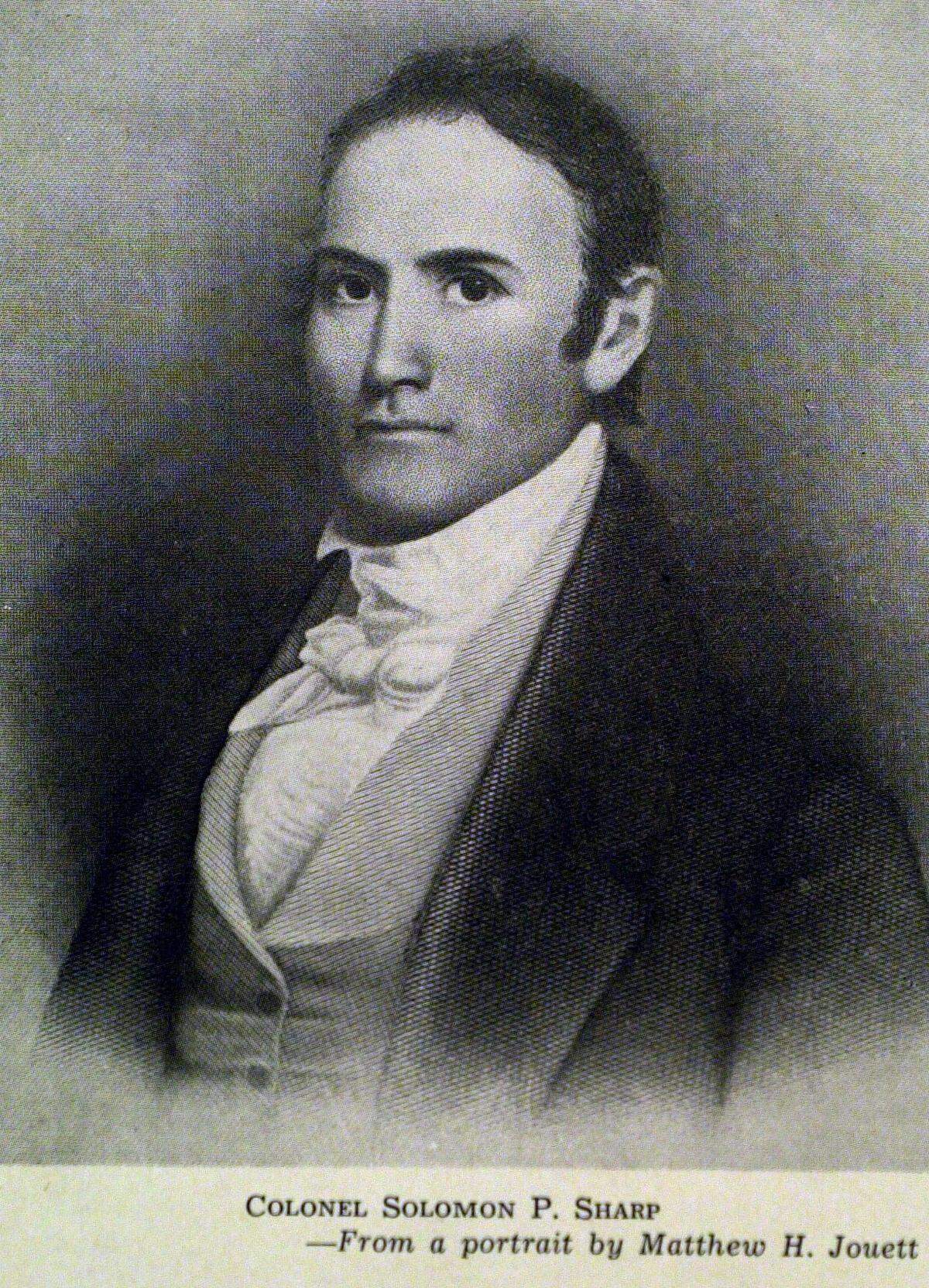
Despite his success in passing the anti-dueling legislation for Kentucky officials, Sharp was assassinated — though not in a duel — in 1825 by Jereboam Beauchamp in what was referred to as “The Kentucky Tragedy.”
And Kentucky legislators thought the law so important that in 1849, a similar clause was added to the state’s constitution.
The Kentucky Gazette reported the vote to approve was narrow, and one of the “biggest fights” of Hardin’s life to pass.
The dueling clause was again implemented into Kentucky’s fourth adaptation of the Constitution in 1890, ratified in 1891, and remains in effect to this day.
In modern times, there have been scant attempts to change the longstanding oath of office’s language surrounding the dueling clause.
One reason for the few attempts is simply because amending the state’s constitution is a difficult process. To do so requires a bill to pass with a 60% vote in each legislative chamber and then be approved by voters as one of a maximum of four ballot referendums.
The most recent attempt to change the language took place in 2010 when former Louisville Rep. Darryl Owens requested a public vote to remove the language. He said the outdated oath was “backward” and a distraction to a dignified ceremony.
What KY officials think about the oath
Attorney General Russell Coleman said the oath of office should be taken seriously, and has a heaviness to remind Kentucky of where we come from.
He said the reason he celebrates the code’s presence is because it reminds him how much Kentuckians have progressed.
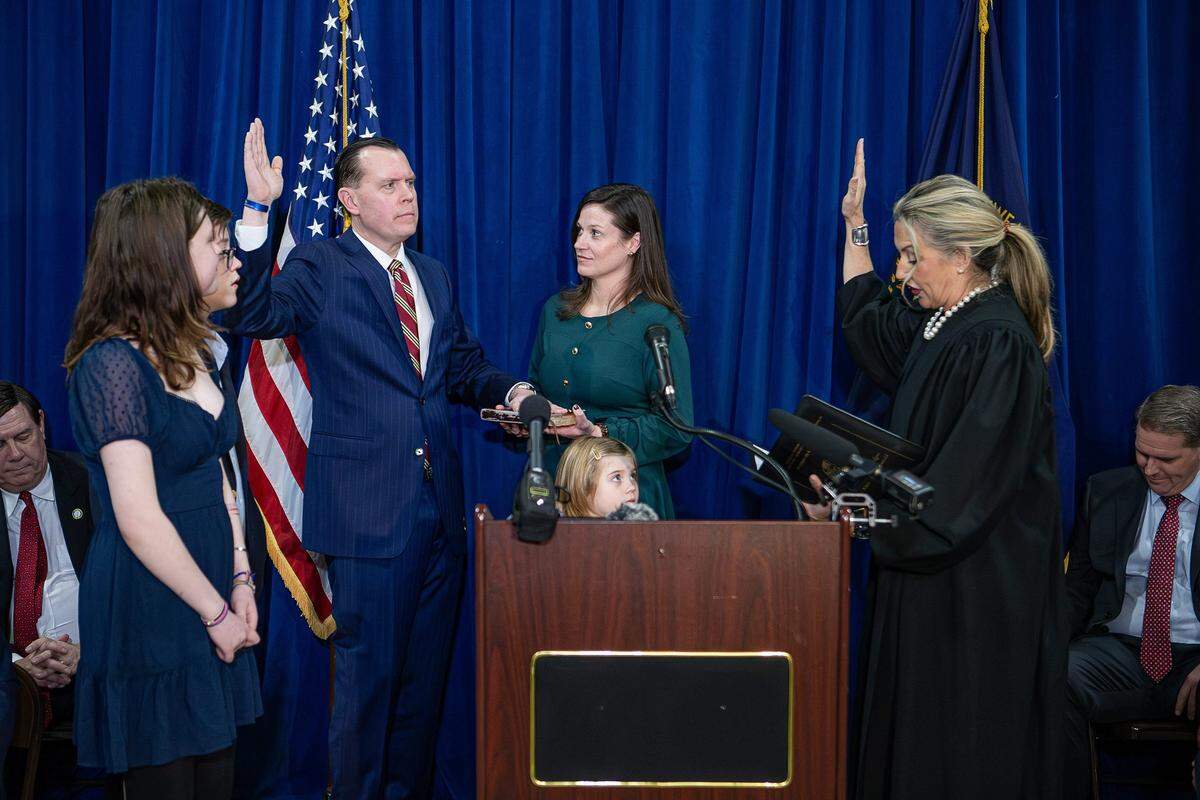
“It reminds those colleagues that are stepping forward, what happens when you don’t have an office like ours, you don’t have men and women to enforce the rule of law,” Coleman said in an interview with the Herald-Leader.
“There should be a heaviness in our folks take that oath, because that’s what happens when we don’t do our jobs. That’s what happens when we, as an institution, don’t step forward and protect families,” Coleman said.
Secretary of State Michael Adams said it was fortunate the dueling clause is not still relevant, but it’s still a good reminder of how pervasive the threat of violence was even among Kentucky’s elite leaders.
Adams admitted he has even had to suppress a smile himself when reciting the oath.
“It’s comforting to think we’ve progressed beyond such an archaic practice, but increasingly toxic and threatening political discourse, and the occasional flare-up of political violence, should keep us in this day and age from becoming too smug about our advancement,” Adams said.
This story was originally published July 17, 2025 at 5:00 AM.