
KY Sen. Rand Paul pitches health care solution, talks tariffs in Richmond
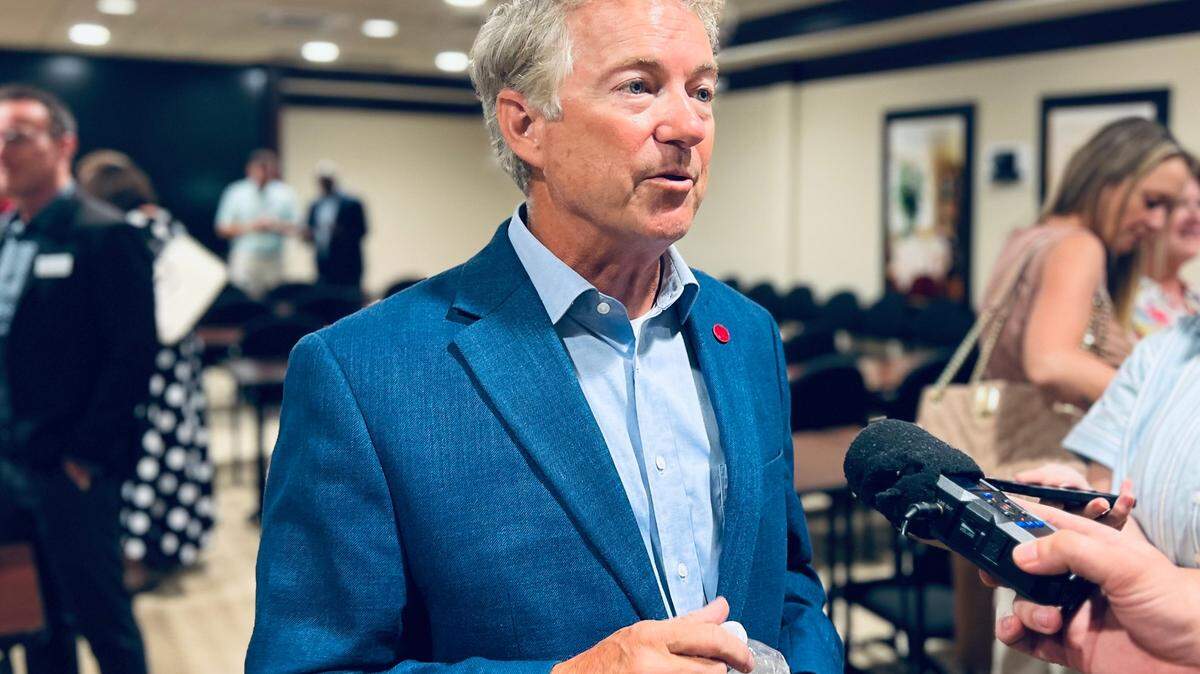
Kentucky Republican Sen. Rand Paul updated constituents about goings-on in Washington Friday afternoon, including his vote on the “Big, Beautiful Bill” and more tariff announcements.
After visiting Georgetown’s Ag Credit luncheon, Paul stopped in Richmond to meet with members of the city’s chamber of commerce.
Much of Paul’s remarks to the Central Bank community room were critical of what he described as the haphazard, unpredictable nature of tariffs and trade policy. He said unilateral decisions by President Donald Trump to impose tariffs are hurting Kentucky’s economy and should be discussed more before they’re implemented.
He also said part of the importance of good trade relationships is maintaining peace with allies and said the approach should be more balanced with a consideration of global politics.
Though some headlines are negative, Paul said the country is still strong and has made significant progress since his first days in Congress to reduce extreme poverty and improve living standards across the board.
Here’s what else the congressman had to say:
Race to find his next colleague in the Senate
Paul said he’s not going to get involved in the race for Sen. Mitch McConnell’s seat as far as endorsements go.
“I’m looking at all the candidates and will decide who to vote for like everyone else,” he told the Herald-Leader after his remarks to the room. “I want to see them (the candidates) present their ideas. What are their ideas on debt, on spending, on involvement in war?”
Republicans U.S. Rep. Andy Barr, former Attorney General Daniel Cameron and Lexington tech entrepreneur Nate Morris are all running for McConnell’s seat in 2026. Kentucky’s senior senator announced earlier this year he would not seek reelection.
Kentucky House Democratic Floor Leader Pamela Stevenson is also running.
Medicaid coverage spending
During the question and answer portion that followed his remarks, Paul said one of the problems with Medicaid is it crowds out private insurance.
“Anybody in here who works for a company with health insurance doesn’t complain (about costs). If you’re an accountant and you have three employees then you’ve got to buy your own. They’d complain. Why? Because health insurance is expensive and the billion-dollar insurance companies are big and you and your three employees, you have no leverage.”
One of Paul’s ideas is to change a federal labor law, the Employee Retirement Income Security Act, that sets standards for retirement and health plans for those employed by a private company.
Paul said it’s a complicated labor rule that says negotiating for benefits can only be done by someone who is connected to a provider by employment.
“But if I’m a member of Costco and I’m not related to you in any way, but I’m in this pool of people, and one guy’s negotiating, or woman’s negotiating (for benefits for the group), I think it would transform it,” Pail said.
A consortium like that, where coverage is provided by a large company with members who buy in, would be less expensive, Paul said. It would bolster someone’s choice without a subsidy, and would allow for collective bargaining where necessary.
Difference with Trump on Big, Beautiful Bill
Paul has publicly opposed the president, mostly on differences on fiscal policy. Paul criticized the president about his Big, Beautiful Bill and voted no despite meeting individually with Trump to talk about the debt ceiling.
“I think the president appreciated that I was willing to talk to him and wasn’t adamant about it. But you know, he’s a guy with a big ego and a lot of things he believes in and so it isn’t always easy,” Paul said. “But I think my job representing Kentucky is to listen to people in Kentucky, ask tough questions, and I won’t be a rubber stamp.
“I’m a Republican. But that doesn’t mean I’m always going to support everything President Trump does.”
Disapproves of next tariffs on Canada
Trump said Thursday, July 10, he would impose a 35% blanket tariff on Canadian goods staring in August. Paul doesn’t think tariffs are good for the economy.
He said for the most part, trade with Canada is good for the U.S. He used automotive production lines that cross North America as an example of a complicated system that has benefited from free trade.
“The tariffs now have made it such that they have to look and say, ‘was that bolt from Canada?’” Paul said. “The taxes are individualized on all of the parts of that car, it’s very complicated.”
“I talk about the benefits of trade because I think people need to know that trade is proportional to prosperity,” Paul said. “We get richer when we trade because it’s an element of capitalism, it’s not something separate. I’m better if I trade with people in Richmond. I’m also better if I trade with people in Lexington or another state or another country.
“It breeds the efficiency of lowest cost goods that are efficient and the best quality since there’s more competition.”
.JPG)