
Kentucky site picked for Trump administration’s AI, energy infrastructure plan
AI-generated summary reviewed by our newsroom.
- DOE selected Paducah site for AI and energy infrastructure development.
- Federal land will host data centers and power sources to cut energy costs.
- Kentucky lawmakers say site is key to economic growth and nuclear revival.
A Kentucky site has been tapped by the federal government as a prime location to carry out the Trump administration’s plan to build the nation’s artificial intelligence infrastructure including the energy sources necessary to power it.
The U.S. Department of Energy said Thursday four pieces of federal land, including the Paducah Gaseous Diffusion Plant, could be utilized to lower energy costs and power AI. In an announcement July 24, the department said the chosen locations are well-situated for large-scale data centers and new power generation.
More details on project scope at each site is expected to be released in the coming months with developer and energy company partners potentially selected by the end of the year, the department said.
Other sites include the Idaho National Laboratory, Oak Ridge Reservation in Tennessee and the Savannah River Site in South Carolina.
“By leveraging DOE land assets for the deployment of AI and energy infrastructure, we are taking a bold step to accelerate the next Manhattan Project — ensuring U.S. AI and energy leadership,” said Energy Secretary Chris Wright in the department’s announcement. “These sites are uniquely positioned to host data centers as well as power generation to bolster grid reliability, strengthen our national security, and reduce energy costs.”
Kentucky leaders react
State Sen. Danny Carroll, R-Paducah, said in a statement the site selection is affirmation of the state’s position as a leader in energy policy and economic opportunity. Carroll sponsored legislation earlier this session that created the Kentucky Nuclear Energy Development Authority. A total of $40 million was allocated in the state’s budget to fund the authority and its related research efforts.
“Paducah’s potential as a nuclear and innovation hub is clearer than ever,” Carroll said in the statement. “We have the people, the partnerships, and the bipartisan momentum to turn this designation into something transformative for our economy.”
In a statement, state Sen. Amanda Mays Bledsoe, R-Lexington, said the department’s inclusion of a Kentucky site is exactly what the state has been preparing for.
Bledsoe, who co-chairs the Kentucky Artificial Intelligence Task Force, said the group has taken deliberate steps to get ahead of the AI curve by “crafting a responsible policy framework while also evaluating what it takes to build out the infrastructure AI demands.”
“In the second phase of our work, we’re looking at everything from workforce development to cybersecurity to energy capacity,” Bledsoe said. “This federal announcement aligns directly with those efforts and reinforces the connection between smart policy and smart infrastructure.”
Longtime Kentucky Sen. Mitch McConnell also praised the Department of Energy’s Paducah selection. Earlier this year, the Republican senator said his office contacted the Energy department and was in support of the Western Kentucky city’s submission to be considered for the AI infrastructure program.
“The site at Paducah Gaseous Diffusion Plant has long held a critical role in advancing U.S. national security, and is poised, yet again, to be a national leader in an emerging and important technology,” McConnell said in a statement. “I am proud of the Paducah community and its workforce and know they are prepared to continue working closely with the Department of Energy to further instill (the plant’s) role in national security while helping facilitate greater U.S. leadership in AI.”
History of Paducah site in Western Kentucky
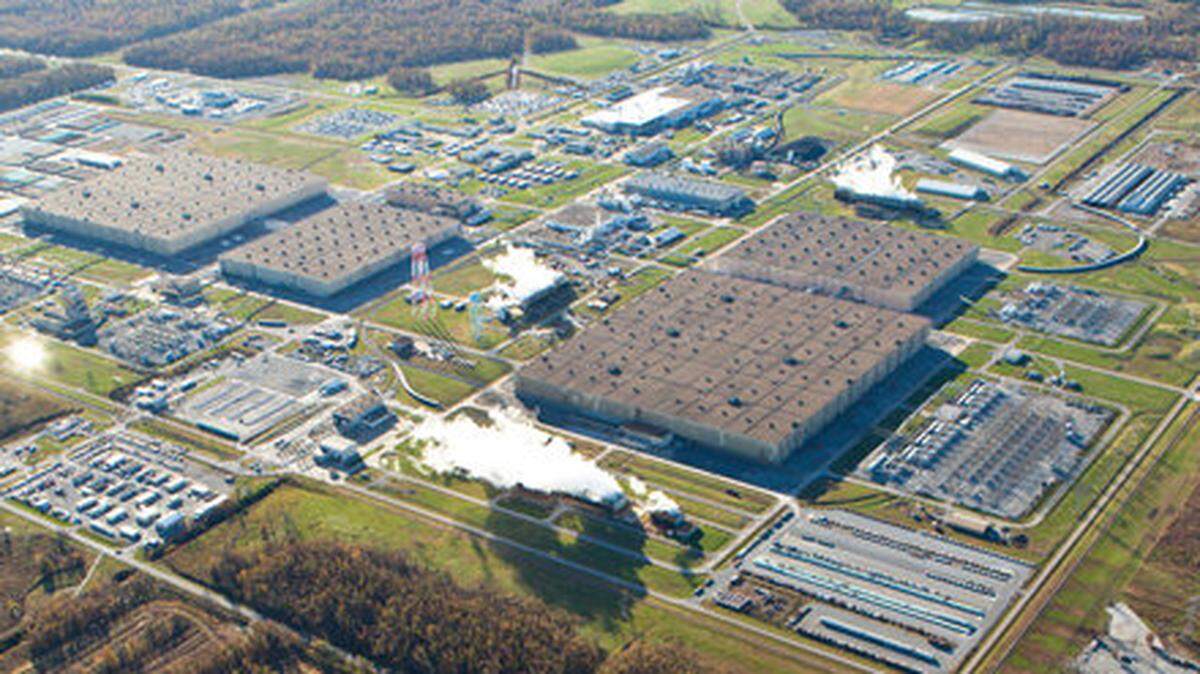
The Paducah Gaseous Diffusion Plant is one of the nation’s largest former uranium enrichment facilities and is now undergoing necessary preparation for future redevelopment, according to the energy department. Enriched uranium is a critical piece of nuclear power generation. The plant was constructed in 1952 to support the nation’s nuclear program at the time and then was used to make nuclear fuel for commercial power plants.
Operations stopped at the plant in 2013 when the facility was turned over to the energy department’s environmental management program. The program has managed extensive cleanup activities at the site since the 1980s and is deactivating parts of the plant. The Portsmouth Paducah Project Office is continuing other aggressive remediation at the site.
McCracken County’s 1st District Commissioner Bill Bartleman told the Herald-Leader he suspects the Paducah site was picked because it already has the available electricity and infrastructure in place for something to be developed. Plus, he said, the community would welcome a move back to nuclear production.
“We have a positive history of nuclear energy in West Kentucky,” Bartleman said. “For 60 years, we did uranium enrichment. It was a major part of the federal government and in the defense of the country. So, we’re very positive on nuclear energy and we think that this is just a piece of that because it’ll allow for, probably, creation of other jobs and new types of nuclear power plants.”
Paducah’s Republican Rep. Steven Rudy, who is part of the Kentucky Rural Electric Cooperative Caucus, said the plant was a major employer for years and it’s crucial to envision the site as something new.
“We have a trained workforce, we have a lot of assets and we feel like there’s getting ready to be a nuclear revolution in this country. We want to be in the middle of it,” Rudy told the Herald-Leader. “... We’re a community, unlike most, that welcome nuclear with open arms.
“We think that’s going to be key to American energy independence,” he said. “We’re looking at all of the above, not just one particular thing, as we focus on diversifying our nation’s and our state’s energy portfolio.”
.JPG)